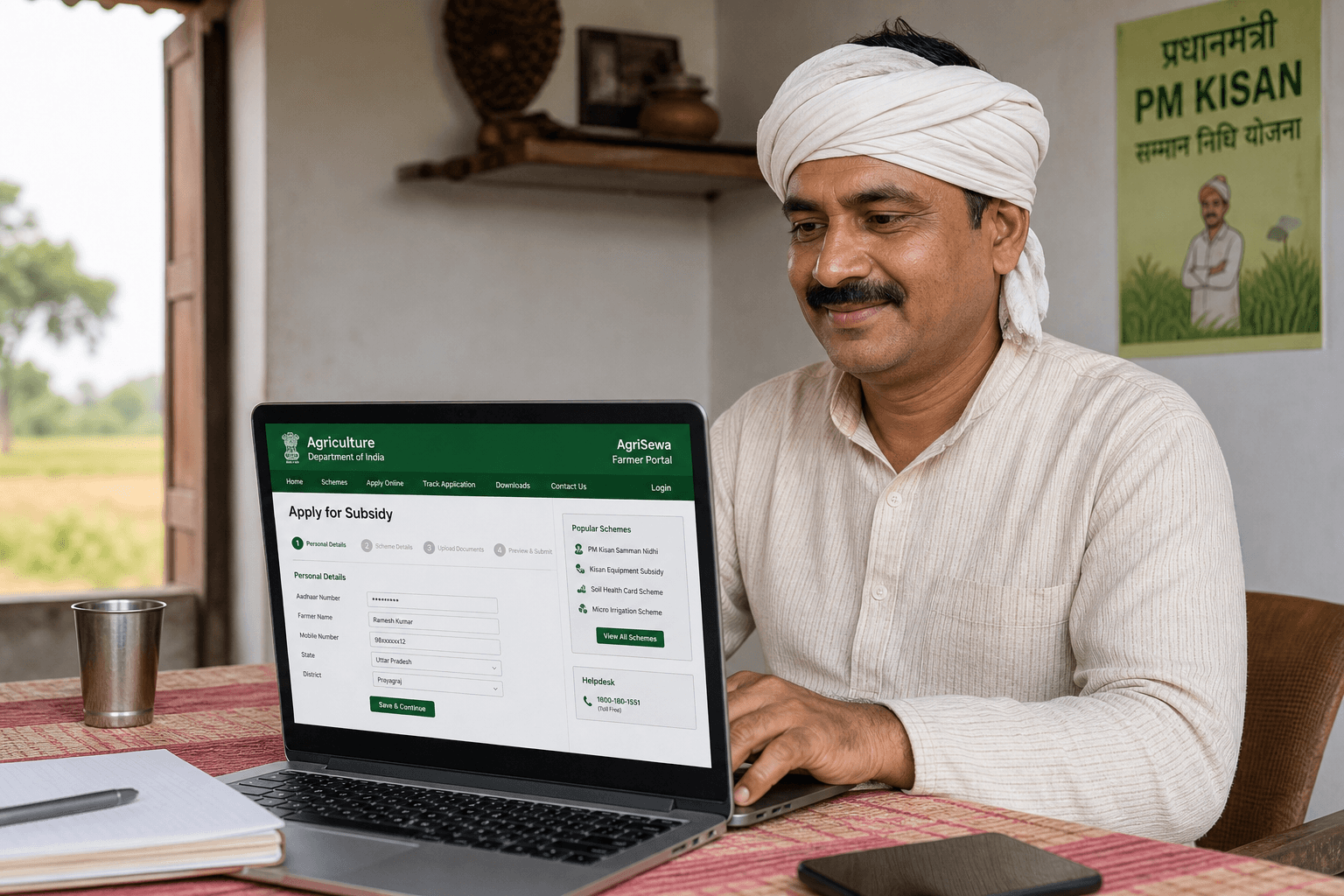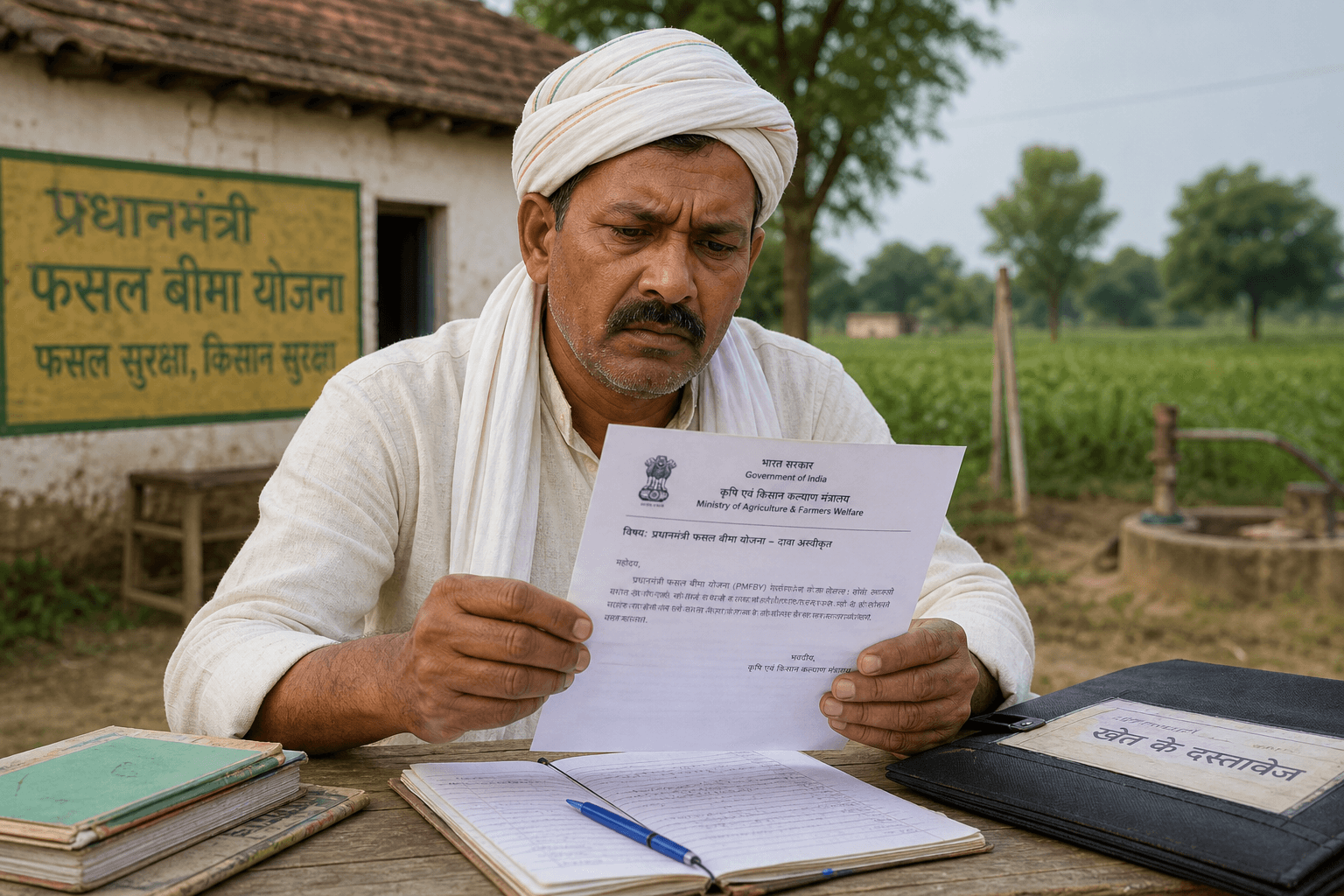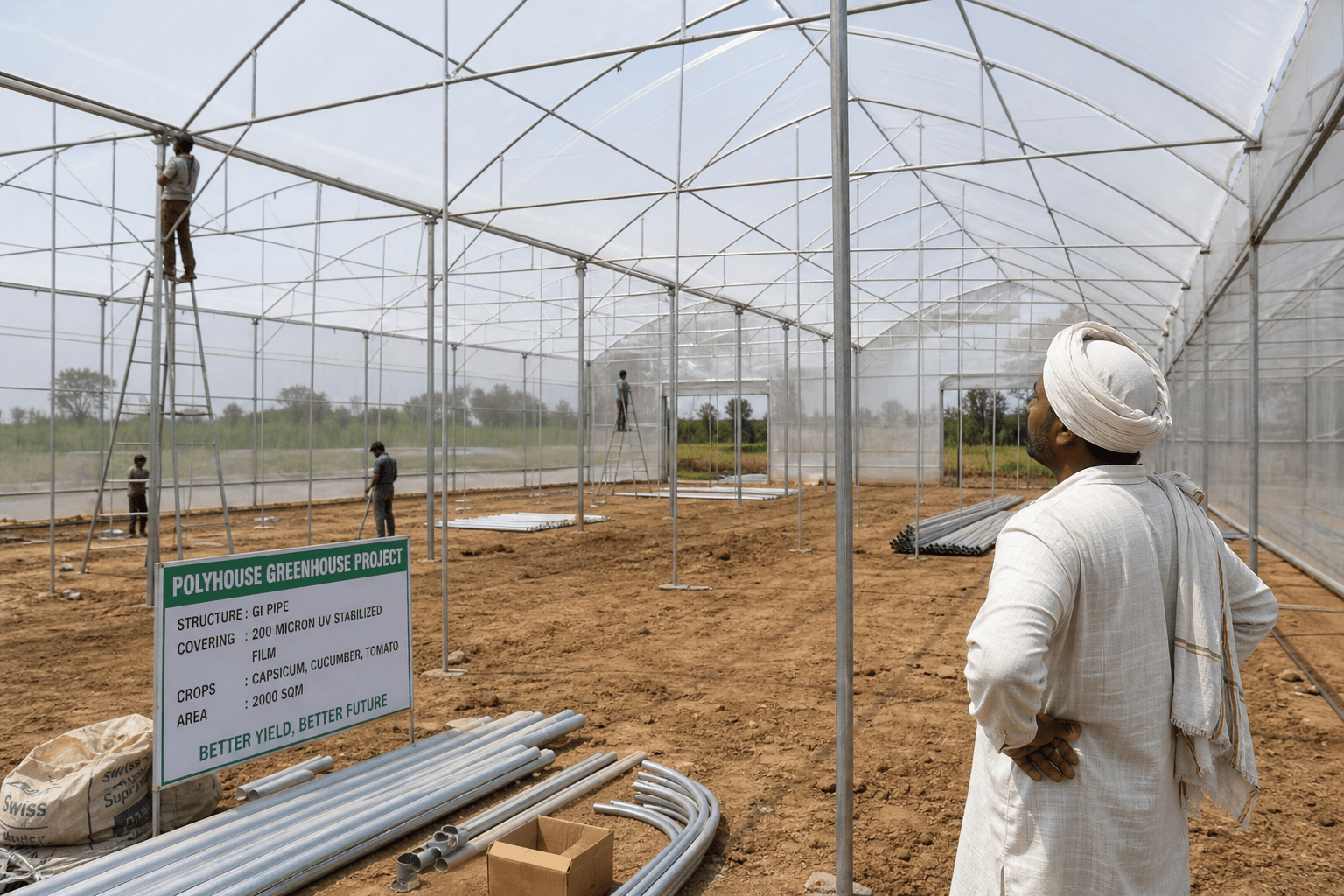
If you search "polyhouse subsidy kaise milegi" or "polyhouse ke liye subsidy milti hai kya," you will find dozens of blogs promising 50% off your greenhouse. Some add state top-ups and claim 65%, 75%, even 95%. A few show photos of lush capsicum rows as if the subsidy cheque arrives the week you call a vendor.
The reality in 2026 is more nuanced — and more profitable if you understand it. Protected cultivation is the flagship money-maker in modern Indian horticulture: a well-managed 4,000 sqm (≈1 acre) polyhouse can net ₹6–14 lakh per year, recover investment in 2–4 years, and grow crops like coloured capsicum at ~₹18.14 lakh net per acre per annum. But the subsidy math that makes those projects bankable is not the headline percentage on a government poster.
This is the master guide. Read it before you pay a deposit to any polyhouse erector.
The One Rule That Cancels Everything
Never start polyhouse construction before receiving your Letter of Intent (LoI) or Letter of Comfort (LoC) from NHB or your state horticulture department. You must also secure bank term-loan sanction and submit your application before building. Starting early, or deviating from the approved DPR crop and structure without written permission, causes automatic, permanent rejection. No appeal fixes this. Vendors who say "start now, apply later" are costing you ₹10–20 lakh.
This rule appears in NHB commercial horticulture guidelines, state MIDH circulars, and our research list of the nine most common subsidy failures. It is non-negotiable. If you remember nothing else from this page, remember this.
For the step-by-step application sequence, continue to our polyhouse subsidy online apply guide. For DPR content, see how to write a bankable DPR.
50% Advertised vs 35–40% Effective — The Trust Gap
Government schemes quote 50% subsidy under NHM/MIDH and NHB for protected cultivation. State top-ups push combined figures higher in places like Telangana (75% general, 95% SC/ST), Maharashtra (50% + top-up to 65–70%), and Haryana (85% for SC owners).
So why do experienced farmers and consultants insist the real number is 35–40%?
Because subsidy is calculated on official cost norms per sqm, not on your vendor's quotation. MIDH/NHB norms by area slab:
| Area slab | NVPH cost norm (per sqm) |
|---|---|
| Up to 500 sqm | ₹1,060 |
| 500–1,008 sqm | ₹935 |
| 1,008–2,080 sqm | ₹890 |
| 2,080–4,000 sqm | ₹844 |
Fan-and-pad hi-tech greenhouses carry norms of ₹1,400–1,650 per sqm. Shade net houses are cheapest at ₹710 per sqm. Hilly areas receive norms 15% higher (NHB Appendix-1-B).
Market reality in 2026: a naturally ventilated polyhouse (NVPH) costs roughly ₹25–40 lakh per acre before subsidy — often above the norm multiplied by your area. Subsidy is capped at 50% of the norm, not 50% of what you actually spend.
Example: 4,000 sqm at ₹844 norm = ₹33.76 lakh eligible cost. At 50% = ₹16.88 lakh subsidy. If your vendor quotes ₹38 lakh actual, your effective support is 44% of real cost — and if the quote hits ₹45 lakh, effective drops toward 37%.
Keep 15–20% extra cash beyond your loan margin money. Blogs that tell you 10% farmer contribution is enough are using the advertised 50%, not the norm-adjusted reality. This honesty is why farmers trust this guide over generic agri-content farms.
NHB Route vs State NHM/MIDH Route
Two main pathways exist. Many farmers use both concepts simultaneously — NHB for commercial scale, state mission for smaller or supplementary units.
NHB — National Horticulture Board
- Subsidy: Flat 50%, credit-linked, back-ended
- Ceiling: ~₹56 lakh per beneficiary (up to ~₹1 crore depending on structure/location)
- Minimum area: 4,000 sqm general; 1,000 sqm NE/hilly
- Portal: nhb.gov.in; processing fee ~₹5,000–10,000
- 2023 reform: Optional Letter of Comfort (LoC) + mobile-app self-inspection (PIB PRID 1906941) replaced mandatory two-stage In-Principle Approval (IPA) + Grant of Clearance (GoC)
Back-ended means subsidy credits to your loan account after construction and inspection — not upfront.
NHM / MIDH — State Horticulture Missions
- Subsidy: 50% baseline; enhanced for SC/ST and hilly/NE (up to 90% central share in NE/Himalayan states under HMNEH)
- Max area: 4,000 sqm per beneficiary
- Application: District horticulture officer or state portal — methods vary (lottery, first-come-first-served, offline)
See our state-wise polyhouse subsidy guide for Maharashtra, Telangana, MP, Gujarat, UP, Rajasthan, and other portals.
LoI, LoC, and the 2023 NHB Simplification
For years, NHB followed a two-stage approval: In-Principle Approval (IPA) followed by Grant of Clearance (GoC), with a Letter of Intent (LoI) triggering a Joint Inspection Team (JIT) visit after construction.
In 2023, NHB simplified the flow:
- Optional Letter of Comfort (LoC) replaces much of the old bureaucracy for many applicants
- Mobile-app self-inspection supplements or replaces physical JIT in eligible cases
Many vendor brochures and YouTube videos in 2026 still describe the legacy LOI → build → JIT sequence. Both descriptions circulate because state missions and older NHB cases may follow the traditional path.
What you must do in either version:
- Prepare DPR and get bank term-loan sanction
- Apply on nhb.gov.in or state portal before construction
- Receive written approval (LoI or LoC) — do not interpret a verbal OK from a dealer as approval
- Build exactly as per approved DPR
- Complete inspection (JIT or app-based) with geo-tagged photos
- Receive back-ended subsidy credit
Polyhouse Types and Cost Norms
Choose structure type before calculating subsidy:
| Type | Market cost (indicative) | Cost norm |
|---|---|---|
| Naturally ventilated polyhouse (NVPH) | ₹25–40 lakh/acre | ₹844–1,060/sqm by slab |
| Fan & pad hi-tech greenhouse | ₹35–50 lakh/acre | ₹1,400–1,650/sqm |
| Shade net house | Cheapest option | ₹710/sqm |
Starter unit (1,000 sqm): roughly ₹7–10 lakh before subsidy, falling to ₹3.5–5 lakh after — the practical entry point for beginners. Minimum NHB area in NE/hilly is 1,000 sqm; general states require 4,000 sqm for the commercial NHB route.
Hi-tech greenhouses make sense for year-round floriculture (Dutch rose ₹12–18 lakh/acre but highest risk) or premium vegetables in extreme climates. NVPH is the profit sweet spot for coloured capsicum and seedless cucumber.
Profit Context — Why Subsidy Math Matters
Subsidy makes the project bankable; crop economics make it profitable. Without both, you own an expensive tunnel.
Net profit: ₹6–14 lakh/year for a well-managed 4,000 sqm polyhouse. From Year 2 onward, only running costs (₹4–6 lakh/year) apply against gross revenue — the structure is already built.
Top crops by net return (Agrifirst NVPH data and programme research):
| Crop | Net return (indicative) | Notes |
|---|---|---|
| Coloured capsicum | ~₹18.14 lakh/acre/year | Best balance of profit vs risk for first-timers |
| Seedless cucumber | ~₹16.76 lakh/acre/year | Harvest from ~35 days; 2–3 cycles/year |
| Dutch rose | ₹12–18 lakh/acre | Highest revenue, highest risk; 5–6 year life |
| Gerbera / floriculture | ₹10–15 lakh/acre | Stable margin; 2–3 year productive life |
| Cherry tomato, strawberry | High-value short season | Cherry tomato more salt-tolerant than capsicum |
Growing low-value mandi crops — spinach, okra — in a ₹25–40 lakh structure is mistake number three on our failure list. See best high-profit polyhouse crops.
Stacking Subsidy with Loans and Other Schemes
Polyhouse subsidy rarely stands alone. Stack carefully:
- Agriculture Infrastructure Fund (AIF): 3% interest subvention on loans up to ₹2 crore for 7 years; stackable with NHB — agriinfra.dac.gov.in
- NABARD: Refinances bank loans; 7% crop loans (effective 4% on prompt repayment); does not pay subsidy directly — NABARD process guide
- PMKSY drip/fertigation: 55% central for small/marginal, 45% others, plus state top-ups — drip PMKSY guide
- PM-KUSUM Component B: 60% on solar pumps — pairs with polyhouse irrigation; PM-KUSUM guide
Full scheme list: government subsidy schemes 2026.
Documents and DPR Essentials
Whether you pursue NHB or state MIDH, the same document bundle appears repeatedly:
- Aadhaar, PAN, SC/ST caste certificate if applicable
- Land records: Jamabandi, 7-12 & 8-A, Khasra-Khatauni — or registered lease deed (10–15+ years), not merely notarised
- 3–4 vendor quotations with GST
- Soil and water test reports — high EC may require RO before capsicum/gerbera
- Bank term-loan sanction letter
- Aadhaar-linked bank passbook
- Geo-tagged construction-stage photographs
DPR financial viability must show DSCR ≥1.5, IRR/BCR, break-even, and repayment schedule. Technical section specifies B-Class GI pipes, UV-stabilised polyfilm of approved micron, drip/fertigation integration, and water EC parameters.
State Highlights — Where Rates Are Highest
Central baseline is 50% everywhere. Selected state enhancements (verify on official portal):
| State | Indicative rate | Portal |
|---|---|---|
| Telangana | 75% general; 95% SC/ST (up to 3 acres) | horticulture.tg.nic.in |
| Maharashtra | 50% + top-up to 65–70% | MahaDBT (lottery) |
| Haryana | 85% SC owner; 65% SC lease; 50% general | HORTNET |
| Madhya Pradesh | 50% on norm; 80% small/marginal/SC-ST | MPFSTS |
| Gujarat | 50–90% | i-Khedut |
| Assam & NE | 90% central share (HMNEH) | dirhorti.assam.gov.in |
| Himachal Pradesh | Up to 85% general (hilly) | eudyan.hp.gov.in |
| Kerala | Up to 75% (greenhouse ≤500 sqm) | shm.kerala.gov.in |
West Bengal, Chhattisgarh, Jharkhand, and Punjab percentages require verification on state portals — label as indicative until confirmed.
Inspection — JIT vs App Self-Inspection
After construction, a Joint Inspection Team verifies:
- Structure dimensions match DPR
- Material specs (polyfilm micron, pipe class, ventilation) match approval
- Crop planted matches approved crop plan
- Geo-tagged photos align with site location
Under the 2023 NHB reform, mobile-app self-inspection may substitute in eligible cases. Do not assume you are exempt from inspection because you received an LoC — read your approval letter conditions.
Subsidy credits back-ended to the loan account reduce outstanding principal or as per bank/NHB MOU.
Common Failures — Learn From Others' Losses
Our research compendium lists nine recurring disqualifiers. The top three for polyhouse:
- Construction before LoI/LoC — instant loss
- Believing 50% headline — cash crunch mid-project when norms cap eligible cost
- Wrong crops — pretty but unprofitable harvests
Also: uncertified seedlings, no training (₹5,000–10,000 courses pay back fast), no market linkage, DPR deviation, and ignoring water quality. Full article: 9 mistakes that cancel your subsidy.
Starter Path for Small Farmers
If 4,000 sqm feels too large, consider:
- 1,000 sqm starter unit: ₹7–10 lakh pre-subsidy → ₹3.5–5 lakh post-subsidy (indicative)
- Shade net house at ₹710/sqm norm — up to 80% for small/marginal in MP
- Sequence: PMKSY drip → PM-KUSUM pump → polyhouse
Roadmap: small and marginal farmer modern farming 2026.
Verify on Official Portals
Before you sign:
- nhb.gov.in — NHB commercial horticulture
- State horticulture .gov.in — MIDH/NHM windows
- agriinfra.dac.gov.in — AIF loan stacking
- District Horticulture Officer — local verification
Subsidy percentages, cost norms, and ceilings change with funding windows. The 50% rate is real on paper; the 35–40% effective rate is real in your bank account. Plan for both, apply before you build, grow crops that earn ₹16–18 lakh per acre, and this flagship modern farming investment pays you back for decades.
Frequently asked questions
What is the polyhouse subsidy percentage in India in 2026?
The advertised rate is 50% under NHM/MIDH and NHB for general farmers, with enhanced rates up to 65–95% in some states for SC/ST and hilly/NE categories. Because government cost norms (₹844–1,650 per sqm) lag actual market prices, the effective subsidy most farmers receive is typically 35–40% of real project cost. Budget 15–20% extra cash beyond loan margin money.
Can I start building my polyhouse before applying for subsidy?
No. You must secure bank term-loan sanction and receive a Letter of Intent or Letter of Comfort from NHB or your state horticulture department before starting construction. Building before approval permanently forfeits subsidy — this is the single most common and irreversible disqualification.
What is the difference between Letter of Intent and Letter of Comfort?
NHB simplified the process in 2023, replacing the mandatory two-stage In-Principle Approval plus Grant of Clearance with an optional Letter of Comfort plus mobile-app self-inspection. Many 2026 vendor guides still describe the legacy LOI plus Joint Inspection Team flow. Both paths require pre-construction approval — follow whichever your current NHB circular and state portal specify.
What is the NHB subsidy ceiling for polyhouse projects?
NHB offers flat 50% credit-linked back-ended subsidy with a ceiling of roughly ₹56 lakh per beneficiary, up to about ₹1 crore depending on structure and location. Minimum project area is 4,000 sqm in general states and 1,000 sqm in NE and hilly areas.
Which portal do I use to apply for polyhouse subsidy?
Commercial projects apply at nhb.gov.in with a processing fee of roughly ₹5,000–10,000. State NHM/MIDH routes use state portals such as MahaDBT, MPFSTS, i-Khedut, horticulture.tg.nic.in, and RajKisan. Always verify the current portal and open window on your state horticulture department website.