A Detailed Project Report (DPR) is the document that stands between you and lakhs of rupees in polyhouse subsidy. Banks refuse term loans without it. NHB rejects applications without it. The Joint Inspection Team (JIT) compares your built structure against it — and any mismatch cancels your claim permanently.
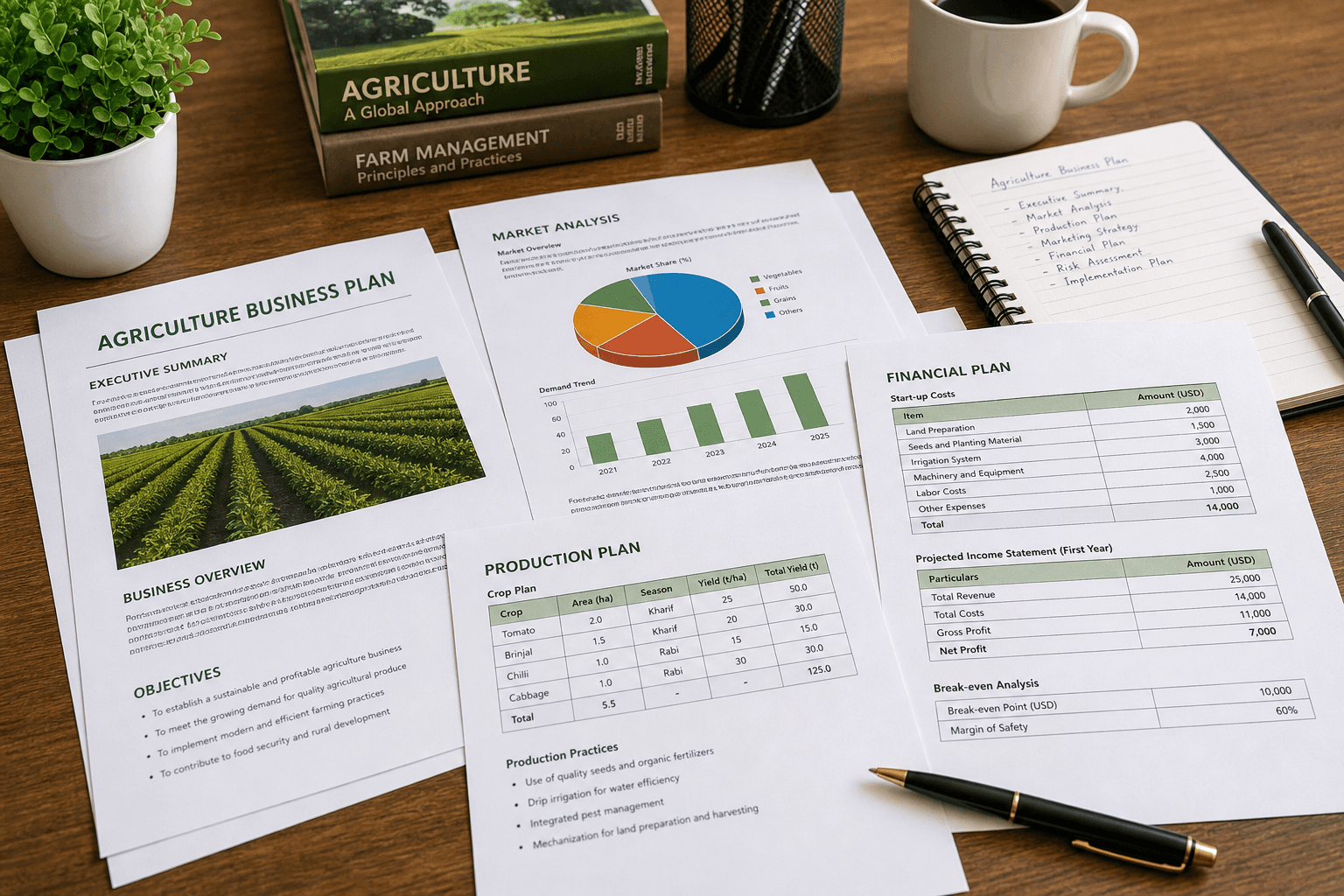
This guide walks through every section a bankable DPR must contain, the financial ratios your bank expects (DSCR ≥ 1.5), technical specifications NHB inspectors verify, the full document checklist, and how the DPR connects to the Letter of Intent (LOI), Letter of Comfort (LoC), and back-ended subsidy credit. If you are applying for protected cultivation subsidy, read this before you pay a single rupee to a polyhouse vendor.
Why the DPR Is Non-Negotiable
Polyhouse subsidy under NHB and MIDH is credit-linked and back-ended. The workflow is:
- Write a bankable DPR.
- Obtain bank term-loan sanction.
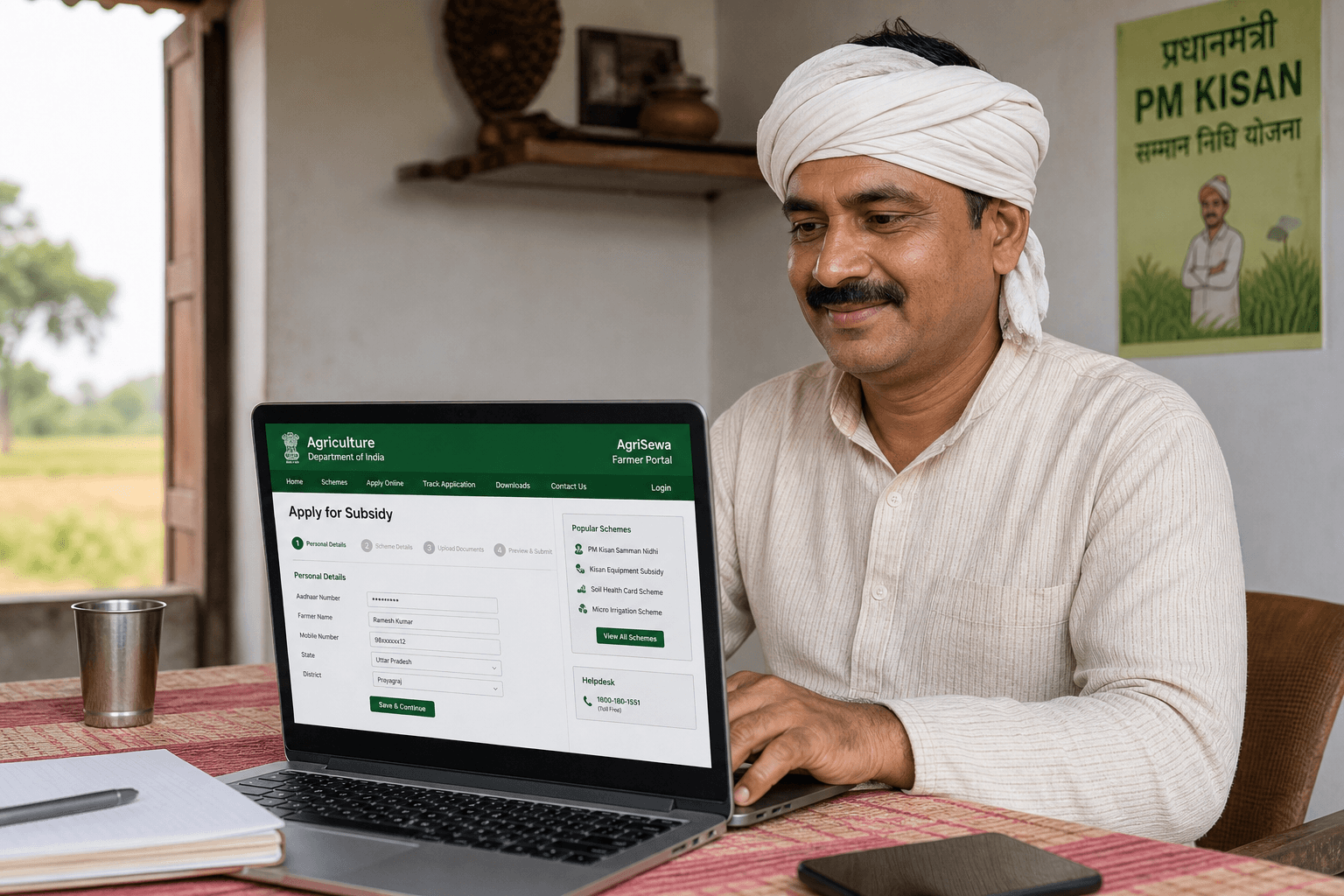
- Apply on nhb.gov.in and your state horticulture portal.
- Receive LOI or LoC before construction.
- Build exactly as approved.
- Pass JIT inspection (or 2023 app-based self-inspection).
- Receive subsidy credited to your loan account.
Skip the DPR, and step 2 fails. Build before step 4, and subsidy is permanently forfeited — the single most common rejection reason documented across Indian horticulture schemes. Our Polyhouse Subsidy Guide 2026 covers the full subsidy landscape including the effective 35–40% support reality when government cost norms lag market prices.
Never start polyhouse construction before receiving your Letter of Intent or Letter of Comfort and bank term-loan sanction. A perfect DPR cannot save a project that broke ground too early.
DPR Section 1 — Project at a Glance
Open with a one-page executive summary:
- Project name and location (district, tehsil, survey number)
- Promoter name and category (general / SC / ST / small / marginal / women)
- Structure type — naturally ventilated polyhouse (NVPH), fan-and-pad hi-tech greenhouse, or shade net house
- Area in sqm — minimum 4,000 sqm for general states, 1,000 sqm for NE/hilly areas
- Total project cost and funding mix (term loan, promoter contribution, expected subsidy)
- Primary crop and cultivation cycle
- Implementation timeline (typically 4–8 months from sanction to first planting)
- Expected employment (family labour plus hired workers)
Include a simple site layout diagram showing polyhouse orientation, water source, drip header lines, and road access for JIT inspection vehicles.
DPR Section 2 — Promoter and Entrepreneurship Details
Banks and NHB assess promoter credibility. Include:
- Full name, age, address, contact
- PAN, Aadhaar, GST (if registered)
- Caste certificate (SC/ST for enhanced state subsidies — e.g., Telangana 95% for SC/ST up to 3 acres, Rajasthan 70–95% for SC/ST and small/marginal)
- Educational qualifications
- Training certificates — horticulture short courses (₹5,000–10,000) from KVK, state horticulture department, or private institutes. Skipping training is a documented failure reason; certified training reduces crop-loss risk.
- Prior farming or business experience
- Disclosure of benefits already availed under NHM, MIDH, NHB, PMKSY, or other schemes — mandatory honesty; false disclosure triggers audit rejection
DPR Section 3 — Market Viability
Your DPR must prove you can sell the crop before you plant it. Include:
- Target crop with justification — coloured capsicum (net ₹18.14 lakh per acre per year), seedless cucumber (net ₹16.76 lakh per acre, harvest from ~35 days, 2–3 cycles per year), Dutch rose (₹12–18 lakh per acre), gerbera (₹10–15 lakh per acre), cherry tomato, or strawberry
- Local mandi prices and seasonal peaks — capsicum reaches ₹75–150 per kg, highest October–December when supply is tight
- Buyer letters of intent from mandi aggregators, exporters, or retailers
- Competition analysis — other polyhouses in the district
- Transport and logistics plan
Growing low-value crops (spinach, okra) in an expensive polyhouse is a documented subsidy-project failure pattern. Match crop value to infrastructure cost — capsicum and cucumber offer the best profit-versus-risk balance for first-timers.
Not pre-arranging market linkage before planting ranks among the top reasons protected cultivation projects fail financially — even when subsidy is approved.
DPR Section 4 — Technical Viability
This section must match what the JIT will physically inspect. NHB cost norms by area slab:
| Area Slab | Cost Norm (₹/sqm) |
|---|---|
| Up to 500 sqm | 1,060 |
| 500–1,008 sqm | 935 |
| 1,008–2,080 sqm | 890 |
| 2,080–4,000 sqm | 844 |
| Fan-and-pad hi-tech | 1,400–1,650 |
| Shade net house | 710 |
| Hilly areas | 15% higher (NHB Appendix-1-B) |
Structure specifications
- Foundation and anchoring — concrete footings, ground anchor spacing per vendor design approved by horticulture department
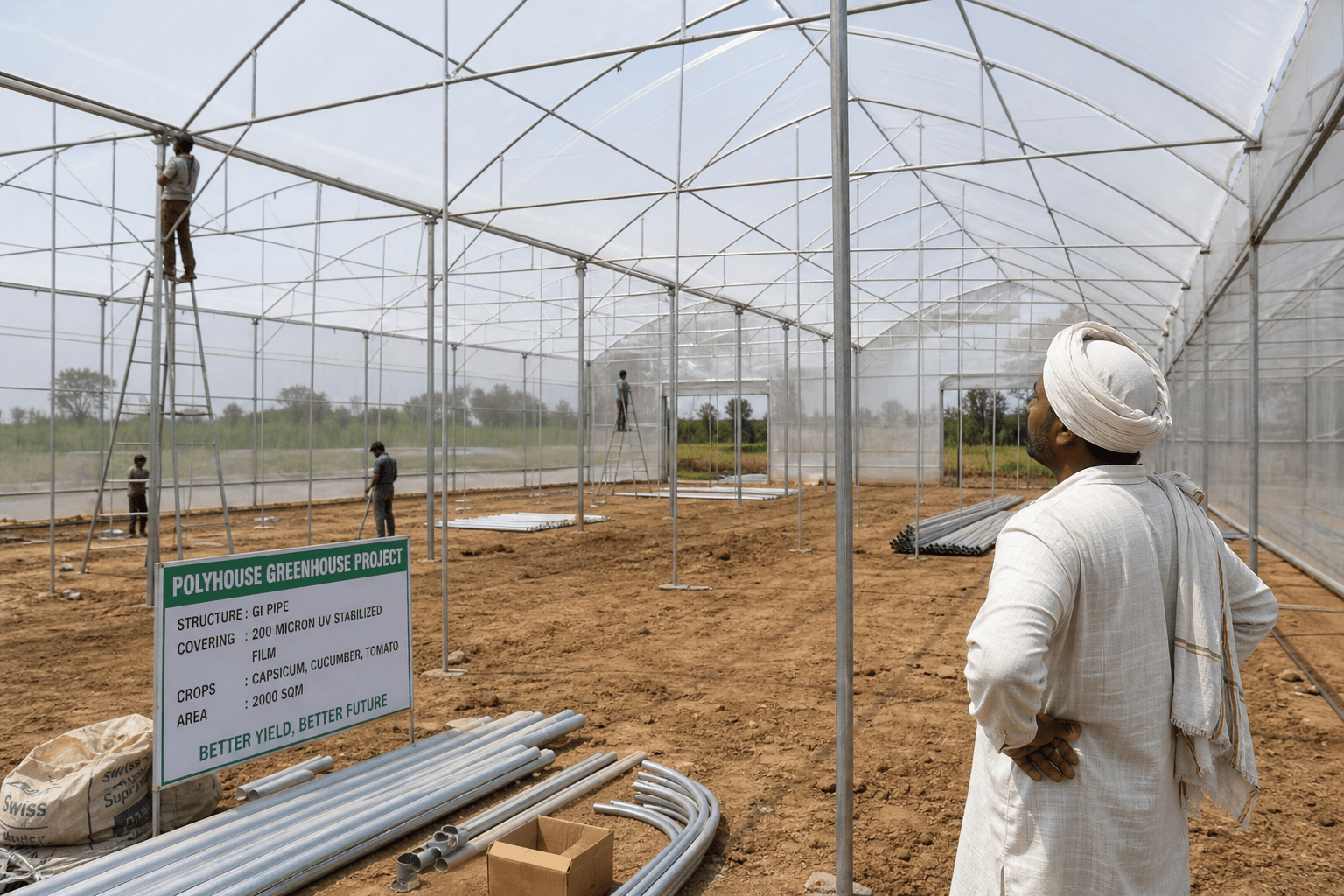
- Frame material — galvanised iron (GI) pipe; B-Class GI pipes as required by NHB specifications
- Covering — UV-stabilised polyfilm of approved micron thickness; fan-and-pad structures use polycarbonate or equivalent where specified
- Ventilation — NVPH side roll-up vents, exhaust fans and evaporative pads for hi-tech
- GI door and lockable entry for biosecurity
Water and irrigation
- Water source — borewell, canal, or tank with yield certificate
- Water quality test — EC (electrical conductivity), pH, TDS. High EC water requires an RO plant before growing capsicum or gerbera. Misjudging water quality is a documented failure reason.
- Drip and fertigation system — header, venturi injector, fertigation tank, filters. Stack PMKSY "Per Drop More Crop" subsidy at 55% for small/marginal farmers (45% for others) — include PMKSY as a separate line item in the DPR funding table.
- Storage — sump capacity for 2–3 days operation
Crop production plan
- Seedling source — certified tissue-culture or pro-tray seedlings (book 3–4 months ahead). Buying roadside nursery plants is a documented failure reason.
- Planting density, variety name, expected yield per cycle
- IPM schedule (integrated pest management)
- Harvest and post-harvest handling
DPR Section 5 — Financial Viability
Banks scrutinise this section most heavily. Required metrics:
Total project cost breakdown
Example for a 4,000 sqm (≈1 acre) NVPH with capsicum:
| Item | Cost (₹) |
|---|---|
| Polyhouse structure (market rate) | 28,00,000 |
| Drip/fertigation | 2,50,000 |
| RO plant (if EC high) | 3,00,000 |
| Seedlings and planting (Year 1) | 2,00,000 |
| Working capital (Year 1) | 3,00,000 |
| DPR and misc | 50,000 |
| Total | 39,00,000 |
Subsidy calculation uses cost norm (₹844 per sqm × 4,000 = ₹33,76,000 eligible base), not your ₹28 lakh vendor quote. At 50%: ₹16.88 lakh subsidy on the norm — effective support approximately 35–40% of actual cost. Budget 15–20% extra cash beyond promoter margin.
Key financial ratios
- DSCR ≥ 1.5 (mandatory) — Net operating income ÷ annual debt service ≥ 1.5
- IRR (Internal Rate of Return) — typically 15–25% for well-managed capsicum projects
- BCR (Benefit-Cost Ratio) — benefits ÷ costs over project life
- Debt-equity ratio — commonly 70:30 or 80:20 for agri term loans
- Break-even point — research shows polyhouse investment recovered in 2–4 years; Year 2 onward mainly running costs of ₹4–6 lakh per year
- Repayment schedule with 6-month to 2-year moratorium if stacking AIF (3% interest subvention for 7 years on loans up to ₹2 crore — agriinfra.dac.gov.in)
Revenue projections
Use conservative yield and price assumptions:
- Coloured capsicum: yield 32–50 tonnes per acre, price ₹75–150 per kg
- Net return benchmark: ₹18.14 lakh per acre per year (Agrifirst NVPH data) — state as upper-mid scenario, not guaranteed minimum
- Show Year 1 (partial production), Year 2 (full production), Year 3 sensitivity
DPR Section 6 — Employment Generation
State schemes and bank social-impact assessments expect:
- Permanent jobs (if any)
- Seasonal labour days per year
- Family labour hours
- Skill development for local workers
DPR Section 7 — Annexures
Attach:
- Aadhaar and PAN copies
- SC/ST caste certificate (if applicable)
- Land records — Jamabandi, 7-12 and 8-A, Khasra-Khatauni — or registered lease deed valid 10–15+ years (not notarised)
- Three to four vendor quotations with GST for polyhouse structure, drip system, and RO plant
- Soil test report
- Water test report (EC, pH, TDS)
- Bank term-loan sanction letter (obtained after DPR submission — update annexure before NHB application)
- Aadhaar-linked bank passbook
- Training certificates
- Market linkage letters
- Site photographs (pre-construction)
- Project layout drawings (CAD or hand-drawn to scale)
NHB Application Process — Connecting DPR to Subsidy
After your DPR clears the bank:
Legacy flow (still cited in many 2026 vendor guides)
- Submit DPR to bank → term-loan sanction
- Apply NHB online → In-Principle Approval (IPA)
- Receive Letter of Intent (LOI)
- Construct polyhouse
- Joint Inspection Team (JIT) site visit
- Subsidy credited to loan account
Simplified 2023 flow (PIB PRID 1906941)
- Submit DPR to bank → term-loan sanction
- Apply NHB online → optional Letter of Comfort (LoC)
- Construct with mobile-app self-inspection at milestones
- Final verification → subsidy credited to loan account
Both flows share the same rule: no construction before LOI/LoC. For step-by-step portal navigation, see Polyhouse Subsidy Online Apply — Step by Step.
NHB commercial route parameters:
- Flat 50% subsidy, credit-linked back-ended
- Ceiling approximately ₹56 lakh (up to about ₹1 crore depending on structure/location)
- Processing fee approximately ₹5,000–10,000
- Portal: nhb.gov.in
What the Joint Inspection Team Checks
The JIT compares physical reality to your approved DPR:
- Dimensions — length, width, height within tolerance
- Structure materials — B-Class GI, approved polyfilm micron
- Crop planted — must match DPR crop plan; deviating without written permission causes rejection
- Drip/fertigation installed and functional
- Geo-tagged construction photos matching inspection date
- Water source accessible and storage adequate
Under the 2023 process, farmers upload milestone photos via mobile app for remote verification — but the same DPR compliance standards apply.
Common DPR Mistakes That Kill Subsidy Claims
- DSCR below 1.5 — bank rejects loan; project never starts properly.
- Revenue projections using vendor-inflated hydroponics figures (₹2–3 crore per acre gross) for a standard NVPH capsicum project — banks downgrade credibility.
- Missing water EC data — capsicum planted on high-EC water fails; inspection notes non-viability.
- Lease deed not registered — application rejected at document screening.
- Single vendor quotation — NHB requires competitive quotes (3–4 with GST).
- Crop changed after approval — switching from capsicum to roses without written NHB permission triggers rejection.
- Cost built above norm with no promoter buffer — farmer runs out of cash mid-construction; incomplete structure fails JIT.
See 9 Mistakes That Cancel Your Farming Subsidy for the complete failure checklist.
Stacking Schemes in Your DPR Funding Table
A professional DPR shows all funding sources:
| Source | Amount | Status |
|---|---|---|
| Bank term loan | ₹X | Sanctioned |
| Promoter contribution (10%+) | ₹X | Equity |
| NHB back-ended subsidy (50% of norm) | ₹X | Applied |
| PMKSY drip subsidy (55%/45%) | ₹X | Applied |
| AIF interest subvention (3% for 7 years) | Benefit | Registered |
| State top-up (if applicable) | ₹X | Verify portal |
Stacking is legal and expected — NHB, AIF, and PMKSY are designed to combine. NABARD refinances the bank loan at backend; see NABARD Loan for Farmers.
Starter Unit DPR — 1,000 sqm Entry Point
For small and marginal farmers, the 1,000 sqm starter unit (₹7–10 lakh before subsidy, ₹3.5–5 lakh after) is the practical entry point. DPR structure is identical but scaled:
- Cost norm: ₹1,060 per sqm (up to 500 sqm slab) or ₹935 per sqm (500–1,008 sqm slab)
- Crop: seedless cucumber for quick cash flow (harvest from ~35 days) or cherry tomato (more salt-tolerant than capsicum)
- Minimum area in NE/hilly: 1,000 sqm qualifies under NHB
The Bottom Line
A bankable polyhouse DPR is a technical document, a financial model, and a legal contract with the subsidy system — all in one. Include every required section, hit DSCR ≥ 1.5, specify B-Class GI and approved polyfilm, test your water EC, attach registered land documents and GST quotations, and never break ground before LOI/LoC. The DPR is what the JIT inspects; make it match what you build.
Disclaimer: NHB cost norms, subsidy ceilings, and DPR requirements change by year and funding window. Verify on nhb.gov.in and your state horticulture portal before submitting.
Last verified: May 2026
Frequently asked questions
What is DSCR and why must it be at least 1.5?
Debt Service Coverage Ratio (DSCR) measures whether your project's net operating income can cover loan repayments. Banks and NHB expect DSCR ≥ 1.5 — meaning income is at least 1.5 times your annual debt obligation. Below this threshold, most banks reject the term loan and subsidy application stalls.
What sections must a polyhouse DPR include?
A bankable DPR needs project at a glance, promoter details, disclosure of prior benefits, market viability, technical viability, financial viability with DSCR/IRR/BCR, crop plan with yield and price projections, employment generation, and annexures with quotations and test reports.
Can I use a notarised lease deed for polyhouse subsidy?
No. You need land records (Jamabandi, 7-12 and 8-A, Khasra-Khatauni) or a registered lease deed valid 10–15+ years. Notarised agreements are not accepted.
What technical specs do NHB inspectors check?
Inspectors verify B-Class GI pipes, UV-stabilised polyfilm of approved micron thickness, water EC suitability, drip/fertigation layout, and that the built structure matches the approved DPR dimensions and crop plan.
When is subsidy credited after DPR approval?
After construction, a Joint Inspection Team (or app-based self-inspection under the 2023 NHB process) verifies the built structure against the DPR. Back-ended subsidy is then credited to your bank loan account — not paid as cash to your personal account.