Indian farmers in 2026 have access to more central and state subsidies than at any point in the past decade — but the programmes overlap, the portals differ by state, and the headlines rarely match what lands in your bank account. A "50% polyhouse subsidy" often works out to 35–40% effective support once cost norms are applied. PM-KUSUM Component A offers no capital subsidy at all, yet official data cites ₹4.5 lakh per MW per month in gross income for investors who build grid-connected plants.
This page is the master reference for every major scheme in our research compendium: what it covers, how much it pays, where to apply, and how to stack benefits without triggering disqualification. For deep dives, use our two pillar guides — polyhouse subsidy 2026 and PM-KUSUM solar farming.
Quick Comparison Table
| Scheme | What it subsidises | Indicative support | Portal / route |
|---|---|---|---|
| NHM / MIDH | Protected cultivation, horticulture | 50% general; max 4,000 sqm/beneficiary | State horticulture dept |
| NHB | Commercial horticulture structures | 50% back-ended, ceiling ~₹56 lakh (up to ~₹1 crore) | nhb.gov.in |
| PMKSY | Drip, sprinkler (Per Drop More Crop) | 55% small/marginal, 45% others + state top-up | State portals (MPFSTS, i-Khedut, etc.) |
| PM-KUSUM | Solar pumps & grid plants | 60% on pumps (Comp B); Comp A no capital subsidy | pmkusum.mnre.gov.in |
| AIF | Agri infrastructure loans | 3% interest subvention, 7 years, up to ₹2 crore | agriinfra.dac.gov.in |
| SMAM | Farm machinery, drones | 50% up to ₹5 lakh (farmers); FPOs 40% up to ₹4 lakh | agrimachinery.nic.in |
| PKVY / MOVCDNER | Organic conversion | ₹31,500/ha (PKVY); ₹46,500/ha (NE) | State agri dept |
| NABARD | Bank refinance, FPO, warehouses | 7% crop loans; AMI 25–33% | Through banks |
Verify every percentage, ceiling, and portal URL on official .gov.in sites before applying. Subsidy windows, cost norms, and state top-ups change annually. Figures marked "indicative" require confirmation on your state horticulture or agriculture portal.
NHM and MIDH — Horticulture Backbone
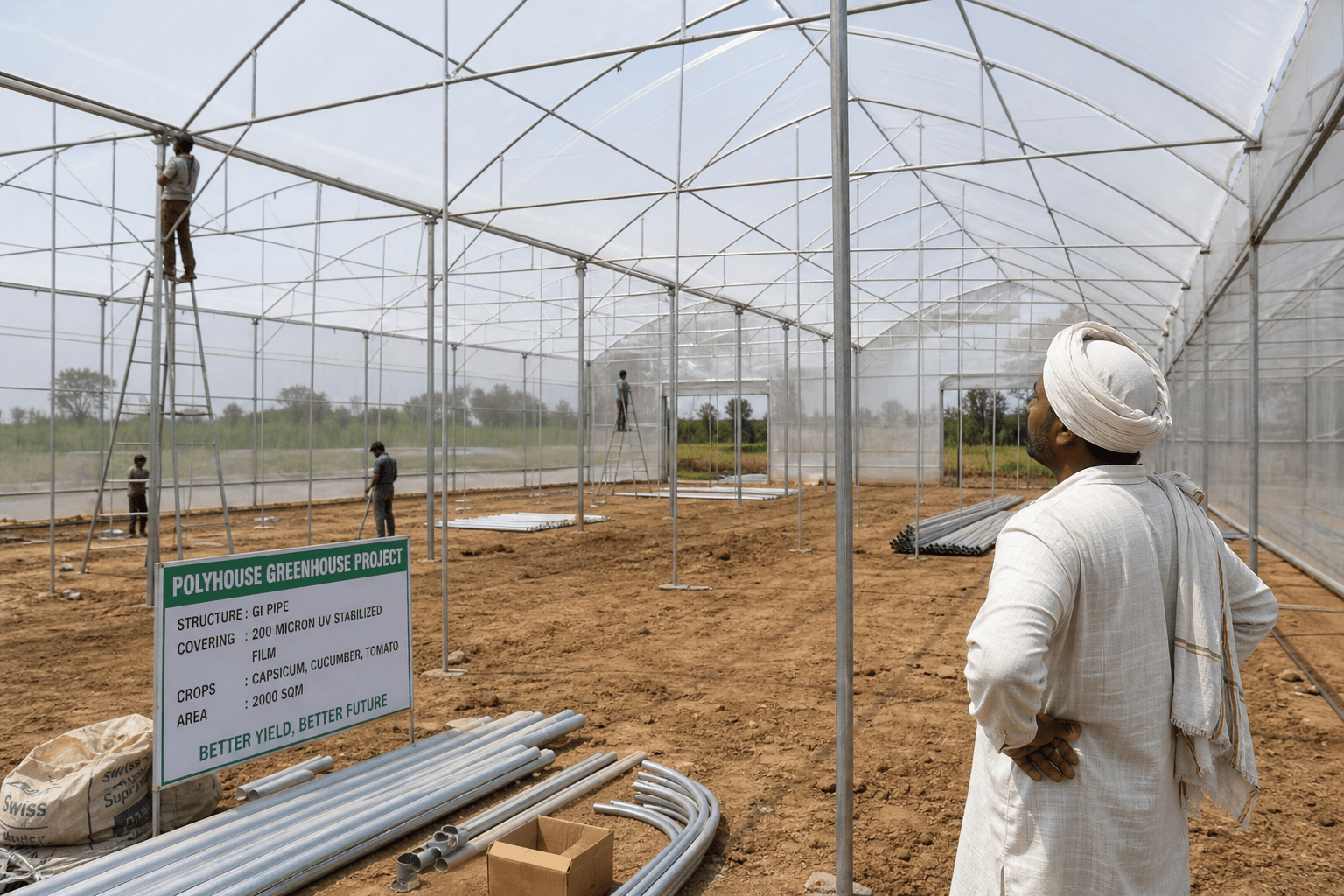
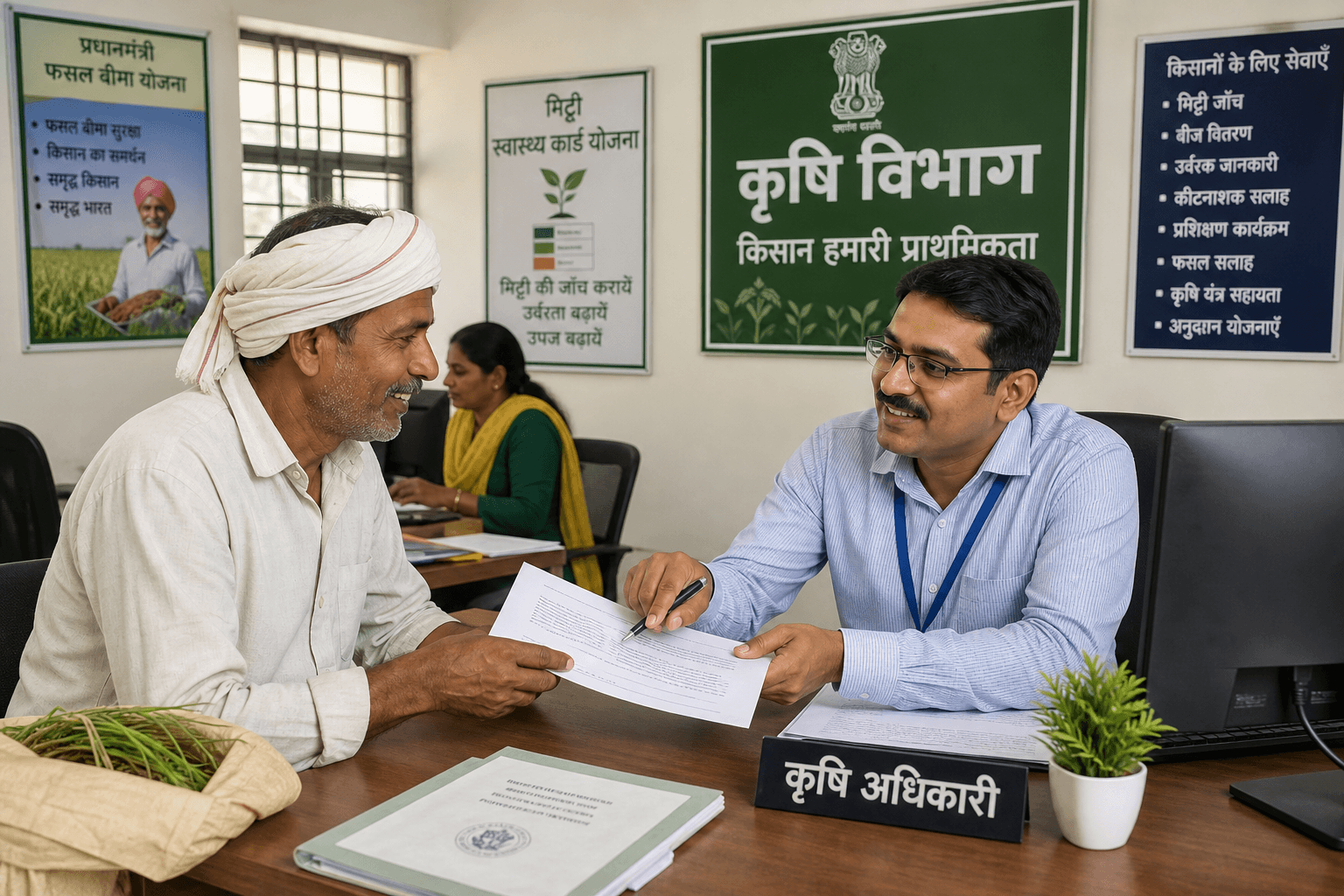
The National Horticulture Mission (NHM) and Mission for Integrated Development of Horticulture (MIDH) provide the baseline 50% subsidy for protected cultivation — polyhouses, greenhouses, and related structures — routed through district-level state horticulture departments.
Key parameters:
- Maximum area per beneficiary: 4,000 sqm
- Enhanced rates for SC/ST and hilly/NE states under HMNEH, where the central share can reach 90% in NE/Himalayan states
- State top-ups push combined rates higher in states like Telangana (75% general, 95% SC/ST), Maharashtra (50% + top-up to 65–70%), and Haryana (85% for SC owners)
MIDH/NHM is the scheme most farmers encounter first when searching "polyhouse subsidy kaise milegi." The application method varies: lottery in Maharashtra (MahaDBT), first-come-first-served in Gujarat (i-Khedut), online in MP (MPFSTS, apply April–June for speed).
For state-by-state percentages and portals, see our state-wise polyhouse subsidy guide.
NHB — Commercial Horticulture Route
The National Horticulture Board (NHB) offers a flat 50% credit-linked, back-ended subsidy for commercial horticulture projects. This is the route most serious polyhouse entrepreneurs use when building at scale.
| Parameter | Detail |
|---|---|
| Subsidy | 50% of eligible cost |
| Ceiling | ~₹56 lakh per beneficiary (up to ~₹1 crore depending on structure/location) |
| Minimum area | 4,000 sqm general; 1,000 sqm NE/hilly |
| Application | nhb.gov.in; processing fee ~₹5,000–10,000 |
| 2023 reform | Optional Letter of Comfort (LoC) + mobile-app self-inspection replaced mandatory two-stage IPA + GoC |
You must secure bank term-loan sanction and apply before construction. Starting to build before receiving Letter of Intent or Letter of Comfort permanently forfeits subsidy. Deviation from the approved DPR crop or structure without written permission also causes automatic rejection.
Because official cost norms per sqm (₹844–1,650 depending on structure and area slab) lag 2026 market prices, the effective subsidy is typically 35–40%, not 50%. Our polyhouse subsidy master guide explains this reality check in detail.
PMKSY — Per Drop More Crop (Drip & Sprinkler)
Pradhan Mantri Krishi Sinchayee Yojana micro-irrigation support saves roughly 70% water, 40% fertiliser, and delivers 20–30% yield gains when properly managed.
- Central share: 55% for small/marginal farmers, 45% for others
- State top-ups: up to 60–90% combined (UP up to 90% for small farmers; Gujarat +10% in dark zones; Rajasthan 60% on pipelines)
- Ceiling: 5 ha per beneficiary; re-eligible after 7 years
- Application: state portals with Aadhaar-seeded DBT; lottery in states like MP
Full process: drip irrigation and fertigation PMKSY guide.
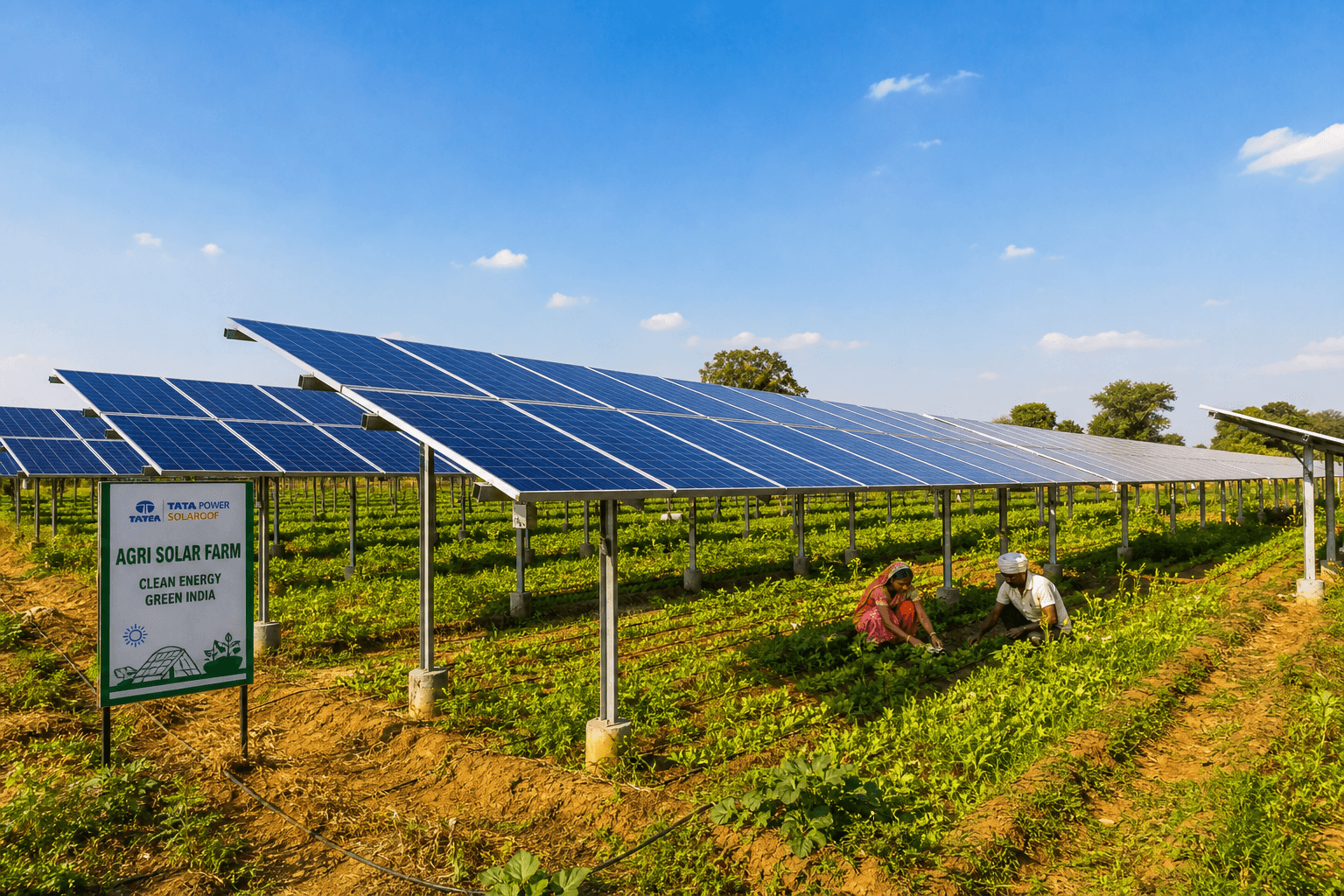
PM-KUSUM — Solar Income on Farm Land
PM-KUSUM has three components:
Component A — Grid-Connected Plants
- Target: 10,000 MW of 500 kW – 2 MW decentralised plants
- Capital cost: ~₹4 crore/MW; no capital subsidy — developer self-finances (banks/SBI lend up to 70%)
- Land: 4–5 acres/MW within 5 km of a 33/11 kV substation
- Income: DISCOMs buy at SERC-set tariffs (₹2.75–3.50/unit); official median ₹4.5 lakh/MW/month gross (MoS Rajya Sabha reply, Dec 2025)
- Land lease: ~₹30,000/acre/year (IISD); up to ₹80,000/hectare/year (government figures)
- ROI: estimated 11–16% annual for 0.5–2 MW plants
- DISCOM incentive: ₹0.40/unit or ₹6.6 lakh/MW, whichever is less, for 5 years from COD
Component B — Standalone Solar Pumps
- Target: 14 lakh pumps up to 7.5 HP
- Subsidy: 60% (30% central + 30% state); 50% central in NE/hilly/island UTs
- Farmer share: 10% cash; 30% loan
- A 5 HP diesel-to-solar switch costing ~₹3–4 lakh drops to ₹1.2–1.6 lakh after subsidy
Component C — Grid-Pump Solarisation
- Solarisation of 35 lakh grid-connected pumps
- CFA 30% of benchmark; feeder solarisation ₹1.05 crore/MW
- Surplus power sold to DISCOM; Component C land-leasing ~₹25,000/acre/year
2026 updates: Union Budget raised PM-KUSUM allocation from ~₹2,600 crore to ₹5,000 crore (~92% increase). Minister Pralhad Joshi announced PM-KUSUM 2.0 with a dedicated 10 GW Agri-PV component at the National Agro-RE Summit (March 2026). Detailed 2.0 guidelines were not yet released as of March 2026.
Progress (Nov 2025): 20.42 lakh farmers benefited; Maharashtra leads with 11,21,416. Apply via pmkusum.mnre.gov.in or state nodal agencies (UPNEDA, TEDA, etc.).
Full guide: PM-KUSUM solar farming.
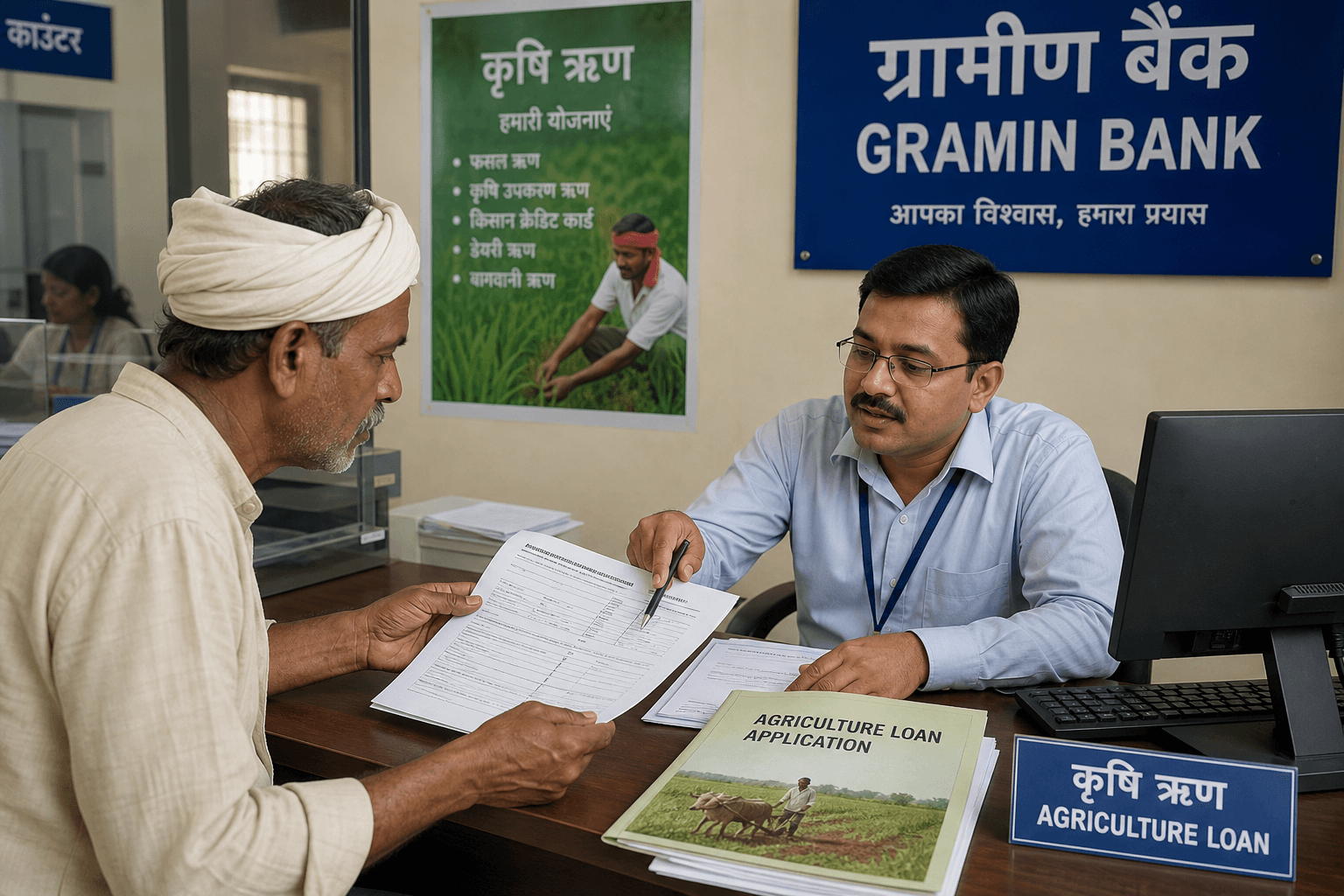
Agriculture Infrastructure Fund (AIF)
The Agriculture Infrastructure Fund provides a ₹1 lakh crore corpus with:
- 3% interest subvention on loans up to ₹2 crore for 7 years
- CGTMSE credit guarantee (fee borne by government) up to ₹2 crore
- 10% minimum promoter contribution
- 6-month to 2-year moratorium
- Operational 2020-21 to 2032-33
AIF is stackable with NHB, SMAM, and PMKSY — a critical detail for polyhouse entrepreneurs who need both subsidy and affordable debt. Apply at agriinfra.dac.gov.in.
SMAM — Machinery and Drones
The Sub-Mission on Agricultural Mechanisation (SMAM) subsidises farm machinery and DGCA-approved Indian drones (imported/DJI drones are not allowed):
| Beneficiary | Support |
|---|---|
| Small/marginal/women/SC-ST farmers | 50% up to ₹5 lakh |
| FPOs / Custom Hiring Centres | 40% up to ₹4 lakh (some reports up to 75%/₹7.5 lakh) |
| KVKs / SAUs / ICAR | 100% up to ₹10 lakh |
| Agri-graduates | 50% up to ₹5 lakh |
Namo Drone Didi: 80% up to ₹8 lakh for women SHGs plus free pilot training (15,000 drones, ₹1,261 crore outlay). Apply at agrimachinery.nic.in (DBT 2.0 portal launched July 2025).
A drone covers 1 acre in 7–8 minutes; SHGs report 15–30% yield increases. Details: drone farming SMAM guide.
PKVY and MOVCDNER — Organic Farming
Paramparagat Krishi Vikas Yojana (PKVY):
- ₹31,500/ha over 3 years, including ₹15,000 DBT for inputs
- Cluster model: 20 ha minimum
- 14.99 lakh ha covered; 52,289 clusters; 25.30 lakh farmers (Feb 2025)
- ₹2,265.86 crore released (2015–25, as on 30.01.2025)
Mission Organic Value Chain Development for North Eastern Region (MOVCDNER):
- ₹46,500/ha for NE states
Certification via PGS-India (domestic) or NPOP/third-party (export). APEDA supports export branding; Sikkim and Kerala lead organic exports. Guide: organic and export farming PKVY.
NABARD — Refinance, Not Direct Subsidy
NABARD does not subsidise farmers directly. It:
- Refinances commercial banks and passes through GoI subsidies
- Offers crop loans up to ₹3 lakh at 7% (effective 4% on prompt repayment)
- Provides collateral-free agri loans up to ₹2 lakh
- Runs FPO support and AMI sub-scheme (25–33%) for warehouses and cold storage
- Refinances bank loans at 75–90% of project cost for ventures like aquaponics
Process details: NABARD loan for farmers.
Other Schemes in the Modern Farming Stack
Beyond the headline programmes, our research covers additional routes worth knowing:
| Method / need | Scheme or route | Key figure |
|---|---|---|
| Shade net house | MIDH/NHM | Cost norm ₹710/sqm; up to 80% for small/marginal in MP |
| Mushroom unit | NHB/MIDH | Up to 50% (max ₹10 lakh on ₹20 lakh unit) + 50% on compost |
| Aquaponics | PMMSY (40–60%) + NHB shell + NABARD loan | Small unit ₹60,000–65,000; commercial ₹80 lakh–₹1.5 crore |
| Hydroponics | NHB protected cultivation for greenhouse | 1 acre ₹70 lakh–₹1.5 crore; no dedicated hydroponics scheme |
| Vertical farming | NHB shell only | 40–60% in some states; no dedicated vertical scheme |
How Schemes Stack — A Worked Example
Consider a farmer in Madhya Pradesh building a 4,000 sqm naturally ventilated polyhouse growing coloured capsicum:
- NHB/MIDH: 50% back-ended on eligible cost (effective ~35–40% after norm adjustment)
- AIF loan: 3% interest subvention on term debt up to ₹2 crore
- PMKSY: Drip/fertigation at 55% if small/marginal (MP may offer 80% for SC/ST/small/marginal on protected cultivation separately)
- PM-KUSUM Component B: Solar pump at subsidised rate for irrigation
- SMAM drone: 50% up to ₹5 lakh for crop monitoring
Each scheme has separate applications, timelines, and inspection requirements. The polyhouse online apply guide and DPR guide cover the NHB portion; the small farmer roadmap sequences the full journey.
DPR and Documents Common to Multiple Schemes
A bankable Detailed Project Report (DPR) underpins NHB, AIF, and most bank term loans. Required sections include:
- Project at a glance; promoter details (PAN, Aadhaar, GST, caste certificate, training)
- Market and technical viability (B-Class GI pipes, UV-stabilised polyfilm, water EC, drip/fertigation)
- Financial viability: DSCR ≥1.5, IRR/BCR, break-even, repayment schedule
- Crop plan with yield and price projections
Document checklist: Aadhaar, PAN, SC/ST certificate, land records or registered lease (10–15+ years), 3–4 vendor quotations with GST, soil/water tests, bank term-loan sanction letter, Aadhaar-linked passbook, geo-tagged construction photos. A Joint Inspection Team verifies the built structure against the DPR before subsidy credit.
Nine Mistakes That Cancel Your Subsidy
Our research identifies recurring disqualifiers:
- Building before LoI/LoC
- Trusting the "50%" headline without budgeting at 35–40% effective
- Growing low-value crops in expensive structures
- Buying uncertified seedlings
- Skipping training
- No market linkage before planting
- DPR deviation without written permission
- Non-DGCA / imported drones
- Ignoring high water EC
Full list: 9 mistakes that cancel your farming subsidy.
Official Portals — Bookmark These
- NHB: nhb.gov.in
- PM-KUSUM: pmkusum.mnre.gov.in
- AIF: agriinfra.dac.gov.in
- SMAM / drones: agrimachinery.nic.in
- State horticulture: MahaDBT, MPFSTS, i-Khedut, horticulture.tg.nic.in, RajKisan, uphorticulture.gov.in — verify on your state's .gov.in domain
Every figure in this article is drawn from our structured research compendium and should be re-verified on official portals before you commit capital. Subsidy is a tool, not a business plan — pair these schemes with crop economics (capsicum ~₹18.14 lakh/acre/year net, cucumber ~₹16.76 lakh), training, and market contracts for a project that survives after the subsidy is credited.
Frequently asked questions
Which is the main scheme for polyhouse subsidy in India?
Protected cultivation subsidy flows primarily through NHM/MIDH (50% general) and NHB (flat 50% credit-linked back-ended, ceiling roughly ₹56 lakh up to about ₹1 crore). Apply at nhb.gov.in or your state horticulture portal before construction. Effective subsidy is often 35–40% because government cost norms lag market rates.
Can I combine NHB subsidy with an Agriculture Infrastructure Fund loan?
Yes. AIF offers 3% interest subvention on loans up to ₹2 crore for 7 years and is explicitly stackable with NHB, SMAM, and PMKSY subsidies according to official guidance on agriinfra.dac.gov.in.
Does NABARD give subsidy directly to farmers?
No. NABARD refinances banks and passes through Government of India subsidies. It supports FPOs, runs the AMI sub-scheme (25–33% for warehouses/cold storage), and enables 7% crop loans with effective 4% on prompt repayment. Collateral-free agri loans go up to ₹2 lakh.
What subsidy is available for solar pumps and farm solar plants?
PM-KUSUM covers three components — grid-connected plants (Component A, no capital subsidy), standalone solar pumps up to 7.5 HP at 60% combined subsidy (Component B), and grid-pump solarisation (Component C). Union Budget 2026-27 raised PM-KUSUM allocation to ₹5,000 crore. Apply via pmkusum.mnre.gov.in or state nodal agencies.
How much support does PKVY give for organic farming?
Paramparagat Krishi Vikas Yojana provides ₹31,500 per hectare over 3 years, including ₹15,000 DBT for on- and off-farm inputs. MOVCDNER gives ₹46,500 per hectare for NE states under a 20-hectare cluster model. PKVY has covered 14.99 lakh hectares through 52,289 clusters involving 25.30 lakh farmers as of February 2025.