If you are planning a polyhouse, shade net house, or cold storage linked to horticulture, you will hear MIDH, NHM, and NHB used interchangeably in 2026. That overlap confuses farmers — and vendors sometimes use the confusion to push you into construction before paperwork is done.
MIDH (Mission for Integrated Development of Horticulture) is the umbrella mission under the Department of Agriculture and Farmers Welfare. It merges the older National Horticulture Mission (NHM), National Horticulture Board (NHB) commercial programmes, and HMNEH for North East and Himalayan states into one integrated policy frame. The subsidy percentages on posters still say 50% for many components, but who you apply to, minimum area, and maximum cheque size depend on which route you choose.
This guide explains MIDH in plain language: NHB vs state SHM, the credit-linked back-ended rule, April–June application timing, and why never build before LoI is still the law of the land.
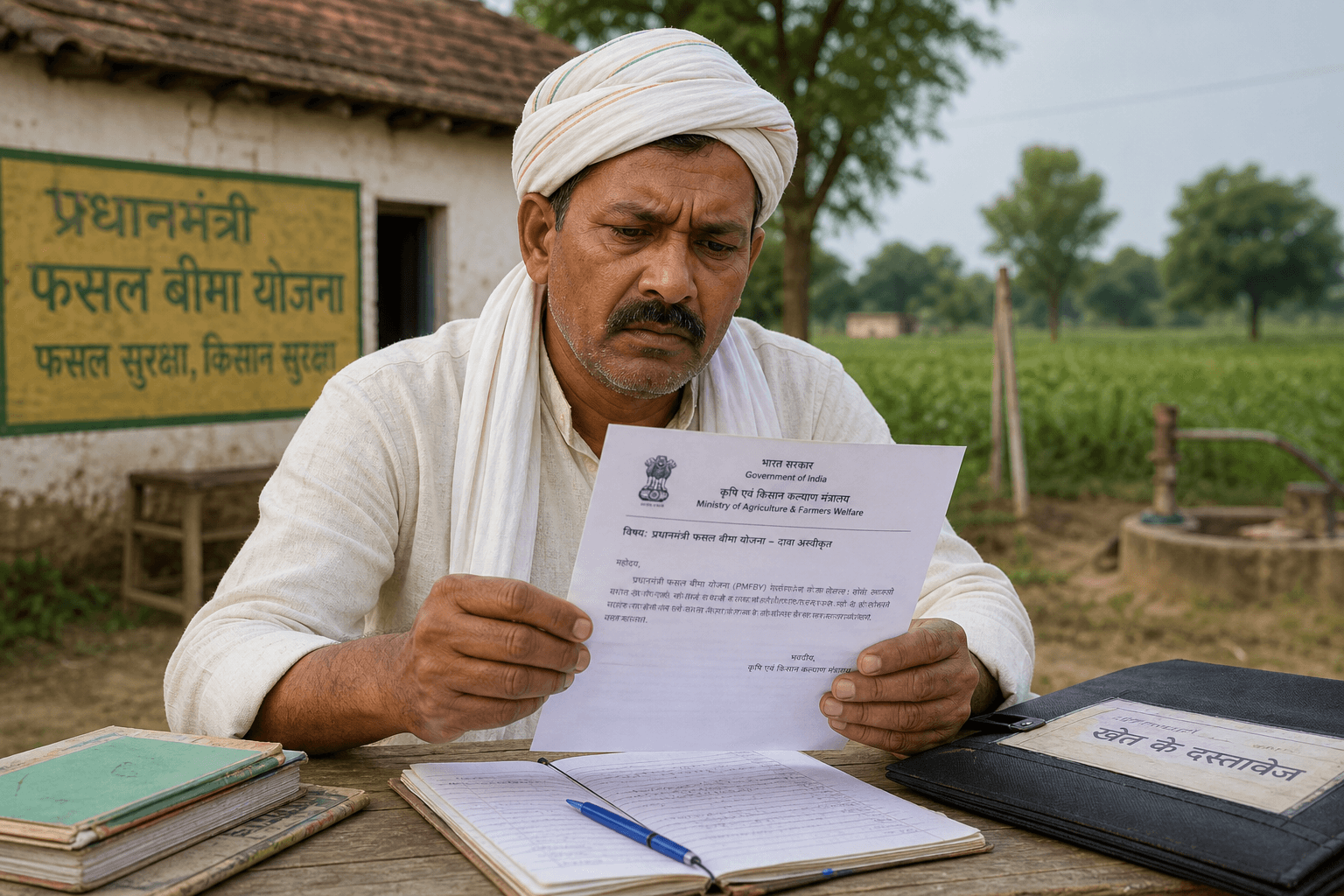
Never start polyhouse or cold-room construction before receiving your Letter of Intent (LoI) or Letter of Comfort (LoC) and bank term-loan sanction. MIDH and NHB rules treat pre-construction spending as automatic disqualification. No appeal fixes this. See our common subsidy mistakes guide.
What MIDH Covers in 2026
MIDH is not a single cheque — it is a bundle of components:
| Component | Typical beneficiary | What it funds |
|---|---|---|
| Area expansion | Farmers, FPOs | New orchards, planting material |
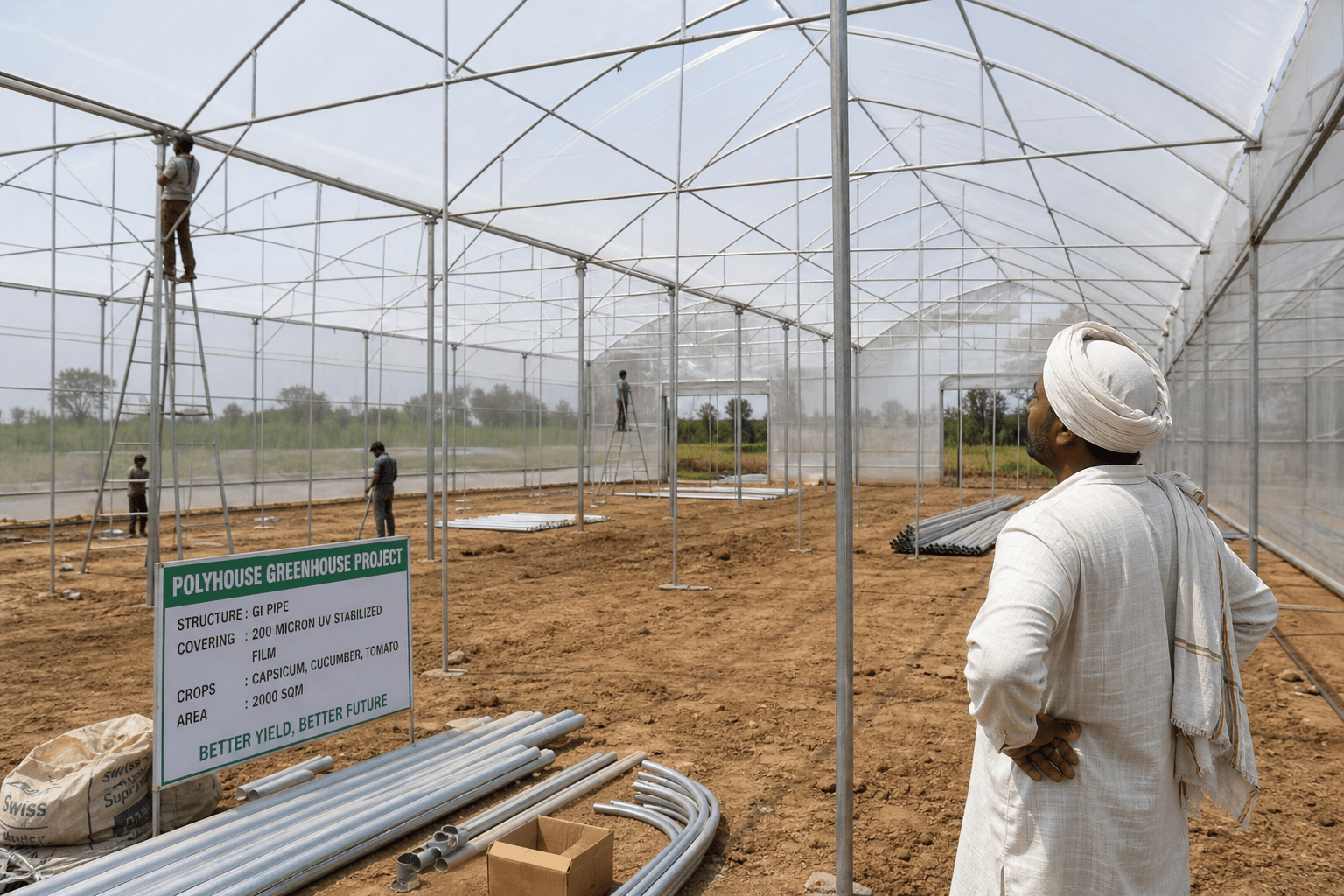
| Protected cultivation | Farmers, entrepreneurs | Polyhouse, greenhouse, shade net |
| Post-harvest | FPOs, aggregators | Cold storage, pack houses, ripening |
| HMNEH | NE & Himalayan states | Higher central share, smaller minimum areas |
Protected cultivation remains the highest-attention line for small and marginal farmers moving into high-value crops. Post-harvest infrastructure sits beside it for anyone selling perishables beyond the village mandi.
For a full scheme map including PMKSY, AIF, and PM-KUSUM, read our government subsidy schemes 2026 complete list.
50% Subsidy — What It Actually Means
Government communications advertise 50% credit-linked back-ended subsidy on horticulture structures. Three words matter:
- Credit-linked — You need a term loan from a scheduled bank or eligible institution. Cash-only projects often do not qualify on the NHB commercial route.
- Back-ended — Subsidy credits to your loan account after construction and successful inspection, not when you sign the vendor contract.
- Cost norms — Subsidy is calculated on official per-sqm norms, not your dealer’s quotation. Many farmers experience 35–40% effective support on real spend. Details in our polyhouse subsidy guide 2026.
Budget 15–20% extra cash beyond bank margin money. Headline 50% assumes norms match market prices — in 2026 they often do not.
Two Routes: NHB (Commercial) vs NHM via State Horticulture Mission
NHB — nhb.gov.in (4,000 sqm and above in general states)
- Minimum project area: 4,000 sqm in general states; 1,000 sqm in NE and hilly areas
- Subsidy: Flat 50% credit-linked, back-ended
- Ceiling: Up to roughly ₹56 lakh per beneficiary (structure and location can push eligible projects toward ~₹1 crore on paper — verify current NHB appendix)
- Portal: nhb.gov.in with processing fee typically ₹5,000–10,000
- Process: DPR → bank sanction → LoI/LoC before build → construction → inspection → subsidy release
NHB is built for commercial scale — capsicum clusters, floriculture export units, and multi-acre NVPH blocks.
NHM / MIDH via SHM — 500 to 4,000 sqm
- Area band: Roughly 500–4,000 sqm per beneficiary through State Horticulture Mission (SHM)
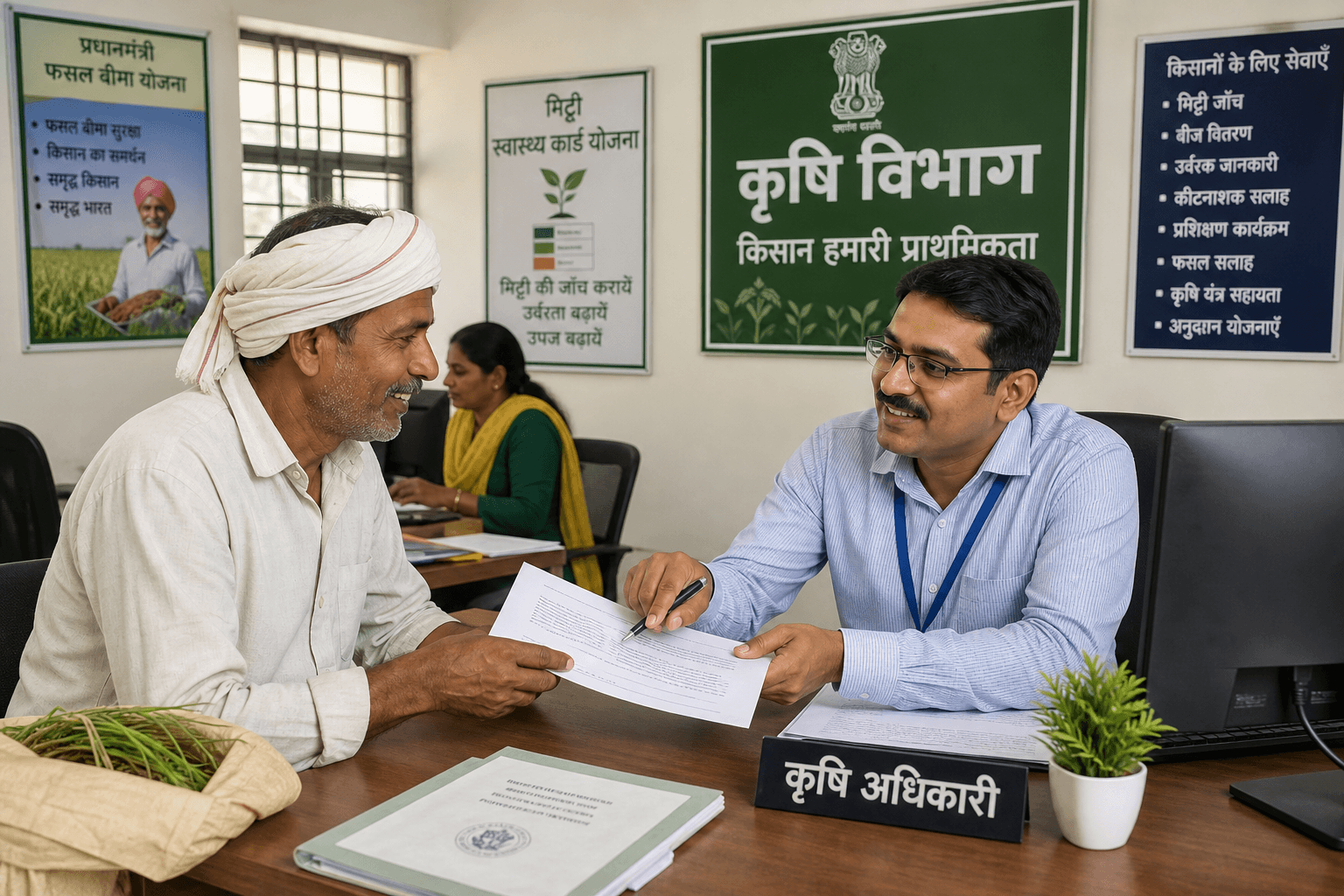
- Application: District horticulture officer or state DBT portal — lottery, first-come-first-served, or offline depending on state
- Subsidy: 50% baseline; SC/ST, women, and hilly/NE categories may get 65–90%+ combined central and state shares under HMNEH rules
Smaller farmers who cannot fill four thousand square metres should target SHM, not NHB — applying on the wrong portal wastes a season.
HMNEH — Higher Support in NE and Himalayan States
Horticulture Mission for North East and Himalayan States (HMNEH) runs inside the MIDH umbrella with enhanced central assistance. Minimum areas for NHB projects drop to 1,000 sqm in many hilly categories. Combined subsidy rates for eligible beneficiaries can approach 90% central share on some components — but cost norms and inspection still apply.
If your land falls in an HMNEH-notified district, ask the horticulture office for the state-specific cost norm table before locking a vendor quote.
Application Window: April–June and Why Timing Matters
Most states open MIDH/NHM horticulture windows in April–June aligned with the financial year. Late applications face:
- Exhausted district targets
- Dealers booked through monsoon
- Bank sanction delays pushing you past the portal close date
Action plan:
- Finalise land title / lease and water source proof early
- Get a bankable DPR — see how to write a DPR for polyhouse subsidy
- Submit on state portal or NHB the week the window opens
- Receive written LoI/LoC — only then pay structural advance
Step-by-Step: NHB Commercial Path (Summary)
- Feasibility — Crop choice, market tie-up, water and power
- DPR + quotation — Match NHB structure categories (NVPH, fan-pad, shade net)
- Bank term loan — Sanction letter before NHB application
- Online application — nhb.gov.in, fee payment, document upload
- LoI or LoC — Wait for written approval; no construction
- Build to approved DPR — Geo-tagged progress photos
- Inspection — Joint team or NHB mobile-app self-inspection where enabled
- Subsidy credit — Back-ended release to loan account
Verify on dac.gov.in/midh
Before you trust a YouTube “agent”:
- Open dac.gov.in/midh for mission overview and circular links
- Cross-check state horticulture .gov.in for open schemes
- Match beneficiary category (general, SC/ST, hilly) on the application form
- Save PDF copies of LoI, bank sanction, and inspection reports
Stack MIDH horticulture with AIF loans for pack houses or cold chain — interest subvention can sit beside NHB subsidy if documents are clean. Read our Agriculture Infrastructure Fund (AIF) 2026 guide and NABARD loan process for bank readiness.
Common Mistakes Under MIDH
- Building before LoI — Permanent rejection
- Wrong portal — SHM application for a 5,000 sqm NHB project
- Ignoring cost norms — Expecting 50% of ₹45 lakh actual when norm caps eligible cost at ₹33 lakh
- Crop change after approval — Capsicum DPR, cucumber planted — inspection fail
- Missing geo-tagged photos — Weak evidence at release stage
Bottom Line
MIDH unifies NHM, NHB, and HMNEH messaging, but your application path still splits: NHB at 4,000+ sqm via nhb.gov.in, 500–4,000 sqm via state SHM, 50% credit-linked back-ended subsidy with ~₹56 lakh NHB ceiling, apply April–June, and never build before LoI. Verify everything on dac.gov.in/midh and official state portals.
Disclaimer: Ceilings, norms, and portals change. Ask Kisan is not a government agency. Confirm on dac.gov.in/midh, nhb.gov.in, and your state horticulture department before investing.
Last verified: June 2026.
Frequently asked questions
What is MIDH and which old schemes does it replace?
MIDH (Mission for Integrated Development of Horticulture) is the central umbrella that merges NHM (National Horticulture Mission), NHB (National Horticulture Board commercial schemes), and HMNEH (Horticulture Mission for North East and Himalayan States). One policy framework now covers protected cultivation, post-harvest, and area expansion — but application routes still split between NHB at nhb.gov.in and state SHM portals.
What is the polyhouse subsidy rate under MIDH in 2026?
General farmers typically receive 50% credit-linked back-ended subsidy on eligible cost norms — not always 50% of your vendor quote. NHB commercial projects (4,000 sqm and above in general states) can reach a ceiling of roughly ₹56 lakh per beneficiary. NHM/MIDH through State Horticulture Missions covers 500–4,000 sqm. Enhanced rates apply in NE and hilly areas under HMNEH.
Can I start building my polyhouse before MIDH approval?
No. You must secure bank term-loan sanction and receive a Letter of Intent (LoI) or Letter of Comfort (LoC) from NHB or your state horticulture department before starting construction. Building before approval permanently forfeits subsidy — the most common disqualification on horticulture projects.
When should I apply for MIDH horticulture subsidy?
State windows often open April–June for the financial year. Apply as soon as your DPR, land records, and bank sanction are ready — do not wait until monsoon when dealers are booked. Verify the active window on dac.gov.in/midh and your state horticulture portal.
Where do I verify official MIDH guidelines?
Central mission details and links are on dac.gov.in/midh. Commercial NHB applications go to nhb.gov.in. State NHM/MIDH components use district horticulture offices or state DBT portals (MahaDBT, i-Khedut, RajKisan, etc.). Always confirm cost norms and ceilings on the current circular before paying a vendor advance.