You built the orchard and the polyhouse — then lost margin because mangoes sold at ₹20/kg in peak glut and ₹80/kg two months later when you had no warehouse or cold room. Capital subsidy under MIDH/NHB helps build structures; Agriculture Infrastructure Fund (AIF) helps you finance them at near-bank-rate-minus-three interest.
AIF runs on agriinfra.dac.gov.in with a ₹1 lakh crore corpus ambition, 3% interest subvention on loans up to ₹2 crore for 7 years, CGTMSE cover for many small borrowers, and 10% promoter margin. This 2026 guide explains who qualifies, how it stacks with NHB cold storage subsidy, and the bank path farmers actually walk.
Register the project on agriinfra.dac.gov.in and secure bank sanction before construction — same discipline as MIDH: building first with “we will register later” loses both interest subvention and capital subsidy eligibility.
AIF at a Glance
| Feature | Detail |
|---|---|
| Portal | agriinfra.dac.gov.in |
| Corpus | ₹1 lakh crore financing facility (scheme design) |
| Interest relief | 3% subvention on eligible loan |
| Loan cap | Up to ₹2 crore per eligible entity |
| Tenure | Up to 7 years (incl. moratorium as per bank) |
| Margin | 10% promoter contribution minimum |
| Collateral | CGTMSE guarantee often enables collateral-free loans |
| Stacking | With NHB, MIDH, PMKSY, SMAM per official FAQ |
For the master scheme map, see government subsidy schemes 2026 complete list.
Who Should Apply — Farmer, FPO, or Agripreneur?
Eligible borrowers typically include:
- Farmer Producer Organisations (FPOs)
- Primary agricultural credit societies / cooperatives
- Agri-entrepreneurs and MSMEs with agri infrastructure DPR
- Individual farmers in some states for micro cold rooms — bank policy varies
AIF is not a substitute for KCC crop loan. It is for durable infrastructure with multi-year cash flow.
FPOs with 200+ members and steady procurement get faster bank comfort than a single farmer asking for ₹2 crore without off-take contracts.
Qualifying Projects: Warehouse, Cold Chain, Processing
Strong fits:
- Warehouse / godown — onion, potato, pulses, grains
- Cold storage — horticulture, dairy, floriculture (pair with MIDH cold storage norms when live)
- Pack house & sorting — export grapes, pomegranates
- Primary processing — dal mill at farm gate, maize drying, turmeric boiling
Weak fits:
- Land purchase only
- Staff quarters
- General trading stock without infrastructure asset
Banks appraise DPR, promoter equity, off-take, and electricity tariff for cold units.
3% Interest Subvention — How the Math Works
If the bank sanctions ₹1 crore at 11% nominal:
- Government pays 3% subvention on eligible outstanding
- Effective cost near 8% if you repay on schedule
- Default or delayed interest can stop subvention — read sanction letter fine print
Maximum benefit applies up to ₹2 crore loan and 7 years — amounts above cap borrow at full bank rate on the excess tranche.
CGTMSE — Why “Collateral Free” Appears in Brochures
Credit Guarantee Fund Trust for Micro and Small Enterprises (CGTMSE) cover lets banks lend without traditional mortgage on eligible AIF tickets. You still need:
- CIBIL clean or explained
- Business viability in DPR
- Promoter 10% equity injection proof
Collateral-free does not mean no documents — it means no land mortgage in many cases.
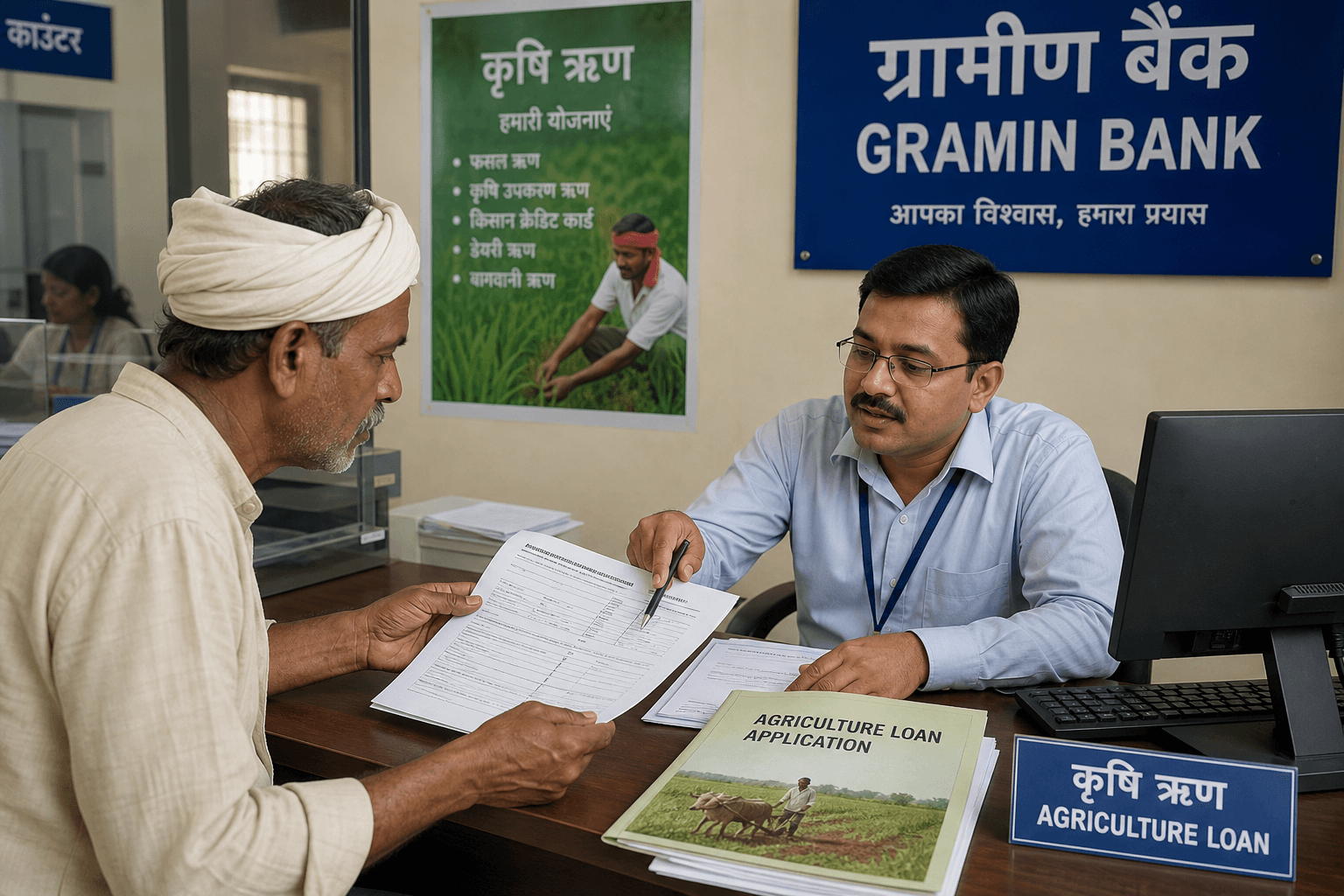
Prepare bank meetings using our NABARD loan process for farmers — NABARD refinances many rural banks behind AIF.
10% Margin and Stacking with Capital Subsidy
Example stack (illustrative):
- Cold room project cost ₹80 lakh
- NHB/MIDH capital subsidy 35–50% on eligible norm (separate application)
- Remaining cost financed via AIF loan with 3% subvention
- Promoter brings 10% of total project cost as margin
Critical: DPR must split components — duplicate subsidy on the same civil work line item triggers audit rejection. Hire a CA or bank-approved consultant for one integrated DPR.
Step-by-Step Application 2026
- Entity ready — FPO registration / GST if required by bank
- DPR + civil estimate — Equipment quotes, power load, revenue model
- Portal registration — agriinfra.dac.gov.in
- Bank selection — Scheduled commercial bank or notified NBFC
- Sanction & margin deposit — 10% promoter funds
- Construction — Only after sanction if combined with NHB LoI rules
- Disbursement in tranches — Linked to progress certificates
- Interest subvention claim — Bank files; maintain repayment discipline
AIF vs NABARD AMI vs MIDH Cold Storage
| Tool | Role |
|---|---|
| AIF | Cheap loan interest on infrastructure |
| NHB/MIDH | Capital subsidy on cold storage civil + plant |
| NABARD AMI | Separate warehouse/cold grant lines through banks |
You may use more than one on the same project if circulars allow and accounting is transparent. When in doubt, ask the lead bank’s agri branch head in writing.
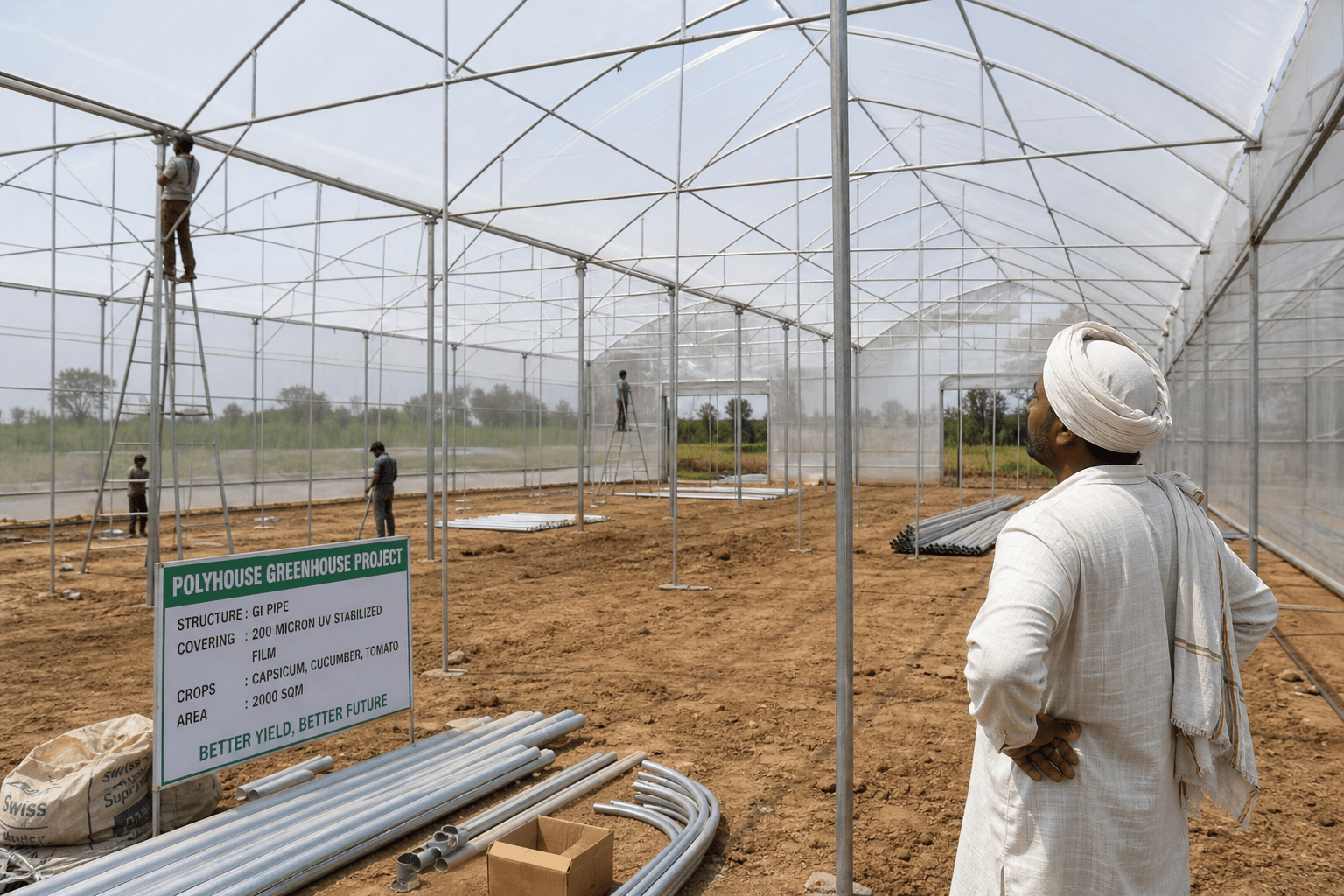
Polyhouse growers adding a pack house should read polyhouse subsidy guide for protected cultivation subsidy first, then layer AIF on the post-harvest block in a separate cost sheet.
Common Mistakes
- No portal ID on agriinfra.dac.gov.in
- Starting civil work before sanction
- Inflated DPR without off-take — subsidy + loan both denied
- Missing repayment — Subvention stops permanently for that account
- Wrong entity — Personal name instead of FPO for ₹1 crore ticket
Bottom Line
AIF 2026: agriinfra.dac.gov.in, ₹1 lakh crore facility design, 3% interest subvention up to ₹2 crore for 7 years, CGTMSE collateral-free for many borrowers, 10% margin, for warehouses, cold chain, and processing. Stack with NHB/MIDH capital subsidy with clean DPR accounting. Prepare the bank file like a business, not a lottery.
Disclaimer: Interest rates, CGTMSE limits, and stacking rules change. Verify on agriinfra.dac.gov.in and your sanction letter. Ask Kisan is not a bank or government department.
Last verified: June 2026.
Frequently asked questions
What is the Agriculture Infrastructure Fund (AIF)?
AIF is a central scheme with a ₹1 lakh crore financing facility for post-harvest infrastructure — warehouses, cold storage, sorting grading units, primary processing — through banks and NBFCs. Eligible borrowers get 3% interest subvention on loans up to ₹2 crore for up to 7 years, subject to timely repayment and portal registration on agriinfra.dac.gov.in.
Can AIF loans be collateral-free?
Many AIF projects up to ₹2 crore qualify for CGTMSE credit guarantee cover, enabling collateral-free or partially collateral-free loans for eligible MSMEs, FPOs, cooperatives, and agri-entrepreneurs — final terms depend on the lending bank’s credit assessment.
How much margin money must the promoter bring?
Promoters typically contribute at least 10% of the project cost as margin money. The remaining 90% can be financed through the AIF-linked loan. Stack capital subsidy from NHB/MIDH or AMI separately — do not double-count the same component in DPR.
Can I combine AIF with NHB or MIDH subsidy?
Yes. Official guidance states AIF interest subvention is stackable with schemes like NHB, SMAM, and PMKSY when project components are clearly separated in the DPR and bank sanction. Subsidy is on capital cost; AIF reduces interest on the loan — verify current DAC circular before applying.
What projects qualify under AIF in 2026?
Warehouses (godowns), cold chain (cold rooms, reefer vans where notified), pack houses, ripening chambers, sorting-grading, and primary processing near farm gate. Pure land purchase, residential construction, and trading inventory alone do not qualify — infrastructure must be agri-linked and appraised by the bank.