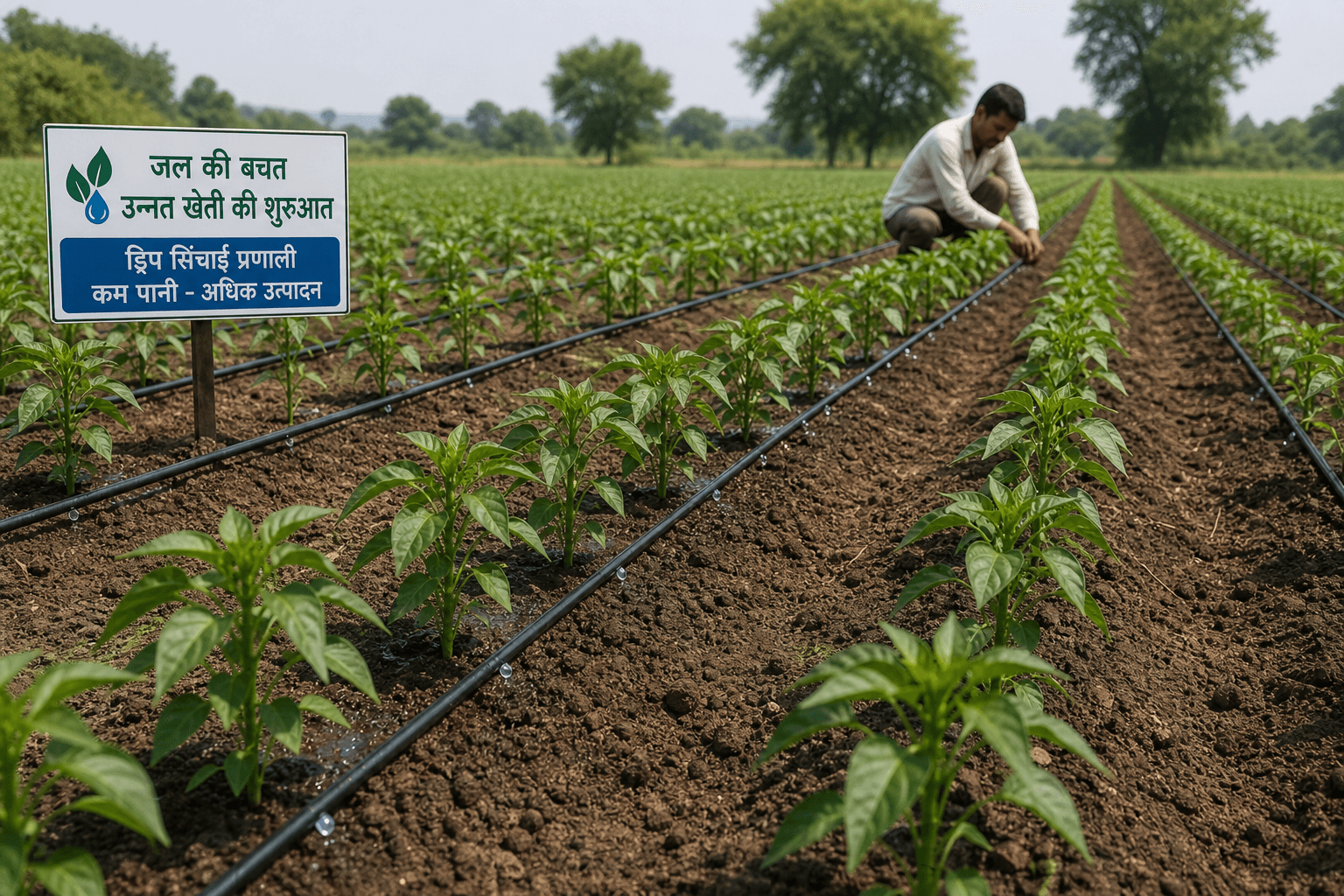
The honest question after every PM-KUSUM camp is: “Solar pump lag gaya — bill kitna kam hua?” Some farmers show zero diesel bills. Others say “kuch farq nahi” because the home meter still runs the tubewell at night, or the 5 HP set was undersized for a 7 HP job.
This article does illustrative maths for Component B (standalone solar pump) — diesel switch, grid irrigation switch, and 5 HP after ~60% subsidy (roughly ₹3–4 lakh benchmark down to ₹1.2–1.6 lakh farmer share in many states). Numbers are research and tender ranges, not your personal guarantee. Verify on pmkusum.mnre.gov.in.
Start with PM-KUSUM guide and 3HP–7HP pump costs.
A solar pump saves money on the circuit it powers. It does not automatically cut household, dairy, or second pump bills. Read your meter split before expecting miracles.
Component B: what actually stops costing money
Component B = dedicated off-grid solar pump — panels, pump controller, motor/pump set.
You stop paying for:
- Diesel per hour (often ₹400–800+/hour equivalent for 5 HP class usage patterns)
- Grid units for that pump’s irrigation (where farmer had metered agricultural connection)
You still pay for:
- Farmer share of capital after subsidy (illustrative ₹1.2–1.6 lakh on 5 HP)
- O&M — cleaning panels, occasional seal/service (₹2,000–5,000/year rough)
- Other loads on the same consumer number
Illustrative case 1: Diesel 5 HP → solar (annual)
Before (diesel, illustrative)
| Item | Range/year |
|---|---|
| Diesel (400–600 hours season) | ₹60,000–1,00,000+ |
| Maintenance, oil, trips | ₹15,000–25,000 |
| Total OPEX | ₹75,000–1,25,000 |
After solar
| Item | Range/year |
|---|---|
| Energy for pump | ~₹0 (sun) |
| O&M | ₹2,000–5,000 |
| Saved OPEX | ₹70,000–1,20,000 (if hours match) |
Capital (illustrative 2026 tender math)
- Benchmark ₹3.2–3.8 lakh pre-subsidy (5 HP, varies by state)
- 60% central + state share → farmer ₹1.2–1.6 lakh
- Simple payback: often 1.5–3 seasons on diesel displacement — if pump is right-sized and panels clean
Illustrative case 2: Grid agricultural connection → solar
Before
- 5 HP on grid, 6–8 hours/day in peak season
- Bill highly state-dependent — illustrative ₹3,000–8,000/month in irrigation months → ₹25,000–50,000/year class (verify local tariff)
After Component B
- Pump circuit off-grid → those units disappear from irrigation
- Home light bill unchanged if same consumer ID runs house + old habits
Farmers who say “bill same” often still run another motor or night irrigation on grid.
5 HP cost stack after subsidy (2026 research range)
| Line | Illustrative |
|---|---|
| Benchmark system cost | ₹3,00,000 – ₹4,00,000 |
| Central subsidy ~60% | ₹1,80,000 – ₹2,40,000 |
| State + farmer share | Balance → farmer often ₹1.2–1.6 lakh |
| Loan (if any) | EMI vs saved diesel — still positive for many |
Full tariff table: PM-KUSUM solar pump cost 3HP–7HP.
When bill “does not drop” — five real reasons
- Wrong HP — 5 HP on 6-inch bore needing 7.5 HP → diesel backup continues
- Shadow / dirty panels — 30% generation loss = longer run hours
- Only pump solarised, house not — check why savings fail
- Component C partial solarisation — grid still bills in low sun weeks
- Season mismatch — rabi night hours on grid by habit
Stack drip under PMKSY — less water hours = smaller pump possible = faster payback on the same acre.
Component B vs C — bill angle
| Component B | Component C | |
|---|---|---|
| Grid in outage | Pump may still run (off-grid) | Depends on hybrid/grid design |
| Bill for pump energy | Typically none | May show partial import |
| Best when | No reliable feeder, diesel expensive | Existing grid pump, good voltage |
Grid quality issues: inverter trip fixes.
How to track savings honestly
- Separate irrigation from house meter if possible
- Log diesel litres or kWh for one season before install
- After install, log solar hours and any backup diesel
- Compare farmer share + loan EMI vs saved OPEX annually
- Keep MNRE inspection and warranty papers for resale value
Link to PM-KUSUM 2.0 and land lease
If someone pitches land lease ₹25–30k/acre instead of a pump, compare certain irrigation savings vs developer/curtailment risk — PM-KUSUM 2.0 agrivoltaics, Rajasthan curtailment.
Bottom line
- Component B can wipe diesel or pump electricity OPEX on the irrigated circuit — illustrative ₹70k–1.2L/year class savings on 5 HP diesel patterns
- Upfront after subsidy often ₹1.2–1.6 lakh on ₹3–4L benchmark — verify tender
- House bill may not move — that is not pump failure
- Size right, clean panels, track hours — or read savings nahi kyu
Disclaimer: Tariffs, diesel prices, and benchmark costs vary by state and month. Illustrative maths only. Verify on pmkusum.mnre.gov.in and state nodal agency.
Last verified: June 2026.
Frequently asked questions
How much can a PM-KUSUM solar pump reduce electricity or diesel cost?
For farmers switching from diesel or paid grid irrigation, Component B can eliminate routine fuel or pump electricity charges for solar hours. Illustrative 5 HP cases: diesel might cost ₹80,000–1,20,000/year in fuel and maintenance; grid irrigation bills vary by hours and tariff — many report ₹30,000–60,000/year before solar. After solar, marginal energy cost is near zero except O&M.
What does a 5 HP solar pump cost after 60% subsidy in 2026?
Benchmark pre-subsidy costs are often quoted around ₹3–4 lakh for 5 HP systems in state tenders. With ~60% central subsidy plus state share, farmer contribution commonly falls near ₹1.2–1.6 lakh — verify on pmkusum.mnre.gov.in and your state list.
Why is my farm electricity bill still high after solar pump?
The house, dairy, cold store, or another tubewell may still be on grid. Solar pump only offsets the irrigation circuit. Undersized pumps force longer run hours or diesel top-up. Seasonal crops may need night irrigation on grid.
Is diesel to solar switch always profitable?
Usually yes on OPEX if the pump is sized for peak head and daily hours, and you maintain panels. Payback depends on farmer share after subsidy (often ₹1–1.6 lakh) versus annual diesel spend. Poor installation or shadow on panels can delay payback.
How does Component B differ from Component C for bills?
Component B is standalone off-grid solar pump — no DISCOM bill for pump energy. Component C solarises existing grid-connected pumps — you may still see connection charges or partial grid use. Choose based on feeder quality and state tender.