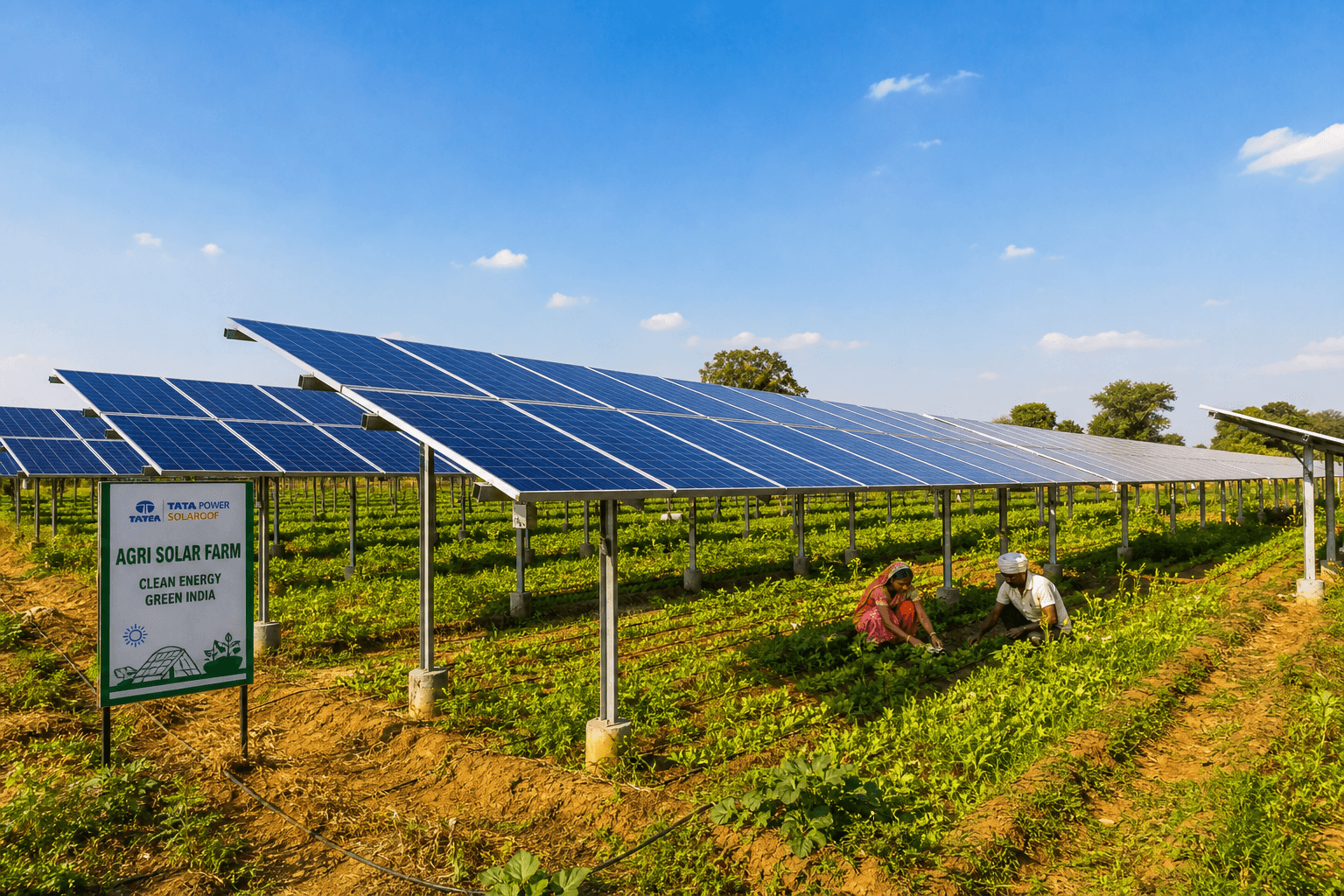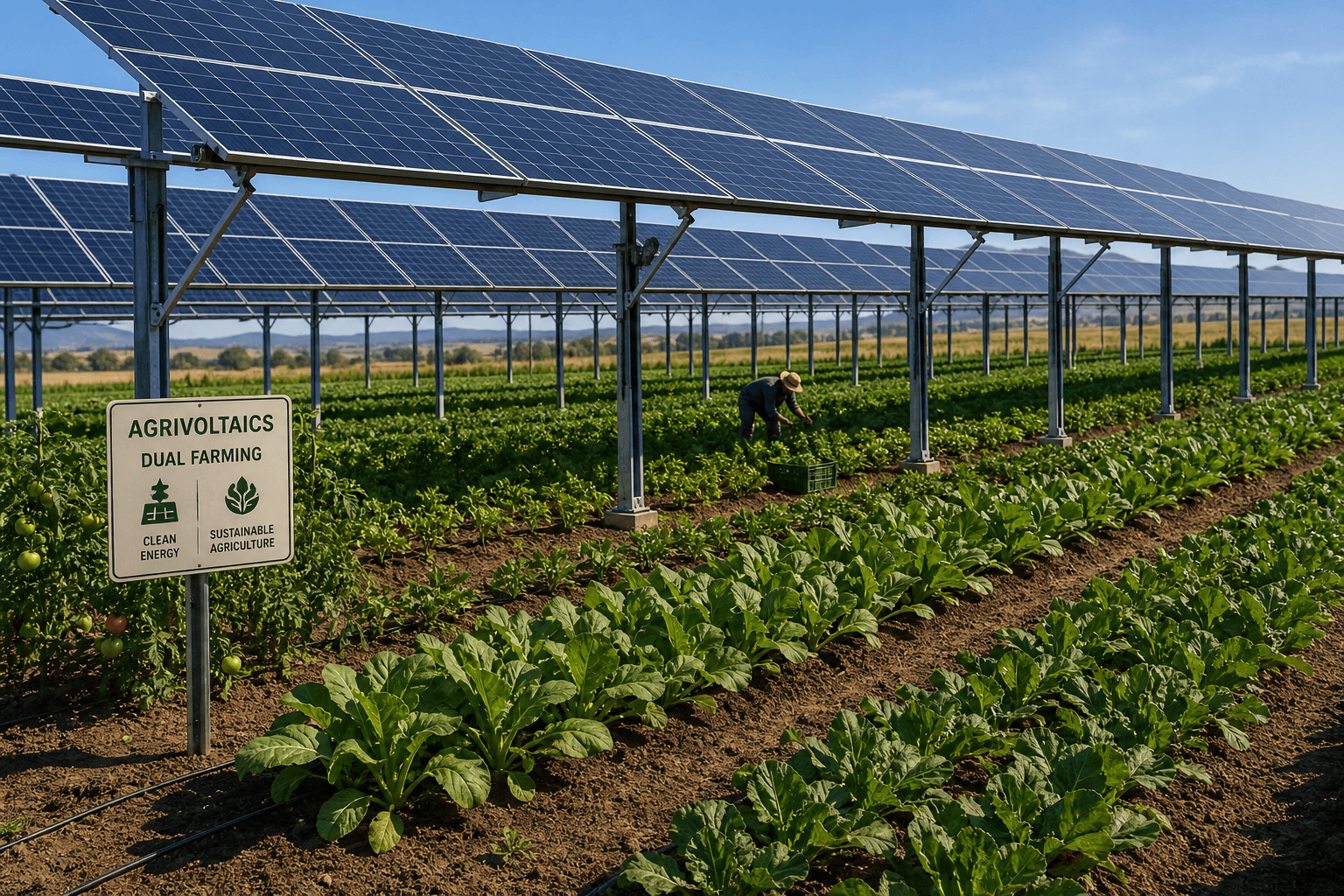
If you follow farm policy news, March 2026 was a turning point: the government signalled PM-KUSUM 2.0 with a 10 GW Agri-PV (agrivoltaics) lane — solar panels and crops on the same land, not either-or. Budget 2026-27 commentary also points to roughly ₹5,000 crore for the scheme family. Farmers are asking one practical question: how much subsidy and income is real today versus announcement?
This guide separates what was said at the summit, what Component B’s 60% pump subsidy still means under the current scheme, and how land lease (~₹25,000–30,000/acre/year) plus dual income models fit together. For Component A/B/C basics, start with our PM-KUSUM solar farming guide.
PM-KUSUM 2.0 operational guidelines were not yet released as of the March 2026 announcement. Treat 10 GW Agri-PV and minister-cited income ranges as policy direction, not a bank guarantee. Verify on pmkusum.mnre.gov.in before changing land use or signing leases.
What happened at the March 2026 Agro-RE Summit?
At the 4th National Agro-RE Summit (New Delhi, 10–11 March 2026, NSEFI / India Agrivoltaics Alliance), Union Minister Pralhad Joshi said the government is preparing PM-KUSUM 2.0, including:
- A dedicated 10 GW Agri-PV component for co-locating solar with agriculture
- Cited studies: annual income from about ₹60,000 per acre to more than ₹1 lakh per acre
- India's agrivoltaic potential framed at 3,000 GW to nearly 14,000 GW (strategic range, not a build schedule)
- Roughly ~50 AgriPV pilots nationally (e.g. ICAR-CAZRI, Jodhpur)
Verify the minister quote in context: these numbers come from studies and pilots presented at the summit, not a uniform payment rate for every farmer. Your block’s crop, shade level, and lease contract will move results up or down.
Read the dedicated policy explainer: agrivoltaics and PM-KUSUM 2.0.
Budget 2026-27: ₹5,000 crore signal
Commentary on Union Budget 2026-27 often cites PM-KUSUM allocation near ₹5,000 crore — a step-up that keeps solar pumps (Component B), grid-pump solarisation (Component C), and decentralised plants (Component A) in focus.
What that means on the ground:
| Item | Farmer takeaway |
|---|---|
| Higher central outlay | States may continue tendering pumps and farm solar — but quota and DISCOM capacity still cap speed |
| Agri-PV lane in 2.0 | Possible new tender formats for stilt-mounted dual-use land — wait for guidelines |
| No automatic cash | Budget line ≠ money in your account; you still need eligible application + inspection |
Component B: 60% subsidy on solar pumps (current framework)
Most small and marginal farmers interact with PM-KUSUM through Component B — standalone solar pumps replacing diesel or grid irrigation.
Under the widely cited structure (confirm on portal):
- Up to 60% of applicable benchmark cost as central subsidy
- State share (often ~30%) and farmer contribution (~10%) vary by state and category (general / SC-ST / small-marginal)
Example logic (illustrative only):
- 5 HP pump benchmark might be quoted around ₹3–4 lakh pre-subsidy in many states
- After 60% + state share, farmer share often lands near ₹1.2–1.6 lakh — see our solar pump cost guide and bill savings article
PM-KUSUM 2.0 may add Agri-PV rules; it does not automatically cancel existing pump pathways where states are still implementing Phase-III.
Land lease and dual income: ₹25k–30k/acre vs ₹60k–1L+ studies
Two income stories get mixed in WhatsApp forwards — keep them separate.
Standard land lease (Component A / developer models)
- ~₹25,000 per acre per year is commonly cited for land lease under PM-KUSUM-style arrangements
- IISD and policy literature often use ~₹30,000/acre/year for lease examples
- Stable, contract-based, but not the same as “total farm profit”
Agrivoltaics “total income” studies (minister-cited)
- ₹60,000/acre → ₹1 lakh+/acre refers to combined crop + solar economics in study/pilot conditions
- Requires shade-tolerant crops, correct panel height, water access, and often developer or cooperative structure
How agrivoltaics changes the maths on one acre
Agrivoltaics (Agri-PV) means agriculture continues under or between panels — usually stilt-mounted structures.
Cash flows to model separately:
- Crop revenue — may shift with shade; variety matters (fodder, spices, some vegetables vs full sun hybrids)
- Lease or generation revenue — lease per acre or share of power sale under PPA
- Subsidy stack — pump subsidy (B) is different from no capital subsidy on large Component A plants (tariff-based return)
Farmers with 5 km of a 33/11 kV substation and 4–5 acres/MW land math should still read PM-KUSUM Component A before assuming Agri-PV 2.0 replaces it.
What you should do now (checklist)
- Need irrigation this season? Check Component B/C on state portal — do not wait for 2.0 if pump tender is live
- Planning Agri-PV on cultivated land? Visit a pilot if possible; read agrivoltaics guide; avoid irreversible lease until guidelines publish
- Ask for written: ALMM module numbers (for any grid-linked part), benchmark cost, subsidy %, O&M responsibility
- Model conservative income — use lease floor (~₹25–30k/acre) plus realistic crop under shade, not summit headline max
- Official sources only: pmkusum.mnre.gov.in, state renewable energy nodal agency
Common mistakes
- Treating ₹1 lakh+/acre as guaranteed rent from the government
- Signing 25-year lease without lawyer review because “2.0 is coming”
- Ignoring DISCOM and transmission risk in solar-heavy states — see Rajasthan curtailment
- Buying non-ALMM hardware for grid-linked parts after June 2026 — ALMM List-II guide
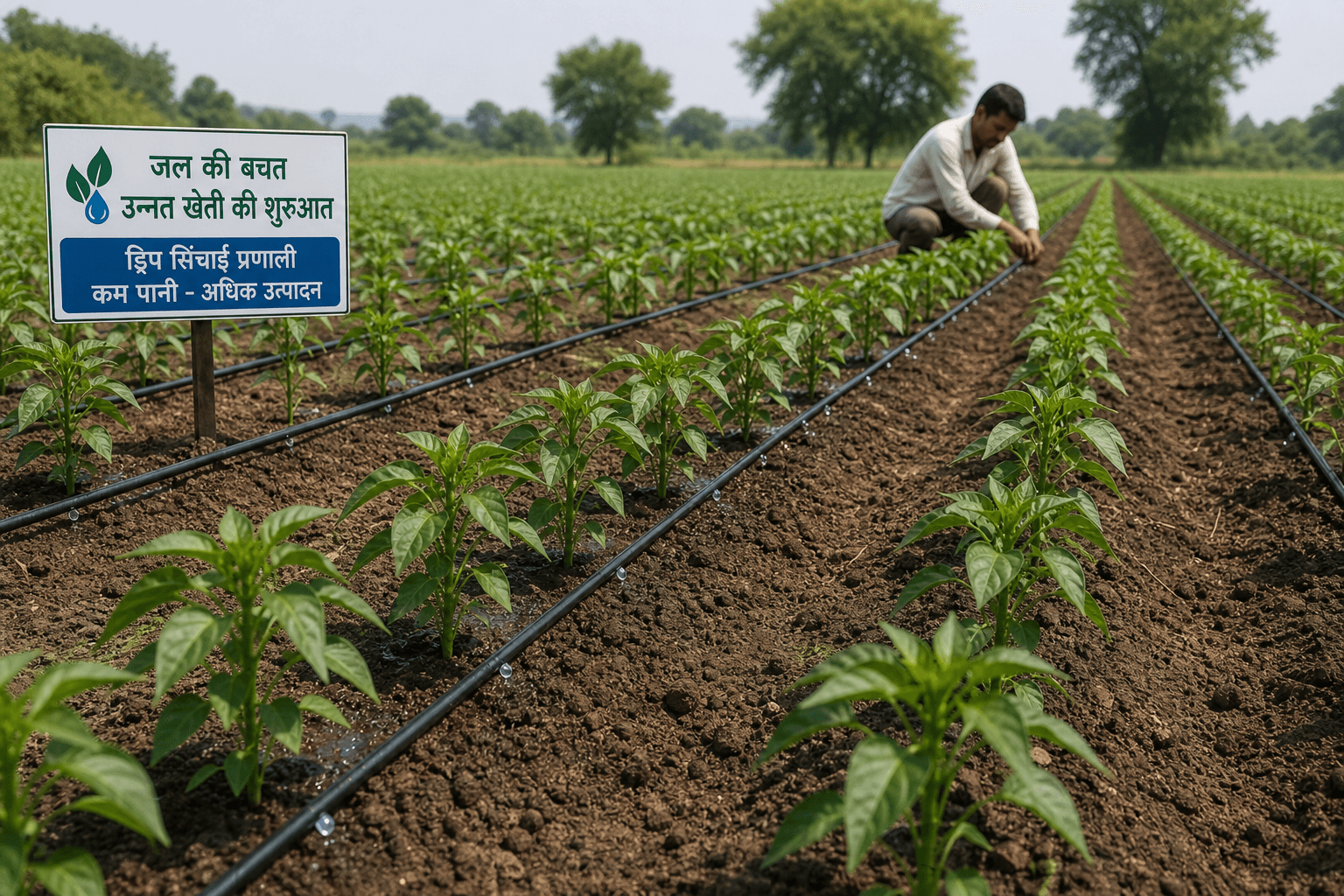
Stack solar planning with water: drip irrigation under PMKSY and protected cultivation under polyhouse subsidy. One acre works harder when energy, water, and crop choice align.
Disclaimer: PM-KUSUM 2.0 details, subsidy percentages, and income figures change. Minister quotes and study numbers are indicative. Verify on pmkusum.mnre.gov.in and your state nodal agency. Ask Kisan is not a government body.
Last verified: June 2026 (summit: March 2026; budget commentary 2026-27).
Frequently asked questions
What is PM-KUSUM 2.0 and when was it announced?
At the 4th National Agro-RE Summit (10–11 March 2026, New Delhi), Union Minister Pralhad Joshi announced preparation of PM-KUSUM 2.0, including a dedicated 10 GW Agri-PV (agrivoltaics) component. Detailed operational guidelines were not yet released as of that announcement — verify on pmkusum.mnre.gov.in.
How much subsidy do farmers get under PM-KUSUM Component B?
Under the existing PM-KUSUM framework, Component B typically offers up to 60% of benchmark cost as central subsidy for standalone solar pumps (with state share and farmer contribution making up the rest). PM-KUSUM 2.0 may refine rules — always check the live portal and your state nodal agency before ordering.
Can income really reach ₹1 lakh+ per acre with agrivoltaics?
Minister Joshi cited studies at the March 2026 summit suggesting incomes could rise from about ₹60,000 per acre to more than ₹1 lakh per acre under agrivoltaics. These are study-level figures, not guaranteed payments. Actual results depend on crop choice, shade design, lease terms, and DISCOM tariffs — verify locally.
What is the Budget 2026-27 allocation for PM-KUSUM?
Union Budget 2026-27 reportedly raised PM-KUSUM allocation to about ₹5,000 crore (figures cited in policy commentary). This signals continued push for solar pumps and farm-level RE — exact release and state matching depend on MNRE orders each financial year.
Should I wait for PM-KUSUM 2.0 or apply under the current scheme?
If you need a solar pump now, Component B/C under the current PM-KUSUM may still be open in your state. If you are planning large Agri-PV on cultivable land, track 2.0 guidelines but do not sign irreversible land leases until operational rules and tariffs are published officially.