If you are planning a PM-KUSUM solar pump in 2026, the first question is simple: "3 HP, 5 HP, ya 7.5 HP — kitna paisa lagega subsidy ke baad?" Dealers quote different numbers; WhatsApp forwards cite outdated rates. This guide gives realistic benchmark ranges, explains the 60% subsidy math (30% central + 30% state), and shows how 10% farmer share + 30% loan works on paper.
Always verify on official portal at pmkusum.mnre.gov.in and your state nodal agency before paying advance. Costs and benchmark prices change with ALMM rules and state budgets.
Standard PM-KUSUM Component B split: 60% subsidy | 30% loan | 10% farmer contribution. North-East / hilly / island areas: 50% central + state share (often ≥30%).
Subsidy structure — how the numbers add up
| Share | Percent | Who pays |
|---|---|---|
| Central CFA | 30% | MNRE (50% in NE/hilly/island UTs) |
| State subsidy | 30% | State nodal agency |
| Bank loan | 30% | Farmer (repay to bank) |
| Farmer upfront | 10% | Farmer at install |
Example — 5 HP pump, ₹3.5 lakh benchmark:
| Item | Amount |
|---|---|
| Total benchmark cost | ₹3,50,000 |
| Subsidy (60%) | ₹2,10,000 |
| Farmer pays (40%) | ₹1,40,000 |
| Typical split: 10% cash + 30% loan | ₹35,000 cash + ₹1,05,000 loan |
If total cost is ₹4 lakh, after 60% subsidy you pay ₹1.6 lakh (₹40,000 + ₹1.2 lakh loan). That matches what many states cite for diesel-to-solar conversions.
3 HP, 5 HP, 7.5 HP — indicative cost table (2026)
Figures below are indicative market benchmarks for AC solar submersible pumps with ALMM-listed modules. Your state portal may publish different approved rates.
| HP | Total cost (before subsidy) | After ~60% subsidy | Best for |
|---|---|---|---|
| 3 HP | ₹2.0 – 2.8 lakh | ₹80,000 – 1.1 lakh | 1–2 bigha, shallow bore, vegetables |
| 5 HP | ₹3.0 – 4.0 lakh | ₹1.2 – 1.6 lakh | 3–5 acre, most common choice |
| 7.5 HP | ₹4.5 – 6.0 lakh | ₹1.8 – 2.4 lakh | Deep bore, 5+ acre, orchard |
DC pumps or surface pumps may cost slightly less or more depending on head (metres) and pipe length — head matters more than HP alone.
North-East and special category states
In Assam, Meghalaya, Manipur, Nagaland, Tripura, Mizoram, Arunachal, Sikkim, and hilly/island UTs, central share can be 50% instead of 30%, with state adding at least 30%. Effective farmer share can drop further — but loan and paperwork rules still apply.
Confirm category on pmkusum.mnre.gov.in when you register.
What is included in the quoted price?
A standard PM-KUSUM Component B package usually includes:
- Solar PV array (kW sized to pump HP)
- Pump controller / VFD
- Submersible or surface pump (BIS compliant)
- Structure (ground mount or pole)
- Installation and commissioning
- 5-year warranty (typical — read your sanction letter)
Usually not included: new bore drilling, long pipeline, fencing, or house wiring. Ask for itemised quotation.
State-wise variation — why your neighbour paid less
| Factor | Effect on price |
|---|---|
| State benchmark rate | Some states cap EPC price lower |
| SC/ST / small farmer top-up | Extra 10–20% in select states |
| ALMM-compliant modules | Slightly higher hardware cost post-June 2026 |
| Dealer margin | ₹20,000–50,000 swing — compare 3 quotes |
| Pump head (metres) | Deep bore needs larger kW array |
Rajasthan farmers should read our Rajasthan solar pump subsidy guide. Everyone else: start from the PM-KUSUM pillar guide.
Step-by-step: apply without losing subsidy
- Register on state portal or pmkusum.mnre.gov.in
- Upload Aadhaar, land record (Khasra/Khatauni), bank passbook
- Select HP category matching water table and acreage
- Get sanction before install — building before approval risks rejection (see subsidy mistakes guide)
- Choose empanelled vendor only
- Pay 10% contribution as per letter; loan disbursed to vendor
- Inspection and subsidy release to vendor — you should not pay 100% cash upfront
Loan part — what farmers ask us
The 30% loan is usually tied to schemes like KCC or nodal-agency MOU banks. Interest rates vary (7–9% band cited in many states — confirm with your branch). EMI on ₹1 lakh for 5 years is roughly ₹2,000/month — still often less than diesel or grid pump bills for active irrigators.
Payback — is it worth it?
If a 5 HP diesel set burns ₹15,000–25,000/month in peak season, a ₹1.4 lakh net cost after subsidy can pay back in 1–2 years. Grid pump users save on agricultural tariff units — see solar pump bill savings cases.
If you irrigate only 2–3 months a year, run the maths before upsizing to 7.5 HP.
Red flags when a dealer quotes "cheap"
- No portal registration number
- Non-ALMM panels "special deal"
- Asks for 100% cash — subsidy "later"
- HP downgrade after sanction (3 HP motor on 5 HP papers)
- No BIS pump stamp
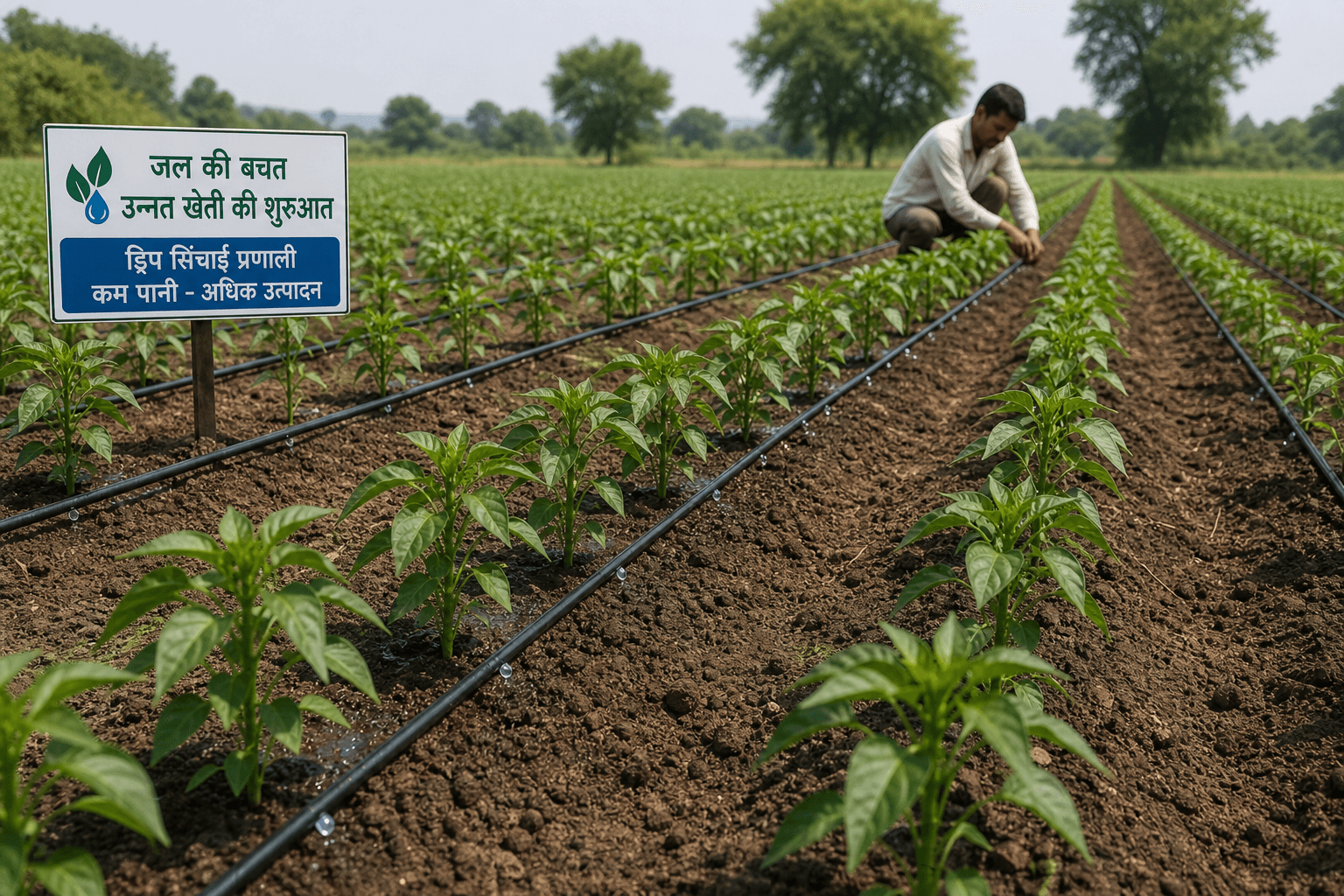
Stack planning: PMKSY drip reduces water need — sometimes lets you drop from 5 HP to 3 HP and save ₹40,000+ on the same subsidy slab.
Disclaimer: Benchmark costs, subsidy percentages, and state top-ups change. Figures here are indicative for farmer planning. Verify live rates on pmkusum.mnre.gov.in and your state nodal agency before payment. Ask Kisan is not MNRE or a bank.
Last verified: 12 June 2026.
Frequently asked questions
What is the total cost of a 5 HP PM-KUSUM solar pump in 2026?
Benchmark cost for a 5 HP AC solar pump is typically around ₹3–4 lakh before subsidy. After 60% subsidy (30% central + 30% state), the farmer's effective cost often falls to roughly ₹1.2–1.6 lakh, with 10% upfront contribution and 30% bank loan in the standard split. Exact figures vary by state — verify on pmkusum.mnre.gov.in.
How is the 60% PM-KUSUM pump subsidy split?
Standard structure: 30% central government (CFA), 30% state government, 30% bank loan to the farmer, and 10% farmer's own contribution. In North-East, hilly, and island UTs the central share can be 50% with state adding at least 30%. Loan interest and processing depend on your bank and state nodal agency.
What do 3 HP and 7.5 HP pumps cost after subsidy?
Indicative benchmarks: 3 HP total cost often ₹2–2.8 lakh (after subsidy roughly ₹80,000–1.1 lakh); 7.5 HP total ₹4.5–6 lakh (after subsidy roughly ₹1.8–2.4 lakh). These are market ranges — your state publishes official benchmark costs on the nodal portal.
Where do I apply and check live subsidy status?
Apply through your state nodal agency portal or pmkusum.mnre.gov.in. You need land records, Aadhaar, bank passbook, and sometimes electricity bill or pump details. Never pay full cash to a middleman without a portal registration number.
Can I get more than 60% subsidy?
Some states add a top-up for SC/ST, small/marginal farmers, or drought blocks — check Rajasthan RRECL, Maharashtra MEDA, etc. The national floor is the 60% structure; extra benefits are state-specific and change with budget cycles.