Polyhouse cucumber — especially seedless or Japanese types on trellis — is one of the most searched high-value crops in protected cultivation. Farmers ask: how many crops per year, tonnes per acre, and whether mandi rates justify the polyhouse investment.
This guide uses illustrative mandi and retail prices with clear disclaimers, walks through 3–4 crop cycles, input costs, and links to subsidy and drip infrastructure. For crop comparison with capsicum and floriculture, see best high-profit polyhouse crops.
All mandi rates and profit figures in this article are illustrative for planning only. Wholesale prices swing weekly by city, variety, and arrival volume. Verify live rates at your nearest mandi (e-NAM, Agmarknet, or local commission agent) before transplanting. Do not submit these numbers to a bank as guaranteed income without district-specific justification.
Why Cucumber Fits NVPH in 2026
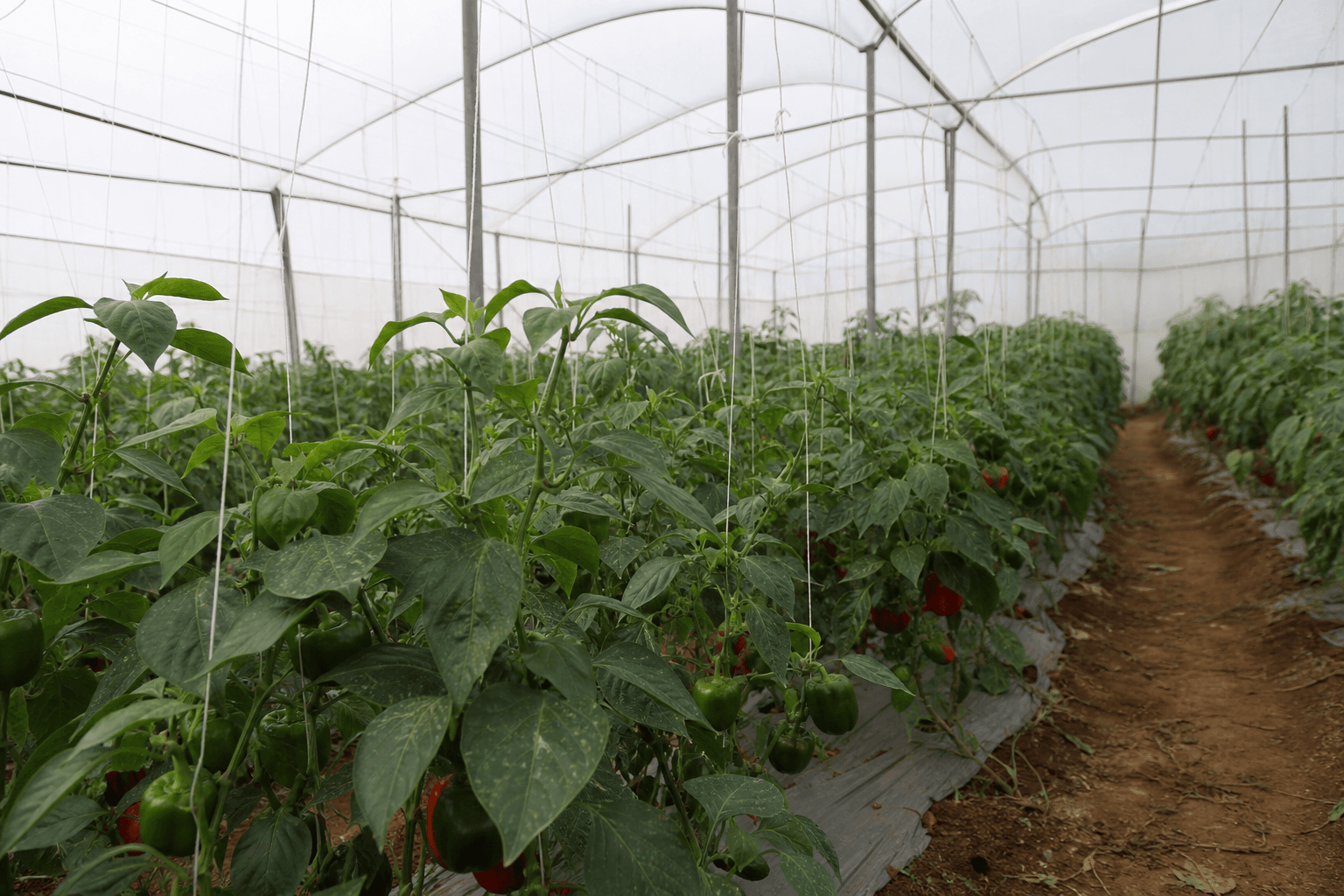
Naturally ventilated polyhouse (NVPH) suits cucumber because:
- Vertical trellis training maximises space — 20,000–25,000 plants per acre layout is common in commercial designs
- Shorter crop cycle than coloured capsicum — faster cash turnover between cycles
- Strong domestic demand year-round in cities; salad chains prefer uniform grade
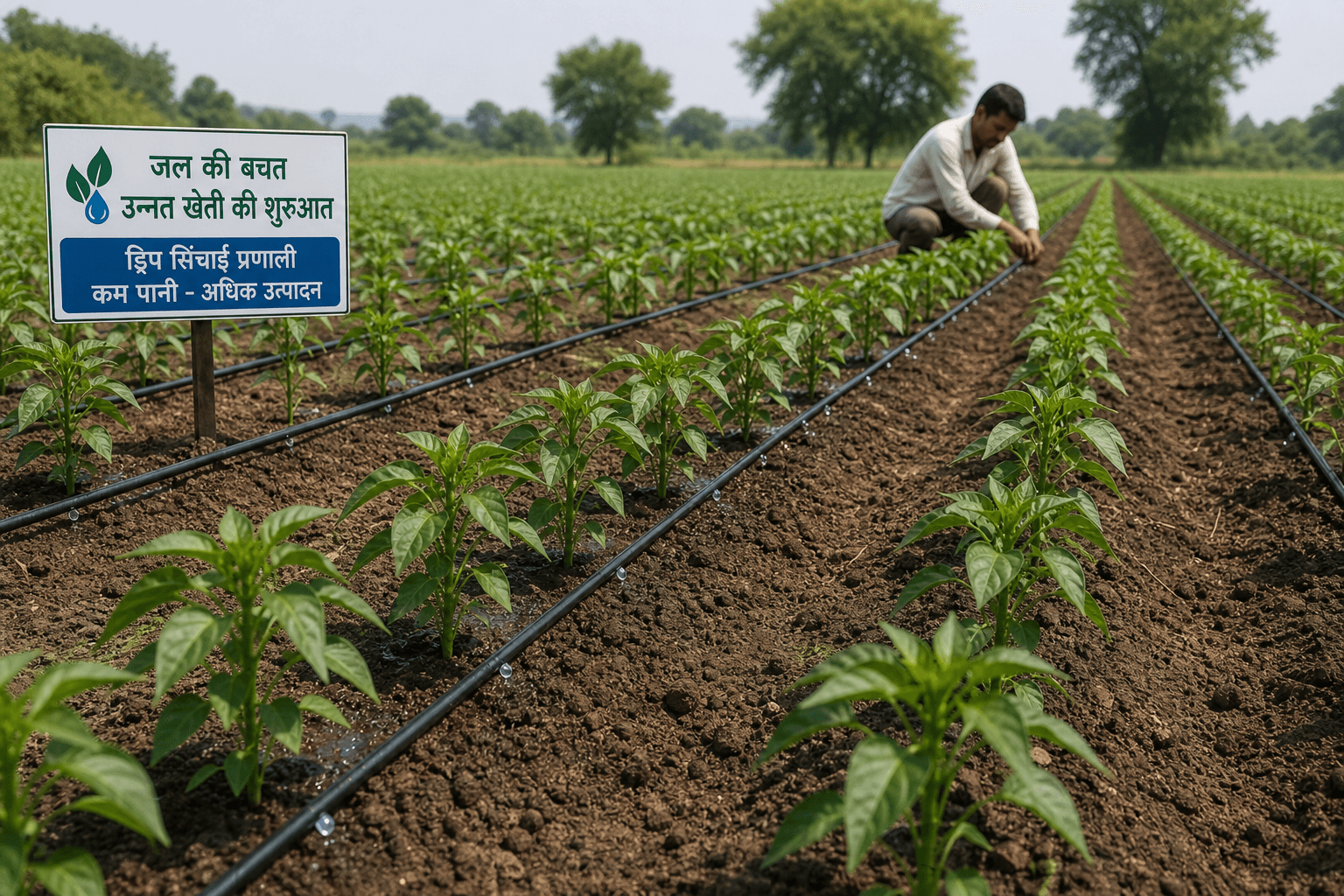
- Works with drip fertigation already mandatory in NHB project specifications
Trade-offs: powdery mildew and downy mildew pressure, bee pollination planning for seeded varieties, and price crashes when neighbouring districts harvest together.
Structure investment before subsidy is typically ₹25–40 lakh per acre for NVPH — see polyhouse farming profit, cost & subsidy 2026. Subsidy under NHB/MIDH is calculated on government cost norms, not always your full vendor bill.
Crop Calendar — 3 to 4 Cycles per Acre
Indicative plains calendar (adjust for your district climate):
| Cycle | Transplant window (indicative) | Duration | Notes |
|---|---|---|---|
| Crop 1 | Aug–Sep | ~95 days | Post-monsoon start |
| Crop 2 | Dec–Jan | ~90 days | Winter premium pricing possible |
| Crop 3 | Mar–Apr | ~100 days | Heat management critical |
| Crop 4 | Jun (where feasible) | ~95 days | Fourth cycle needs strong pest control |
Not every farm runs four cycles — three well-managed cycles beat four stressed ones. Leave 10–15 days between cycles for soil/media refresh, fumigation where practised, and structure sanitisation.
Yield per Acre — Tonnes per Crop and per Year
Commercial NVPH cucumber projects cite:
- Per crop: 20–30 tonnes per acre (grade A + B combined) under good fertigation and pest scouting
- Per year (3 crops): 60–90 tonnes per acre
- Per year (4 crops): 80–120 tonnes per acre at upper commercial management
Yield drivers:
- Variety — hybrid seedless types often yield longer harvest windows
- Plant density and trellis height
- EC and pH of fertigation solution
- Pollination — parthenocarpic varieties avoid bee dependency
- Pest control — one unchecked mildew outbreak can cut a cycle by 30–40%
Mandi Rates — Illustrative Only
Disclaimer: The table below is not live market data. Use it only to structure a conservative DPR sensitivity analysis.
| Channel | Illustrative rate (₹/kg) | Planning note |
|---|---|---|
| Local wholesale mandi (bulk) | ₹15–25 | Crash weeks can hit ₹8–12 |
| City mandi / organised wholesale | ₹20–35 | Grade and packing matter |
| Retail / hotel supply (seedless) | ₹40–80 | Requires contract or aggregator |
| Off-season premium (rare peaks) | ₹50–100+ | Do not base loan DPR on peak alone |
For DPR writing, model three scenarios: low (₹15), mid (₹22), high (₹30) average realisation across the season — not the best week you heard about from a neighbour.
Check e-NAM and Agmarknet for your mandi name before each cycle's harvest planning.
Gross and Net Profit — Worked Illustration
Assume one acre NVPH, 3 crops, 25 tonnes per crop = 75 tonnes/year.
Gross turnover (illustrative)
| Avg realisation | Gross revenue |
|---|---|
| ₹18/kg (conservative) | ₹13.5 lakh |
| ₹25/kg (mid) | ₹18.75 lakh |
| ₹32/kg (optimistic) | ₹24 lakh |
Subtract running costs (indicative annual)
- Seedlings and seeds — ₹1.5–2.5 lakh
- Fertilisers and crop protection — ₹2–3 lakh
- Labour (harvest-heavy) — ₹2–4 lakh
- Power, packaging, transport — ₹1–2 lakh
- Miscellaneous and replacement — ₹0.5–1 lakh
Total running cost band: ₹7–12 lakh per year — aligns with the ₹4–6 lakh baseline in polyhouse literature plus cucumber's higher harvest labour.
Net margin (before loan EMI on structure)
| Scenario | Illustrative net |
|---|---|
| Conservative price year | ₹1.5–6 lakh |
| Mid price year | ₹6–12 lakh |
| Strong price + good yield | ₹12–16 lakh |
Horticulture project data for seedless cucumber in NVPH has cited figures near ₹16.76 lakh net per acre per year in best-case commercial operations — treat that as upper benchmark, not your first-year expectation.
Loan EMI on the structure (after subsidy) must fit inside mid-scenario net — banks want DSCR ≥ 1.5.
Input and Disease Management Outline
Essentials for bankable operations:
- Drip fertigation — NPK staged by growth phase; calcium during fruit set
- IPM — yellow sticky traps, preventive fungicide schedule for mildew
- Grading at harvest — premium channel needs uniform length and colour
- Post-harvest — hydrocooling or shade packing for distant mandi
Pair field infrastructure with PMKSY drip subsidy 2026 update if open-field nursery or hardening beds use separate micro-irrigation.
Subsidy and Paperwork Reminder
Apply before construction — NHB/MIDH credit-linked subsidy requires bank sanction and approved DPR first. Changing crop from cucumber to capsicum without permission can cancel subsidy.
See polyhouse subsidy guide 2026 for Letter of Intent / inspection flow.
Before You Plant
- Confirm live mandi rates for your target variety
- Model low/mid/high price DPR scenarios
- Secure buyer or aggregator for at least one cycle
- Budget running cost ₹7–12 lakh/year, not just structure loan
- Train labour on trellis and harvest timing
Disclaimer: Yields, prices, and profits vary by district, weather, and management. Ask Kisan is not a mandi commission agent or polyhouse EPC contractor. Illustrative rates are not trading advice.
Frequently asked questions
How many cucumber crops can I take from one polyhouse per year?
In most Indian plains with a naturally ventilated polyhouse (NVPH), farmers plan 3–4 crops per year depending on variety, transplant cycle, and climate management. Each crop cycle typically runs 90–110 days from transplant to final harvest.
What is the yield of polyhouse cucumber per acre?
Commercial NVPH projects often target 20–30 tonnes per crop per acre under good management. With 3–4 crops per year, annual potential reaches roughly 80–120 tonnes per acre — upper range requires excellent pest control, fertigation, and market-grade sorting.
What mandi rate should I use for profit planning?
Illustrative planning rates in 2026 range from ₹15–35/kg at wholesale mandi for standard Indian cucumber varieties, and ₹40–80/kg for seedless or premium grades in organised retail channels. Rates crash during peak supply weeks — never use a single peak price for your DPR.
What net profit is realistic from one acre polyhouse cucumber?
After structure cost (often ₹25–40 lakh per acre before subsidy), running costs of ₹4–6 lakh per year, and variable mandi prices, net profit in well-managed units is often quoted in the ₹8–16 lakh per year range in horticulture literature — best-case commercial data cites higher; weak seasons can break even or lose money.
Do I need drip fertigation for polyhouse cucumber?
Yes. Precision drip with fertigation is standard in NVPH cucumber. PMKSY can support field-scale drip before polyhouse; inside the structure, irrigation is part of the NHB DPR. See our PMKSY drip 2026 update and polyhouse profit guide for stacking rules.