If you are searching for “polyhouse cost 1 acre” or “polyhouse ke liye subsidy milti hai kya,” you are not alone. Protected cultivation is one of the highest-intent modern farming topics in India for 2026 — and for good reason. When the structure, crop, and subsidy paperwork align, a polyhouse can move you from open-field volatility toward predictable, high-value harvests. When they do not, you can lose lakhs in a single season. This guide walks through real setup costs, profit ranges, subsidy mechanics, and the one rule that cancels more applications than any other mistake.
Why polyhouse farming matters in 2026
Open-field vegetables fight weather, pests, and price crashes at harvest. A naturally ventilated polyhouse (NVPH) or hi-tech greenhouse gives you partial control over temperature, humidity, and season extension. That control is expensive upfront — which is why government schemes under NHM, MIDH, and the National Horticulture Board (NHB) exist. The trade-off is simple: you invest more capital per acre, you target crops that pay ₹75–150 per kg instead of mandi bulk rates, and you treat subsidy compliance as part of the business plan, not an afterthought.
Figures in this article come from published scheme norms, NHB cost slabs, and project data cited in our research compendium. District windows, state top-ups, and cost norms change — verify on official portal (nhb.gov.in, your state horticulture site, agriinfra.dac.gov.in) before you sign a vendor quotation.
Polyhouse setup cost per acre (before subsidy)
Costs split by structure type. These are indicative market ranges for 2026 planning:
Naturally ventilated polyhouse (NVPH)
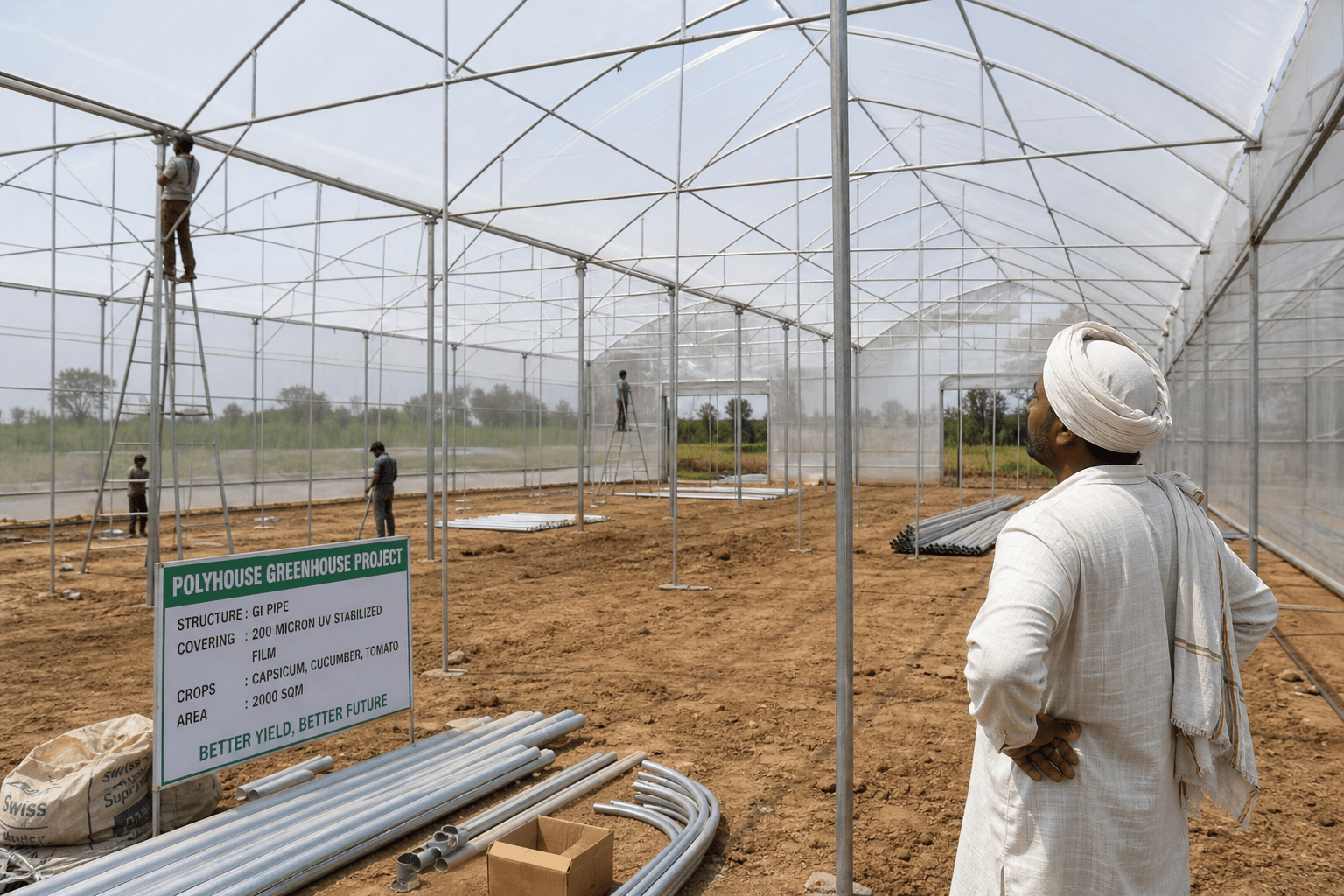
Expect roughly ₹25–40 lakh per acre before subsidy. NVPH is the workhorse structure for coloured capsicum, cucumber, and many floriculture crops in plains and moderate climates. Official MIDH/NHB cost norms per sqm (used to calculate subsidy, not your vendor bill) by area slab are:
- Up to 500 sqm: ₹1,060/sqm
- 500–1,008 sqm: ₹935/sqm
- 1,008–2,080 sqm: ₹890/sqm
- 2,080–4,000 sqm: ₹844/sqm
Hilly areas use cost norms 15% higher (NHB Appendix-1-B). Your contractor quote will usually exceed these norms — that gap is why effective subsidy often lands near 35–40% of actual spend even when the scheme headline says 50%.
Fan-and-pad / hi-tech greenhouse
Budget ₹35–50 lakh per acre before subsidy, with cost norms around ₹1,400–1,650 per sqm. Choose this when your crop plan needs tighter climate control (certain roses, gerbera, or summer production in hot zones).
Shade net house
The cheapest protected option: cost norm ₹710 per sqm, useful for nurseries, leafy greens, and humid regions where full polyfilm may be overkill.
Starter unit: 1,000 sqm
Not ready for a full acre? A 1,000 sqm starter unit often quotes ₹7–10 lakh before subsidy, falling to roughly ₹3.5–5 lakh after subsidy — a practical entry point mentioned in scheme literature for beginners, especially in NE/hilly states where minimum areas can be lower.
Never start construction before subsidy paperwork. You need bank term-loan sanction and a completed application before you build. NHB simplified the process in 2023 (optional Letter of Comfort plus mobile-app self-inspection per PIB PRID 1906941), but many states and vendors still describe the legacy flow: In-Principle Approval (IPA) / Letter of Intent, then Joint Inspection Team (JIT). Building early, or deviating from your approved DPR crop or structure without written permission, causes automatic, irreversible subsidy rejection. Read the full process in our polyhouse subsidy guide for 2026.
Profit, ROI, and running costs
Subsidy reduces capital pain; profit pays the loan. For a well-managed 4,000 sqm polyhouse (about one acre):
- Net profit: often ₹6–14 lakh per year depending on crop, price cycle, and management.
- Payback: investment commonly recovered in 2–4 years.
- From Year 2 onward: you mainly fight running costs of ₹4–6 lakh per year (labour, inputs, power, maintenance) rather than full structure depreciation.
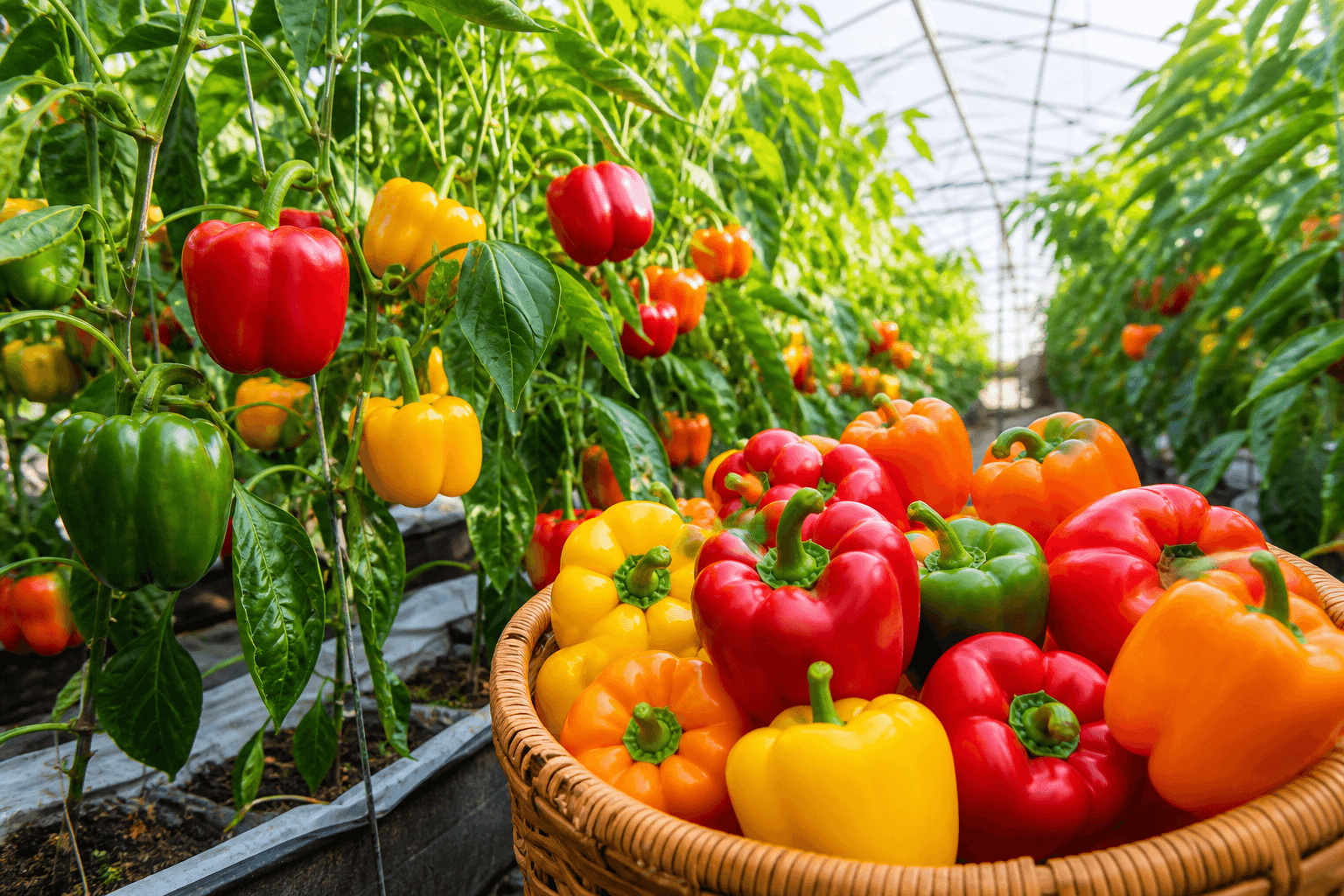
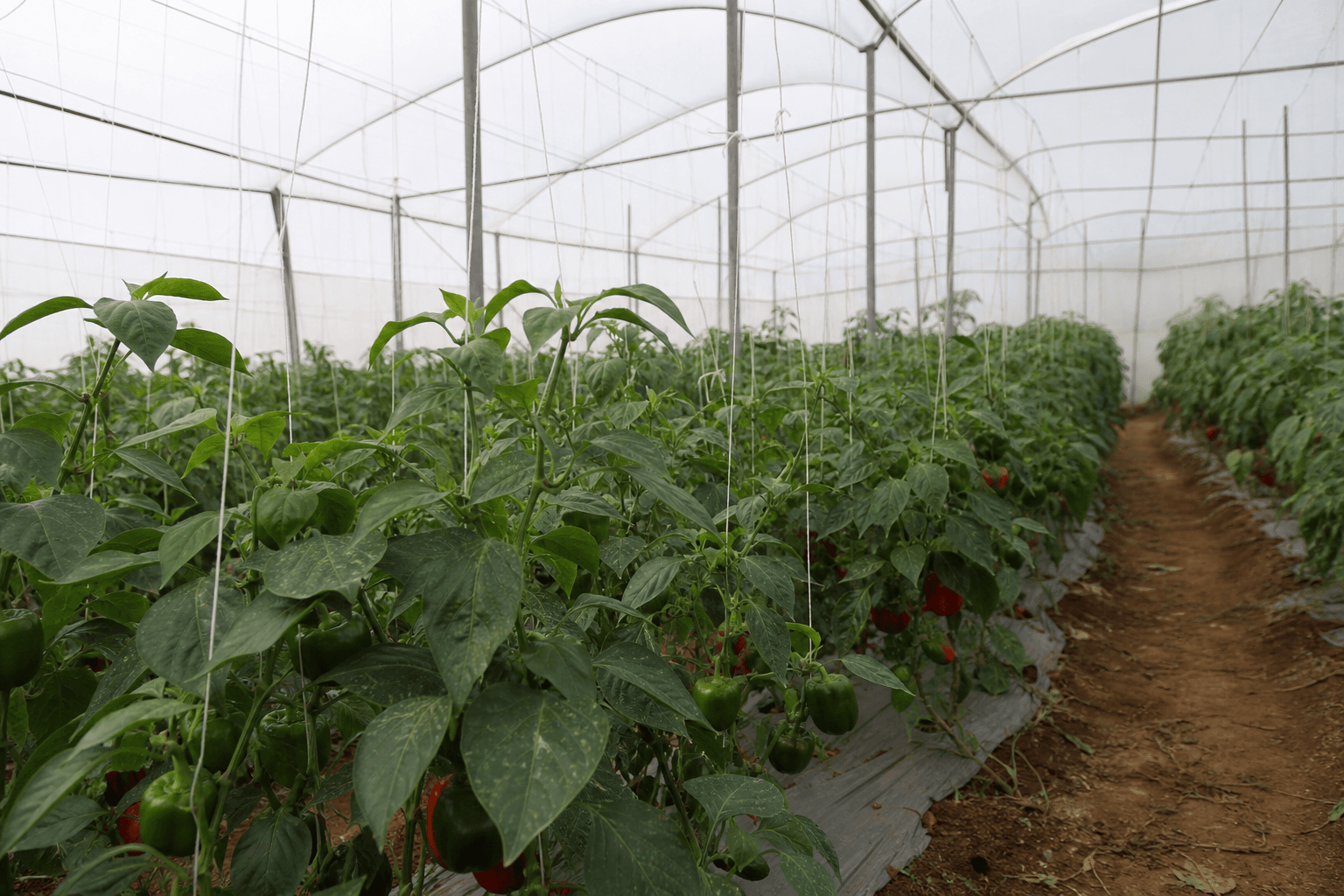
Crop choice drives the top of that range. Agrifirst NVPH project data cited in horticulture literature puts coloured capsicum near ₹18.14 lakh net per acre per year and seedless cucumber near ₹16.76 lakh net per acre — but those are best-case commercial operations, not guarantees. We break down crop-level numbers in best high-profit polyhouse crops.
The “effective subsidy” reality check
Advertised 50% under NHM/MIDH sounds simple. In practice:
- Subsidy is calculated on government cost norms, not your vendor’s ₹25–40 lakh quote.
- Keep 15–20% extra cash beyond bank margin money to cover the norm-vs-market gap.
- State top-ups (e.g. up to 65–95% with SC/ST and hilly/NE enhancements in some states) can help — percentages vary; verify on official portal for your category.
NHB’s commercial route offers a flat 50%, credit-linked, back-ended, with a ceiling around ₹56 lakh per beneficiary (up to about ₹1 crore depending on structure/location). Minimum area is typically 4,000 sqm for general areas and 1,000 sqm in NE/hilly tracts.
Subsidy schemes that stack with polyhouse loans
Beyond NHM/MIDH/NHB:
- Agriculture Infrastructure Fund (AIF): ₹1 lakh crore corpus; 3% interest subvention on loans up to ₹2 crore for 7 years; CGTMSE guarantee up to ₹2 crore; 10% minimum promoter contribution; moratorium 6 months–2 years; operational 2020-21 to 2032-33 — apply at agriinfra.dac.gov.in. Stackable with NHB and machinery subsidies.
- NABARD does not pay farmers directly; it refinances banks and passes through GoI subsidies. Crop loans up to ₹3 lakh at 7% (effective 4% on prompt repayment); collateral-free agri loans up to ₹2 lakh in many cases.
- PMKSY “Per Drop More Crop” for drip/fertigation inside the polyhouse: central support 55% for small/marginal farmers, 45% for others, with state top-ups — saves about 70% water and 20–30% yield gain when designed well.
For state-wise top-up percentages (Maharashtra lottery, Telangana up to 95% for SC/ST, Haryana tiers, etc.), see our state comparison article when published, and always cross-check the portal listed for your state in the official table.
Step-by-step: from idea to first harvest (without losing subsidy)
- Training first — A ₹5,000–10,000 short course from KVK/state horticulture often pays for itself; skipping training is a common failure mode.
- Soil and water tests — High electrical conductivity (EC) may require RO before capsicum or gerbera. Book certified tissue-culture or pro-tray seedlings 3–4 months ahead; roadside nursery stock is a frequent loss maker.
- Crop and market linkage — Pre-arrange mandi, exporter, or contract buyer before planting. Low-value crops (spinach, okra alone) in an expensive polyhouse destroy ROI.
- Bankable DPR — Include technical specs (B-Class GI pipes, UV-stabilised polyfilm of approved micron, drip/fertigation), financial ratios (DSCR ≥ 1.5), crop plan, and annexures. Documents typically include Aadhaar, PAN, land records (Jamabandi / 7-12 / Khasra-Khatauni) or a registered lease valid 10–15+ years (not merely notarised), vendor quotations with GST, bank sanction letter, and geo-tagged construction photos.
- Apply, then build — Optional Letter of Comfort (LoC) plus app-based self-inspection (2023 reform), or legacy IPA/GoC and JIT — present both paths to your bank and horticulture officer so nothing is assumed.
- Inspection and back-ended release — Subsidy often credits to the loan account after structure verification against the DPR.
Common mistakes that erase profit and subsidy
- Construction before LoI/LoC.
- Trusting the “50%” headline without norm-vs-market math.
- Low-value crops in a high-cost house.
- Uncertified planting material.
- No market tie-up.
- DPR deviations without written approval.
- Ignoring water quality.
We cover these in depth in our mistakes article; the polyhouse subsidy pillar page is the best single checklist.
Who should consider a full-acre polyhouse?
A full 4,000 sqm unit suits entrepreneurs with land security, credit access, and time to supervise daily climate and pest scouting. Small and marginal farmers may start at 1,000 sqm or shade net, add PMKSY drip, then scale. SC/ST and hilly/NE beneficiaries often see enhanced central shares under HMNEH — again, verify on official portal.
Bottom line for 2026
Polyhouse farming is not a passive investment. It is a manufacturing line for horticulture: capital-heavy, subsidy-sensitive, and crop-specific. Budget ₹25–40 lakh per acre (NVPH) before aid, plan for ₹6–14 lakh annual net in a solid operation, and treat apply-before-build as non-negotiable. For subsidy math, LoI vs LoC, and the 35–40% effective rate explanation, read our polyhouse subsidy guide 2026. For crop-level revenue, jump to best high-profit polyhouse crops.
Last updated May 2026. Verify subsidy windows, cost norms, and state top-ups on nhb.gov.in and your state horticulture portal before committing.
Frequently asked questions
How much does a 1-acre polyhouse cost in India in 2026?
A naturally ventilated polyhouse (NVPH) typically costs about ₹25–40 lakh per acre before subsidy. Fan-and-pad hi-tech greenhouses run ₹35–50 lakh per acre. Official NHB/MIDH cost norms per sqm are lower than market rates, so verify on official portal (nhb.gov.in, agriinfra.dac.gov.in) for your district slab.
What profit can I expect from polyhouse farming per acre?
For a well-managed ~4,000 sqm (about 1 acre) unit, net profit is often in the ₹6–14 lakh per year range depending on crop and market. Investment is commonly recovered in 2–4 years; from Year 2 onward you mainly face running costs of roughly ₹4–6 lakh per year.
Is polyhouse subsidy really 50%?
NHM/MIDH advertises 50% for protected cultivation, and NHB’s commercial route offers a flat 50% credit-linked back-ended subsidy with a ceiling around ₹56 lakh per beneficiary (up to about ₹1 crore depending on structure and location). Because government cost norms (₹844–1,650 per sqm) lag 2026 market prices, many farmers see an effective subsidy closer to 35–40% — not the headline 50%.
Can I start building before subsidy approval?
No. You must secure bank term-loan sanction and apply before construction. Building before approval, or changing the approved DPR crop or structure without written permission, leads to automatic rejection. See our polyhouse subsidy master guide for Letter of Intent / Letter of Comfort steps.