Your solar pump or rooftop plant was giving good units in the first year. Now output feels 30–40% lower — but the bill did not fall as much, or the pump runs fewer hours on solar alone. Before you blame "bad panels," walk through these seven reasons. Most fixes are cheap; ignoring them costs lakhs over the plant life.
This checklist applies to PM-KUSUM pumps, farm rooftops, and small open-access plants. For dust-specific cleaning, read how much you lose to dust.
If generation dropped suddenly overnight, check inverter fault codes first — do not assume panels "died." A tripped string or blown fuse can look like major loss.
Reason 1 — Dust and soiling (dhool)
Farm belts in Rajasthan, Gujarat, UP, Haryana see heavy dust after harvest and on windy days. Bird droppings and pollen add to the film.
| Condition | Typical loss |
|---|---|
| Light dust | 5–10% |
| Post-harvest / no rain 4 weeks | 15–25% |
| Mud splash after tractor work | 20–35% |
Fix: Soft brush + water in early morning; avoid harsh detergent on hot glass. Monthly rinse in dry season; weekly if near unpaved road. Details in dust cleaning guide and rain/dust tips.
Reason 2 — Shading (new or seasonal)
Shading is the silent killer. One shaded cell can drag a whole string down.
Common farm causes:
- Neem / eucalyptus grown taller since install
- New water tank, poultry shed, or stacked hay
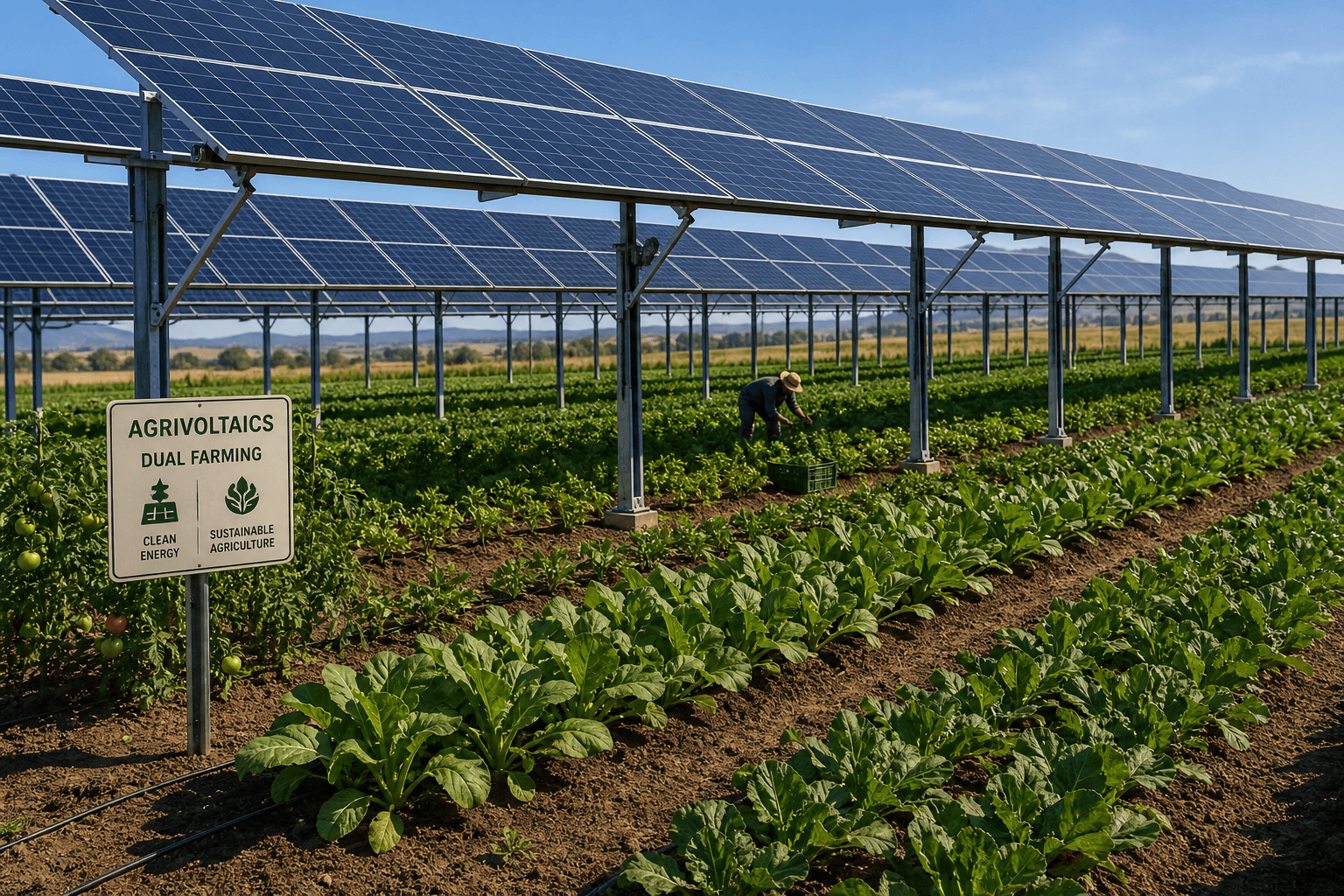
- Agrivoltaics panels casting shade on older ground mount
- Morning/evening shadow from electric pole
Fix: Trim trees where legal; move obstructions; if shade is permanent, re-string panels or relocate array with vendor help. Run a site survey at 9 AM, 12 PM, and 3 PM.
Reason 3 — Inverter fault or wrong settings
Inverters enter fault, limit, or sleep mode from grid issues, overheating, or wrong export cap.
Check:
- Display fault code (photo for vendor)
- Export limit set by DISCOM (e.g. 70% of capacity)
- Fan blocked by wasp nest or dust — overheating derates output
- Wi-Fi/GPRS offline — you only notice when bill arrives
Fix: Clean vents, reset after grid stable, call authorised service for firmware and parameter check. Grid pump users: see inverter trip fixes.
Reason 4 — Wrong tilt or orientation
India is north-facing tilt country (panels face south). Flat mount on a shed roof loses 10–15% annual energy vs optimal tilt (~latitude angle).
| Mistake | Effect |
|---|---|
| Flat roof, 0° tilt | Summer okay, winter poor |
| East-west split without design | Midday dip |
| Wrong azimuth (facing west only) | Morning crop loss |
Fix: New installs — use state solar calculator or vendor simulation. Existing plant — seasonal tilt adjustment on ground mounts if brackets allow; otherwise accept loss or re-mount at next major service.
Reason 5 — Curtailment (grid backs off your export)
When the grid is full, DISCOM signals curtailment — your inverter reduces or stops export. Farmers with Component C or net metering in Rajasthan and other high-solar states report midday shutdowns even in clear sun.
Symptoms: App shows "limited" or zero export 11 AM–2 PM; neighbours on same feeder complain.
Fix: Not a panel problem — lodge DISCOM complaint, document loss logs. For investment plants, read Rajasthan curtailment truth. Consider battery / hybrid only after cost-benefit study.
Reason 6 — Ageing modules (normal degradation)
Quality modules lose about 0.5–0.8% per year. After 8–10 years, expect 5–8% below year-one production — not 40%.
When ageing is suspect:
- Hot spots (brown cells) visible
- Delamination or water ingress
- One string much lower than others in monitoring
Fix: Thermal scan by vendor; warranty claims if within 25-year performance warranty window; replace only failed modules, not entire plant if rest is healthy.
Reason 7 — No monitoring (you cannot fix what you do not measure)
Many farmers install solar and never open the app until something breaks.
Minimum monitoring habit:
- Note daily kWh (or weekly average)
- Compare same month last year
- After dust storm / harvest, check next day output
- Keep serial numbers and vendor helpline on wall near inverter
Free tools: inverter OEM app, some DISCOM net-meter portals. If no app, manual meter read at AC isolator weekly.
Quick diagnostic table
| Symptom | Likely cause | First action |
|---|---|---|
| Gradual drop over weeks | Dust | Clean panels |
| Drop after monsoon only | Soiling returned | Rinse + check drainage under panels |
| Drop one string only | Shading or loose connector | Visual + electrician |
| Midday zero export, sunny | Curtailment | DISCOM ticket |
| All strings low, year 1 | Tilt / design | Vendor review |
| Slow decline over 8+ years | Ageing | Performance test |
Seasonal maintenance calendar
| Month | Task |
|---|---|
| March–April | Pre-summer clean; check earthing wet |
| May–June | Peak — monitor daily; inverter fan clean |
| July–August | Post-storm inspection; check for water under panels |
| October–November | Post-harvest dust removal |
| December | Compare annual kWh vs sanction estimate |
Low generation plus high bill? Read solar pump savings not happening — sometimes the pump runs on grid at night while you only watch daytime kWh.
Disclaimer: Loss percentages vary by site. Curtailment rules change by state DISCOM. This is educational content — verify technical work with your empanelled vendor. Ask Kisan is not a solar EPC company.
Last verified: June 2026.
Frequently asked questions
Why is my solar pump or plant producing less than expected?
The seven most common causes are dust on panels, new shading from trees or structures, inverter fault or wrong mode, incorrect tilt/azimuth, grid curtailment (export limited), ageing modules, and no monitoring so problems go unnoticed for months.
How much generation do dirty panels lose?
In dusty farm belts, soiling can cut output by 10–25% between rains. After harvest season when dust blows, losses of 15–30% are reported until panels are cleaned. See our dedicated dust cleaning guide for safe methods.
Can the DISCOM reduce my solar generation?
Yes — curtailment happens when the grid cannot absorb export, especially on weak feeders in states like Rajasthan. Your inverter may limit export or shut down even when the sun is strong. This is a grid issue, not panel failure.
Do solar panels weaken after 5–10 years?
Modules degrade slowly — typically 0.5–0.8% per year. A 10-year-old plant may produce 5–8% less than year one. Sudden large drops are usually soiling, shading, or inverter faults, not normal ageing.
How can I track generation daily?
Use the inverter app or SMS portal from your vendor, note kWh daily, and compare same month last year. Many PM-KUSUM installers provide basic monitoring — ask for login at commissioning.