Barish brings relief to the field — and a mixed bag for solar output. Rain washes dust and cools panels, but monsoon mud, splash under stilt structures, and post-storm damage can erase those gains within weeks. Farmers who only watch the inverter app in summer often miss the October dip when dhool returns after dry winds.
This guide covers monsoon cleaning, drainage under stilt panels, post-storm inspection, and how rain + dust cycles affect PM-KUSUM pumps and farm arrays — practical tips, not lab theory.
Never inspect roof-mounted arrays during active lightning or high wind. Post-storm checks wait until weather is safe. Electrical shock risk rises when junction boxes are wet or earthing is compromised.
How monsoon helps and hurts solar generation
Helps
- Natural rinse of loose surface dust
- Lower ambient temperature — modules perform better per watt of sun
- Less manual cleaning labour in peak wet months
Hurts
- Cloud cover — fewer peak sun hours even if panels are clean
- Humidity + partial shade from fast-growing kharif crop near arrays
- Mud splash from heavy drops hitting dry soil under tilted ground mounts
- Lightning surges — controller and inverter failures spike in some districts
Track monthly kWh, not single rainy days — averages tell the truth.
Monsoon cleaning — what to do and skip
Rain is maintenance helper, not full service.
| Do in monsoon | Skip in monsoon |
|---|---|
| Clear drainage channels under stilts | Pressure wash on hot sunny roof |
| Remove leaves / plastic blown onto arrays | Harsh detergent in daily drizzle |
| Soft brush on accessible ground mounts in dry spell | Climbing wet corrugated roof |
| Check inverter error log after grid spikes | Ignoring tripped DC isolator |
After monsoon exit (Sep–Oct), schedule one proper clean — see dust and cleaning guide. Western Rajasthan / Gujarat farmers often see the sharpest post-monsoon dust rebound.
Drainage under stilt panels — avoid mud splash loop
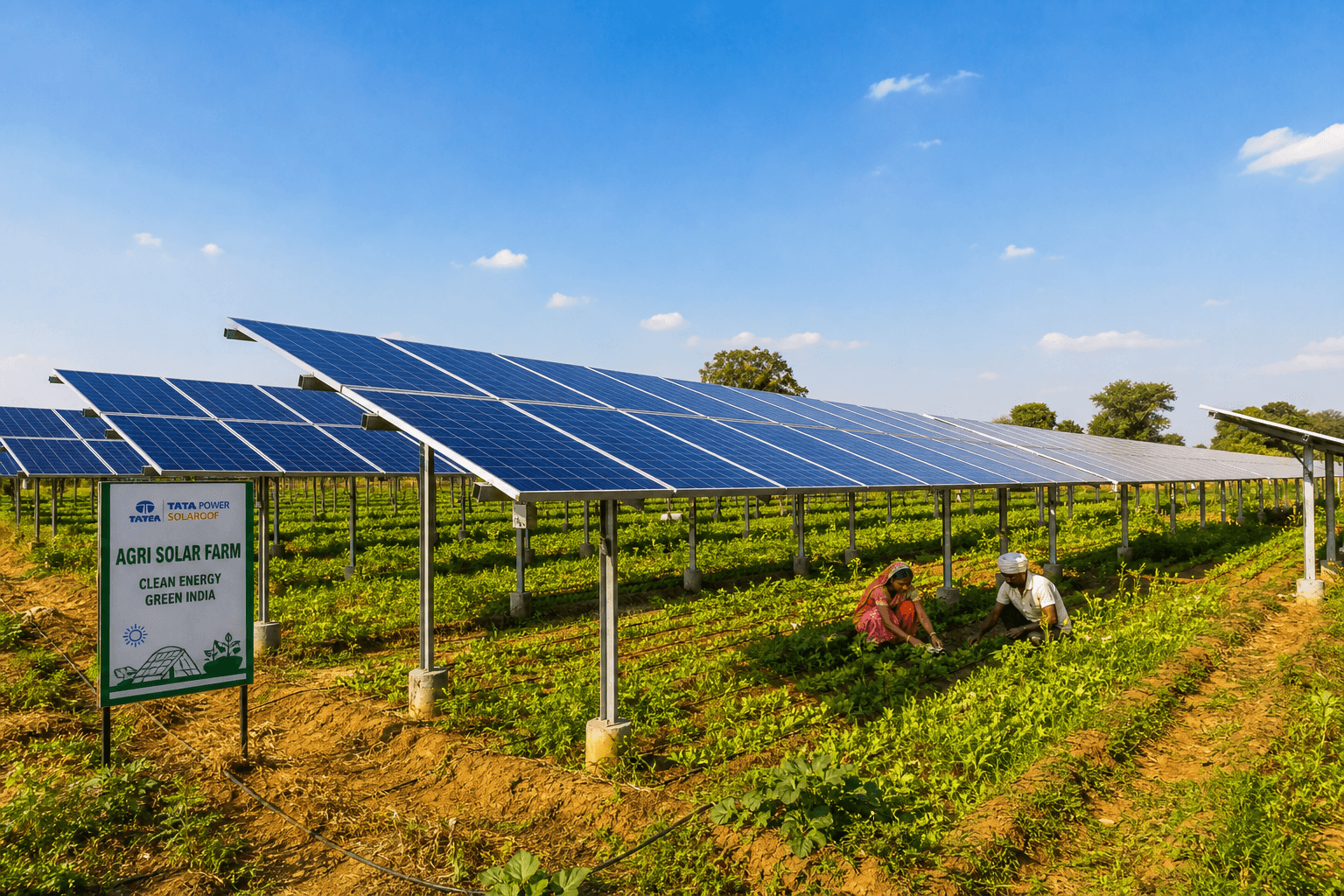
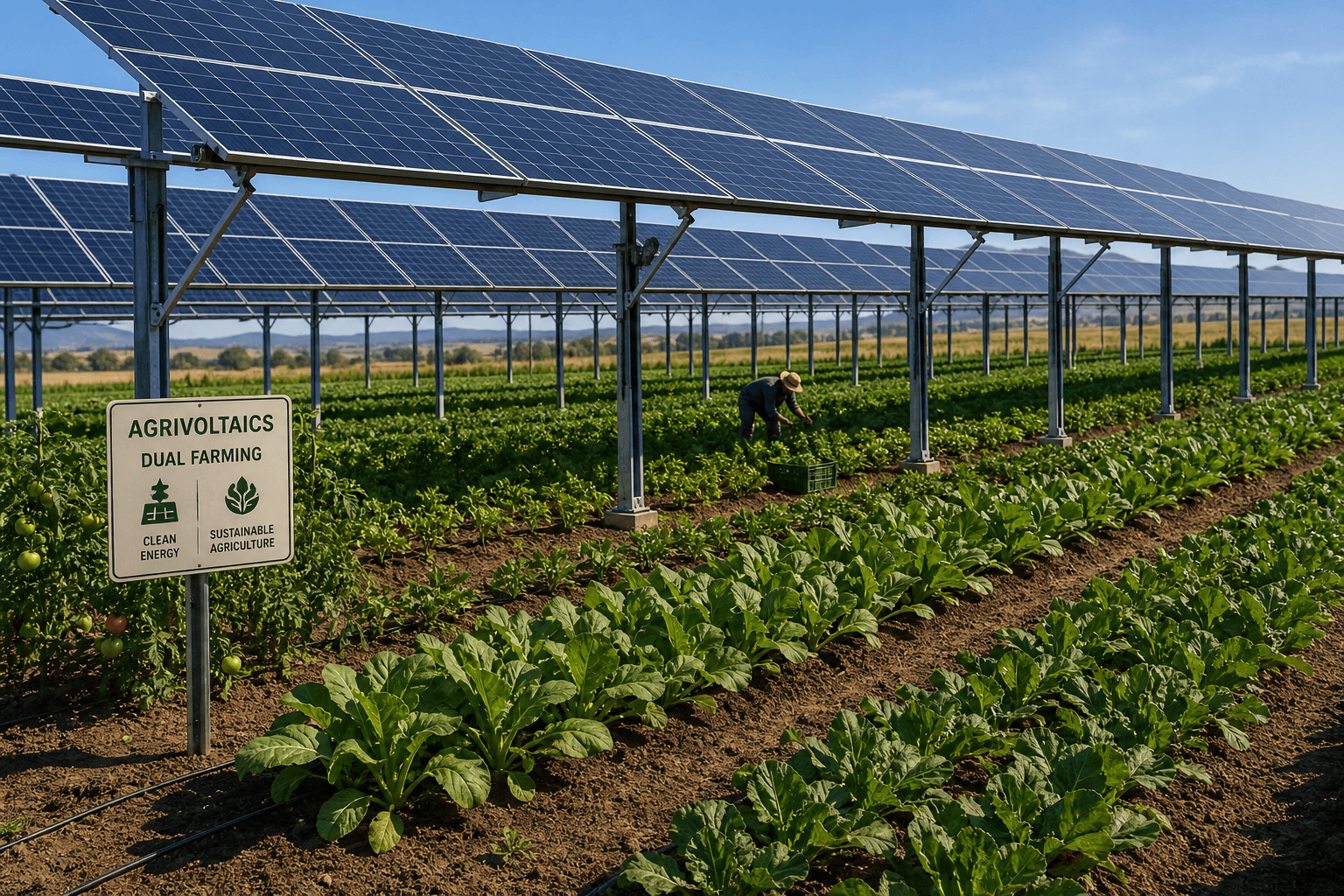
Stilt-mounted farm solar (common in Component A and some agrivoltaics) lifts panels for crops below. Water management matters:
Design / fix principles
- Grade soil so water flows away from leg bases — no pond under centre of array
- Gravel strip under drip line reduces splash back onto lower edge modules
- Avoid bunding tractor paths under panels — rut pools become mud guns in rain
- Inspect after flood — scoured soil exposes anchor bolts
Signs drainage failed
- Dark mud line on bottom 10 cm of lowest panels
- Standing water 24 hours after rain under structure
- Rust streaks on galvanised legs
- Mosquito breeding — stagnant pools (health + labour issue)
If you graze cattle under arrays, compact soil paths separately from drainage paths.
Post-storm inspection checklist
After thunderstorm, dust storm, or hail (when safe):
Visual (from ground if roof unsafe)
- Glass cracks or hail pits
- Frame bent, clamps lifted
- Cables hanging or chafed
- Branch on array — new shading
- Stilt leg plumb — tilt changed?
Electrical
- Inverter / pump controller fault codes
- DC isolator position — tripped?
- Junction box lids tight, no water inside
- Earthing strip connections green or corroded
Documentation
- Date-stamped photos for insurance, EPC warranty, DISCOM if export meter damaged
- Note generation drop % vs pre-storm week
Save nodal agency helpline and installer mobile in phone before monsoon — network fails exactly when transformer near field blows.
Barish + dhool cycle through the year
Pre-monsoon dust (Apr–Jun) → heavy loss without cleaning
        ↓
Monsoon rain (Jul–Sep) → partial clean, cloud loss
        ↓
Post-monsoon dust (Oct–Nov) → often underestimated
        ↓
Winter clear sun (Dec–Feb) → best output if panels clean
Plan two focused cleaning windows: late June (before worst dust) and mid-October (after monsoon mud). Cheap rhythm beats one heroic annual wash.
Agrivoltaics and crop shade in wet season
Taller kharif crops (maize, cotton) may shade lower rows of stilt arrays — generation dips even with clean glass. Options:
- Panel height and row spacing fixed at design — hard to change later
- Trim border crop if legal on your land use
- Accept seasonal CUF swing in income models
Read agrivoltaics PM-KUSUM 2.0 for long-term layout choices.
Lightning and earthing — monsoon priority
More failures come from surge than from dust in July:
- Verify earthing pit resistance periodically
- SPD (surge protection device) if OEM provides — not optional in lightning belts
- Disconnect policy during extreme storms** — some installers advise isolating DC if safe and trained
Controller dry-run and trip issues overlap — see dry run fix guide.
Link maintenance across seasons
| Resource | When |
|---|---|
| Dust cleaning guide | Dry months |
| Generation drop causes | Any unexplained dip |
| Rajasthan net metering disputes | Export credit odd after storm meter damage |
Tilt angle and rain runoff — small adjustments matter
Modules are usually fixed at 15–25° tilt on farm mounts. Steeper tilt sheds rain faster but may catch more wind in storms; flatter arrays hold puddled grime on the lower edge longer. You cannot re-tilt every season, but you can:
- Keep lower edge free of stacked stones or hay bales that block runoff
- Trim grass that touches frame — holds moisture against aluminium
- After hail, verify mount bolts — tilt shift changes splash pattern onto legs
For east-west row agrivoltaics layouts, morning dew plus afternoon dust creates uneven soiling between rows — compare string data if your inverter shows per-string output.
Insurance and EPC warranty after weather events
Many farmers discover too late that standard crop insurance does not cover solar modules. Ask your installer whether OEM all-risk or fire & natural calamity rider was offered at commissioning. After documented storm damage:
- File claim within policy window (often 7–15 days of discovery)
- Attach IMD weather report or panchayat note on hail if available
- Do not dispose of damaged modules before assessor visit
DISCOM-owned net meters damaged by lightning may need a separate DISCOM complaint — generation logs prove export history while meter is replaced.
Bottom line
Barish improves solar output only when drainage works, storm damage is fixed, and you re-clean after monsoon mud. Stilt panels need clear flow under structure — otherwise rain returns dhool to the glass. Post-storm inspection protects warranty and safety more than chasing one extra rainy day’s generation.
Treat monsoon as half maintenance season, not a holiday from the array.
Disclaimer: Weather risk varies by district. Inspection and electrical work carry safety hazards — use qualified help where needed. Ask Kisan is not an insurer or government agency.
Last verified: June 2026.
Frequently asked questions
Does rain clean solar panels enough during monsoon?
Rain removes loose dust and helps output recover, but it often leaves edge mud, bird droppings, and pollen streaks — especially on tilted ground mounts where splash deposits at the bottom row. One heavy rain is not a substitute for inspection; plan a light manual clean after monsoon ends.
Why is water pooling under stilt-mounted panels a problem?
Poor drainage under elevated (stilt) structures causes mud splash back onto lower modules, mosquito breeding, and corrosion on galvanised legs. Keep a clear drainage channel, avoid ploughing under arrays in wet soil, and inspect after floods for shifted foundations.
What should I check after a thunderstorm or hail?
Walk the array when safe: cracked glass, loose clamps, bent stilt legs, water inside junction boxes, tripped inverter or pump controller, and fallen branches causing new shading. Photograph damage immediately for insurance and warranty — do not wait for the next dry day.
Should I clean panels during active monsoon?
Light cleaning on overcast dry windows is fine with soft brush and water. Avoid climbing slippery roofs in rain. Focus on keeping drainage clear and checking earthing — electrical faults in wet season are more dangerous than a thin dust film.
How do barish and dhool together affect annual generation?
Monsoon months often show better output per sunny hour (cooler modules) but fewer clear hours and mixed soiling. Post-monsoon dust in western states can cut output until first manual clean — many farmers lose more in Oct–Nov than in July if they assume rain solved everything.