Search "smart farming sensor price India" and you will see everything from a ₹800 probe on a marketplace to a ₹3 lakh "AI polyhouse package" on a dealer's WhatsApp status. Most small farmers ask a sharper question: "mera 2 acre par IoT lagana worth hai ya paisa waste?" The honest answer depends on what you grow, how you irrigate, and which tier you buy — not on how glossy the app looks.
This guide breaks smart farming IoT into cost tiers from ₹5,000 to ₹2 lakh, explains soil moisture sensors and polyhouse automation, and tells you when the investment pays back for smallholders versus when you should spend the same money on PMKSY drip or certified seedlings first.
Rule of thumb: IoT should reduce water, labour, or crop loss you can measure. If you cannot point to ₹20,000+ annual waste in irrigation or climate control, buy Tier 1 only — or skip until drip and crop choice are sorted.
What "Smart Farming IoT" Means on an Indian Field
IoT (Internet of Things) in agriculture is simply sensors + a controller + an action — measure soil moisture, turn the drip valve on or off. In a polyhouse, add temperature and humidity to trigger fans, foggers, or shade nets.
It is not a replacement for:
- Soil health and balanced fertilisation
- Market linkage before planting capsicum
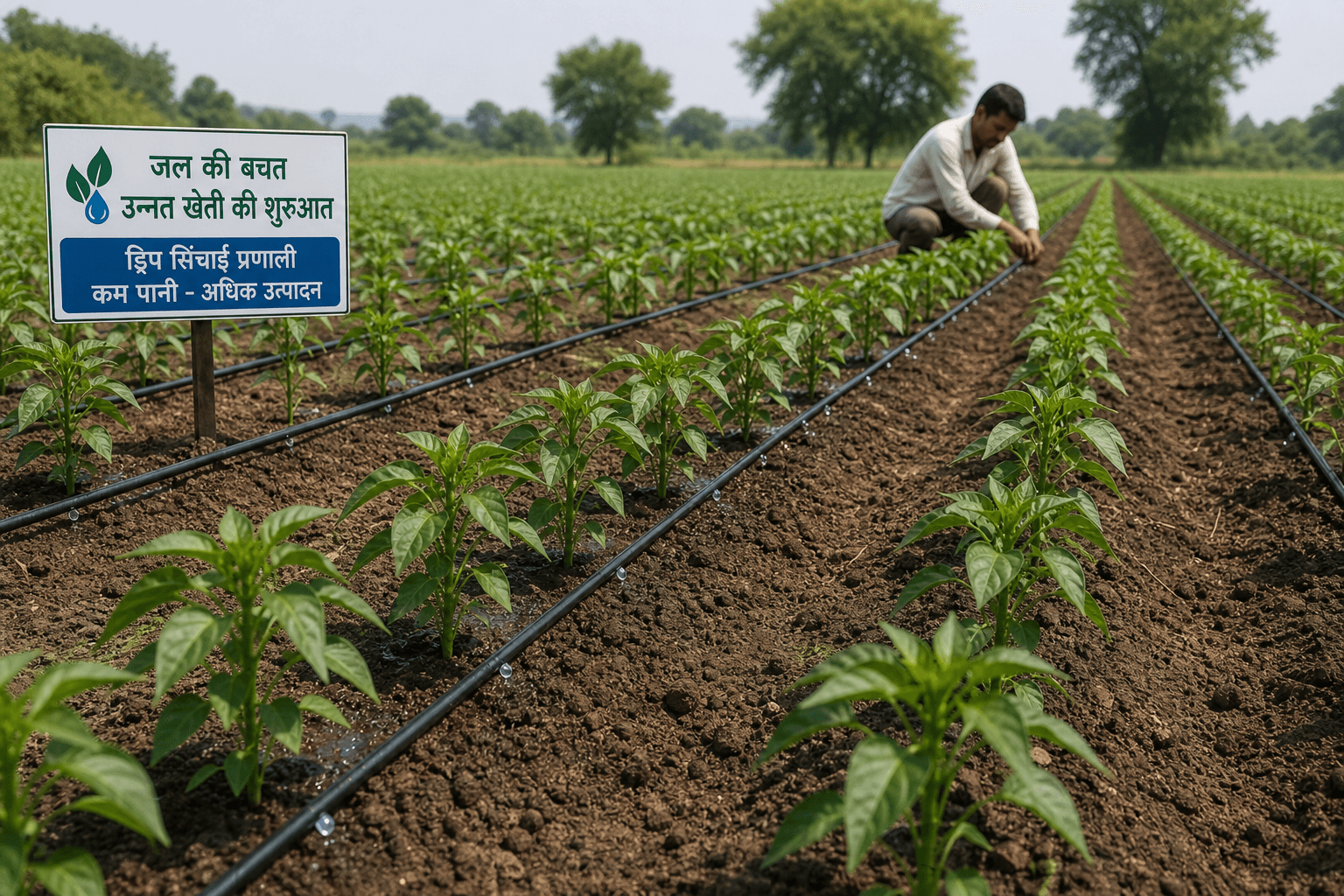
- PMKSY drip subsidy that cuts ~70% water and ~40% fertiliser
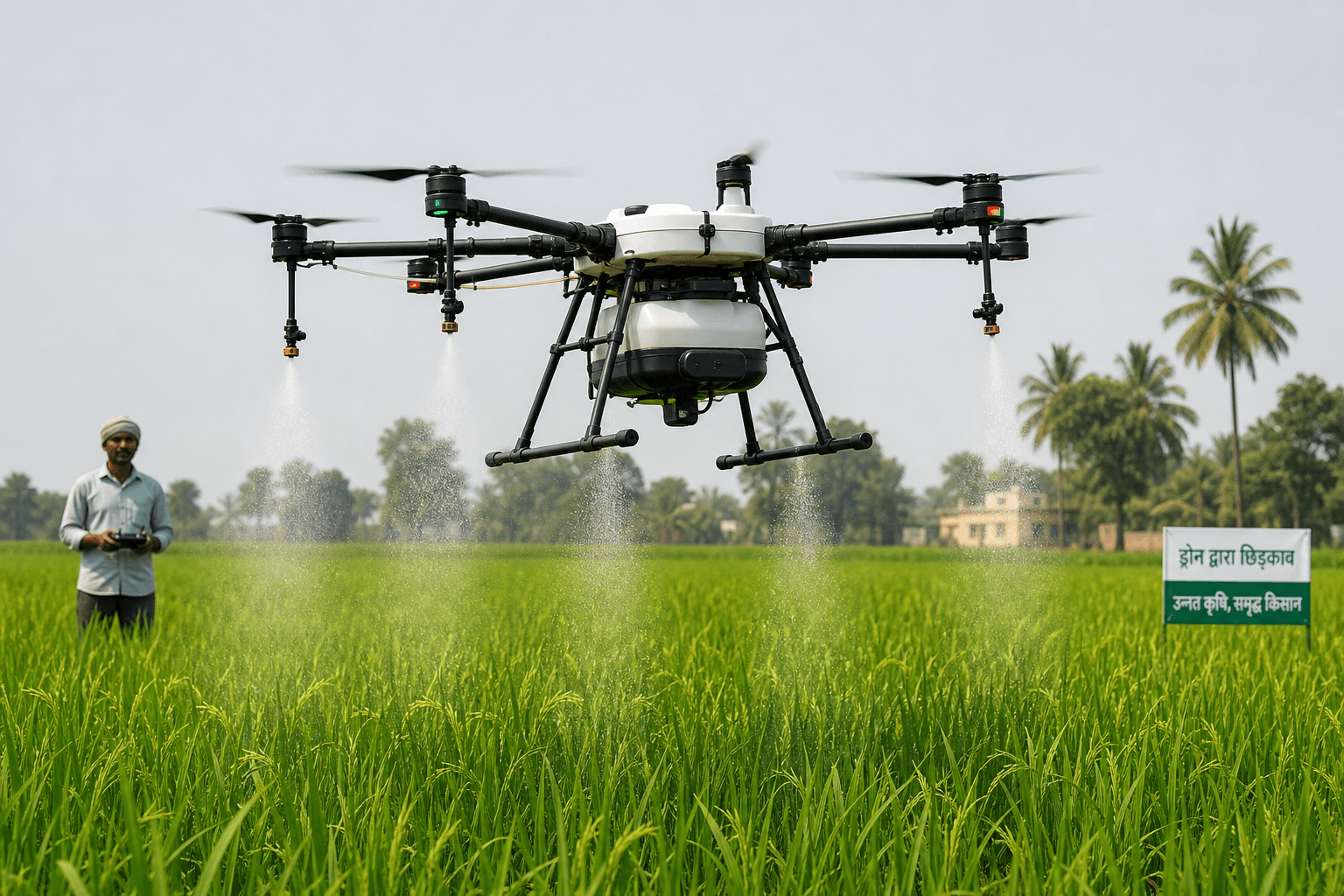
- SMAM drone spraying for labour-heavy field crops
IoT amplifies good farming. On a badly designed polyhouse with roadside nursery plants, sensors only automate losses faster.
Tier 1 — ₹5,000 to ₹15,000: Soil Moisture & Basic Alerts
What you get:
- 1–3 soil moisture probes (wired or wireless)
- Mobile app or small local display
- Manual pump start — you still flip the switch, but data tells you when
Best for:
- Vegetable blocks on 2–5 acres converting from flood to drip
- Farmers who over-irrigate because "paani lagana hai ya nahi" guesswork costs yield
- Orchard rows where one dry zone shows up late in summer
Payback logic: If you save two hours of labour daily for six months at ₹300/day, that is roughly ₹1 lakh/year — Tier 1 pays in weeks. If you irrigate twice a week on rainfed groundnut, payback is weak.
Brands and quality: Avoid no-name probes with no calibration — salinity in Gujarat and Rajasthan soils throws cheap sensors off within a season. Ask for replaceable battery and IP65 outdoor rating.
Tier 2 — ₹25,000 to ₹75,000: Drip Automation & Multi-Zone Fertigation
What you get:
- Multiple moisture + optional flow meters
- Solenoid valves on drip zones
- Timer or threshold-based pump control
- Optional EC/pH probes for fertigation tanks
Best for:
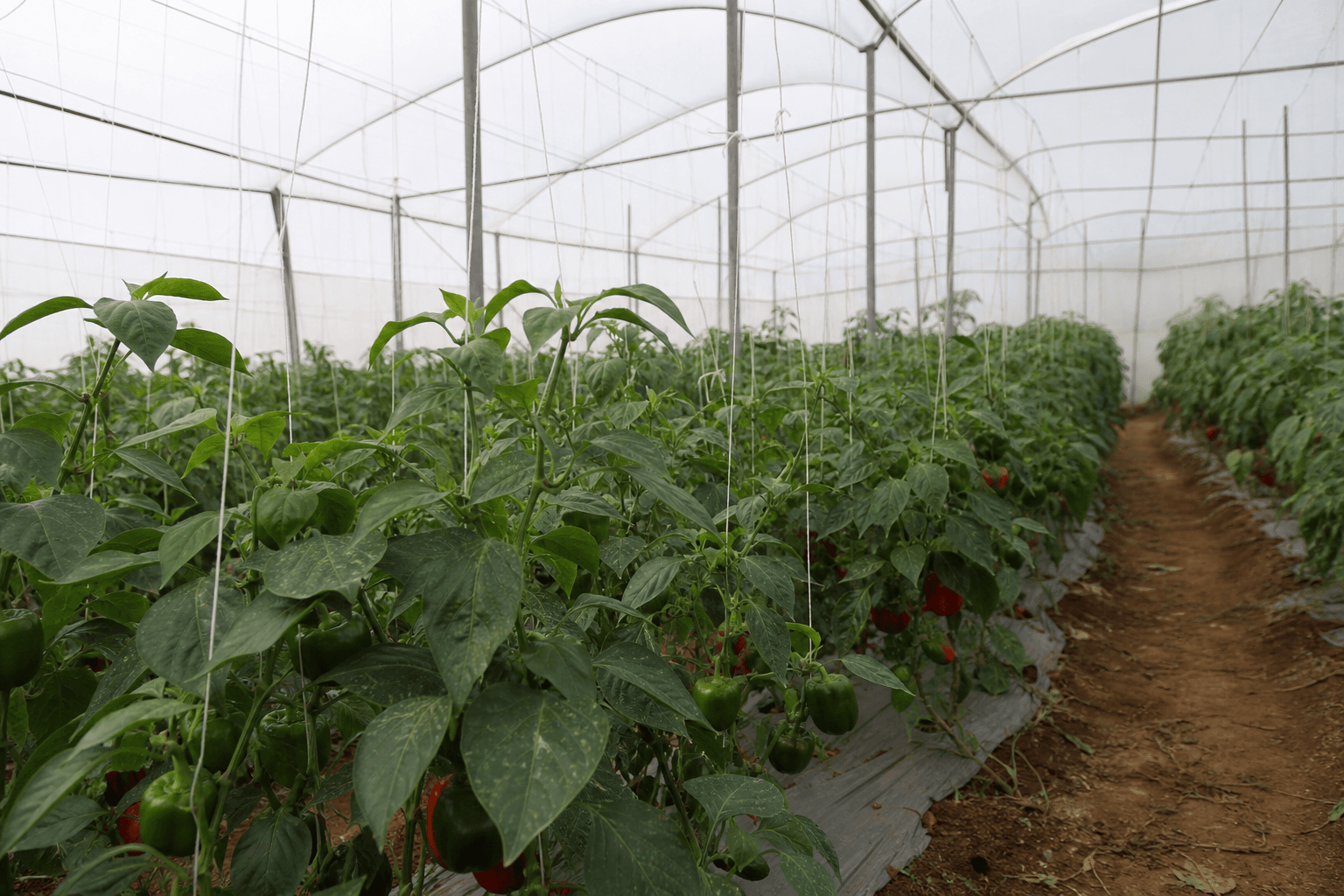
- Protected cultivation starters — 500–1,000 sqm shade net or polyhouse
- Capsicum and cucumber where uniform moisture drives grade-A price
- Farms already on PMKSY drip wanting the next efficiency layer
Stack with subsidy: PMKSY funds the drip line; IoT is often promoter contribution unless your DPR lists automation under approved equipment — confirm with the bank before purchase. Partial inclusion in polyhouse DPR is possible in some states; never assume.
| Component | Indicative cost |
|---|---|
| 4-zone valve controller | ₹15,000–30,000 |
| Moisture + flow sensors (4 zones) | ₹12,000–25,000 |
| Installation + mobile gateway | ₹8,000–20,000 |
| Typical Tier 2 total | ₹35,000–75,000 |
Payback: A well-run 1,000 sqm polyhouse targets ₹6–14 lakh/year net in 2026 benchmarks — saving 10% water + 15% fertiliser on ₹4–6 lakh running cost is ₹40,000–90,000/year. Tier 2 can repay in one to two seasons if the crop plan is solid.
Tier 3 — ₹1 Lakh to ₹2 Lakh: Full Polyhouse Climate Automation
What you get:
- Integrated temperature, humidity, CO₂ (optional) monitoring
- Automated exhaust fans, pad cooling, fogging, shade motors
- Linked drip/fertigation schedules
- Dashboard, alerts, sometimes multi-house view
Best for:
- Fan-and-pad hi-tech greenhouses and 4,000 sqm commercial NVPH units
- Farmers with labour shortage for 5 AM vent adjustments in summer
- Projects already bankable under NHB/MIDH where automation supports DSCR
Not best for:
- Open-field wheat on three acres
- First-time polyhouse farmers who have not completed one manual season
- Blocks with unstable power and no backup — controllers reset mid-heatwave
Cheap controller risk: A ₹40,000 "full automation kit" without service network fails when ambient hits 45°C in May. Budget 10–15% annual maintenance and buy from vendors who stock spare relays locally — not only on Amazon.
When IoT Is Worth It for Small Farmers — Decision Table
| Your situation | Recommendation |
|---|---|
| 2 acre open vegetables, flood irrigation | PMKSY drip first; Tier 1 sensor optional |
| 1,000 sqm polyhouse, coloured capsicum | Tier 2 minimum; Tier 3 if labour cost > ₹8,000/month |
| 5 acre cotton, seasonal labour | Skip Tier 3; consider drone spraying for input efficiency |
| Mushroom or vertical farm indoor | Environmental control mandatory — Tier 2–3 |
| Rainfed pulses, one crop/year | Defer IoT; invest in seed treatment and storage |
Small farmer definition matters: "Small" in scheme language (≤2 ha) does not mean "low revenue." A 1 ha polyhouse capsicum farmer is small by land but high-value by turnover — IoT fits differently than a 2 ha rainfed soybean holder.
Polyhouse Automation — What to Automate First
Priority order that experienced growers use:
- Drip scheduling — biggest water and labour win
- Exhaust fan on temperature threshold — prevents heat wipeout in NVPH
- Fertigation EC monitoring — reduces nutrient waste
- Shade net motors — luxury until core three are stable
- WhatsApp alert dashboard — useful if field is 20 km from home
Do not automate ventilation before drip is calibrated — dry zones and wet zones show up in the same house.
Power, Connectivity, and Maintenance
- Power: Use separate ag pump line or stabiliser; voltage sag kills controllers.
- 4G: Walk the field with your phone before buying cloud subscriptions.
- Calibration: Moisture probes need seasonal reset; salinity changes after fertigation.
- Service: If the dealer has no technician within 50 km, downgrade one tier.
Stacking IoT with Drones and Solar
Modern stack on a progressive horticulture farm:
| Layer | Role |
|---|---|
| PMKSY drip + Tier 2 IoT | Water and nutrient precision |
| PM-KUSUM solar pump | Cheap daytime pumping |
| SMAM drone | Spray and canopy mapping |
| Polyhouse automation | Climate + irrigation integration |
Each layer has separate subsidy rules. IoT is usually cash unless embedded in an approved DPR — plan 15–20% extra liquidity beyond loan margin for polyhouse projects anyway.
Red Flags When Buying "Smart Farm" Packages
- No on-site demo in your soil type
- Subscription fee higher than sensor cost after Year 2
- Promised "AI yield guarantee" — no scheme backs this
- Single-vendor lock — proprietary valves you cannot replace locally
- Quotation without GST invoice for bank DPR inclusion
The Bottom Line
Smart farming IoT in 2026 is not one gadget — it is tiered spending tied to measurable waste. Start at ₹5,000–15,000 if you irrigate high-value crops daily; move to ₹25,000–75,000 when drip is live and labour hurts; reserve ₹1–2 lakh full polyhouse automation for commercial protected cultivation with bankable cash flow. Small open-field farmers win more often from subsidised drip and crop choice than from a dashboard they never open.
Disclaimer: IoT prices, app subscriptions, and DPR inclusion rules vary by vendor, state, and bank. Costs here are indicative for 2026 planning. Verify equipment lists with your district horticulture officer and bank before claiming subsidy linkage. Ask Kisan is not affiliated with sensor brands.
Last verified: 9 July 2026.
Frequently asked questions
How much does basic smart farming IoT cost in India in 2026?
Entry-level soil moisture sensors with a simple mobile app start around ₹5,000–15,000 for one field zone. Mid-tier drip automation with multiple sensors runs ₹25,000–75,000. Full polyhouse climate automation — fan, fogger, vent, fertigation linked — typically costs ₹1–2 lakh depending on area and brand. Labour savings and water reduction determine payback, not gadget count.
Is IoT worth it for a small farmer with 2–3 acres?
Worth it when you grow high-value irrigated crops, face labour gaps for daily irrigation, or pay high diesel/electricity for pumping. For single-season rainfed cereals on two acres, a ₹5,000 moisture probe may help but a ₹2 lakh automation stack is hard to justify. Start with PMKSY-subsidised drip, then add one sensor zone before scaling.
What does polyhouse automation include?
Typical packages monitor temperature, humidity, and soil moisture; auto-trigger exhaust fans, shade nets, or foggers; and integrate drip/fertigation pumps on timers or sensor thresholds. Alerts arrive on SMS or WhatsApp-linked apps. Integration quality matters more than sensor count — cheap controllers fail in peak summer.
Can I get government subsidy on IoT farm equipment?
There is no dedicated national IoT subsidy like SMAM drones. IoT often rides inside PMKSY drip projects, polyhouse term loans, or state horticulture missions as part of the approved DPR equipment list — verify with your bank and district horticulture officer before assuming a line item will pass inspection.
Do I need internet or smartphone for farm sensors?
Basic Bluetooth or local-display sensors work offline. Cloud dashboards need mobile data — 4G coverage in your field is the first check. Some systems use SMS alerts without a smartphone app, which suits older farmers; confirm before buying a subscription-based platform.