If you walk into a rural bank branch in July 2026 and ask "mera KCC limit kitna banega?", the clerk will not quote one magic number from a poster. Kisan Credit Card (KCC) limits are calculated individually from your land, crops, and scale of finance — and they serve a different purpose than the ₹25–40 lakh term loan you need for a polyhouse. Confusing the two is one of the most common reasons farmers either under-borrow for the season or get rejected for infrastructure finance.
This guide explains how KCC limits work in 2026, the 7% crop loan with effective 4% on prompt repayment, which documents banks ask for, and when to graduate from seasonal KCC credit to a term loan for farm infrastructure — including protected cultivation under NHB/MIDH.
Quick distinction: KCC = seasonal crop running cost (seeds, fertiliser, harvest labour). Term loan = multi-year asset (polyhouse, cold storage, solar pump loan component). Subsidy on polyhouse is credit-linked to the term loan, not to KCC crop withdrawal.
What KCC Actually Covers
KCC was designed so farmers do not visit the bank before every sowing season. One sanctioned limit covers:
- Crop production expenses — seed, fertiliser, pesticides, irrigation fuel or electricity
- Post-harvest needs — marketing, storage rent, transport
- Farm maintenance — small repairs, hired labour
- Limited household contingency — historically up to 10% of the crop limit in many bank formats
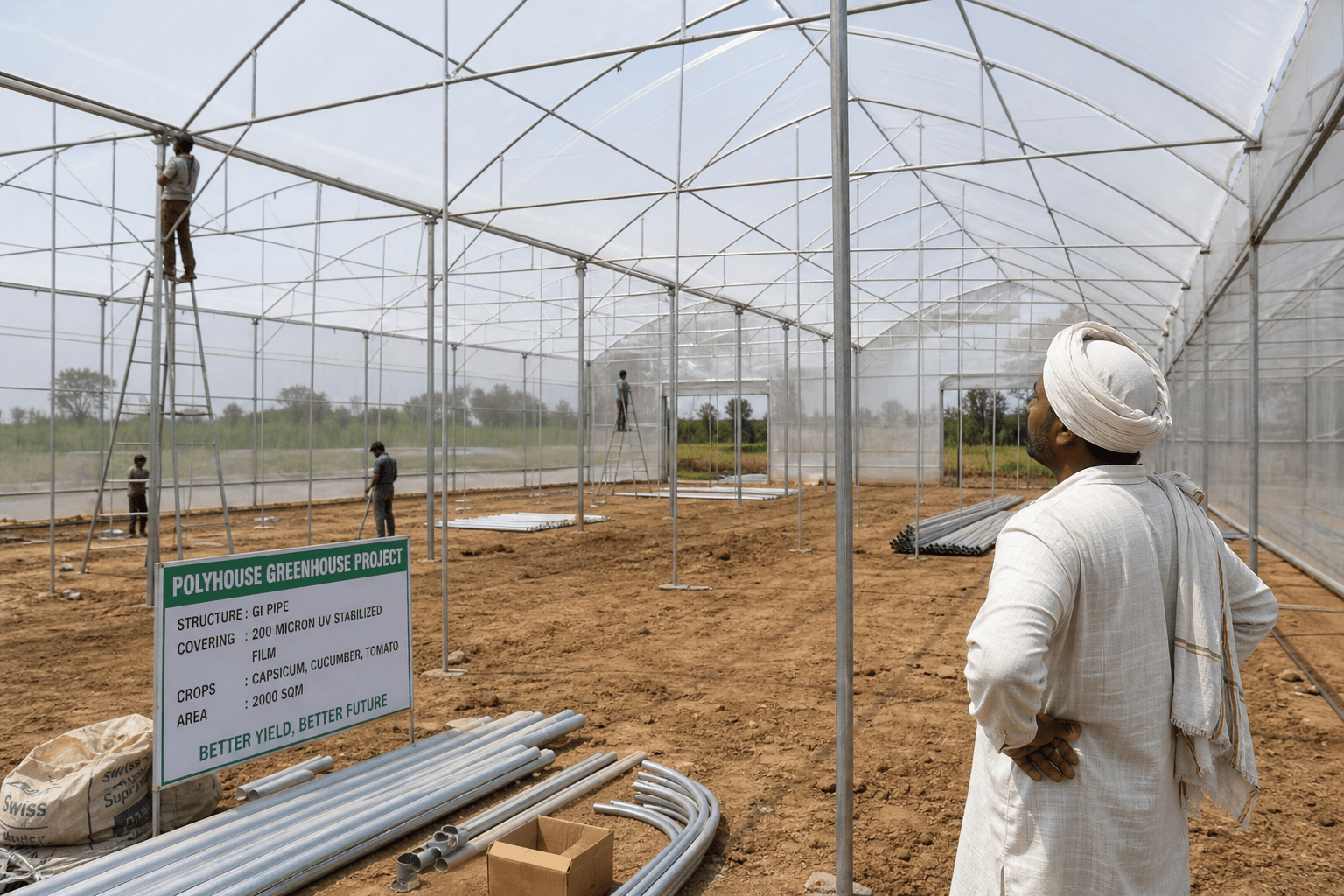
It does not replace a project loan for a 4,000 sqm polyhouse. For that you need a bankable DPR, term-loan sanction, and application on nhb.gov.in or your state horticulture portal before construction — see our polyhouse subsidy guide 2026.
How Banks Calculate Your KCC Limit in 2026
RBI and NABARD have pushed uniform KCC formats, but the final number is branch-specific. The standard logic:
Step 1 — Scale of finance per crop
Each district publishes scale of finance rates per acre for major crops — wheat, paddy, cotton, horticulture, etc. The bank multiplies your owned or leased cultivated area by the approved rate.
Example (illustrative): 5 acres of irrigated cotton at ₹45,000/acre scale = ₹2.25 lakh base crop limit.
Step 2 — Add-ons
Many banks add:
| Component | Typical treatment |
|---|---|
| Crop insurance premium | Included or separate line |
| Post-harvest / marketing | 10–20% of production cost |
| Consumables / maintenance | Small fixed add-on |
| Total KCC limit | Sum of above, subject to bank policy |
Step 3 — Repayment history and land proof
First-time applicants with clear 7/12 and 8-A (or state equivalents like Khasra-Khatauni) receive limits aligned to scale of finance. Farmers with two to three years of clean KCC repayment often receive limit enhancement without new collateral — the bank already trusts the cash flow.
Interest Rate — 7% and the 4% Prompt-Repayment Benefit
For crop loans up to ₹3 lakh, the Government of India interest subvention scheme targets a 7% rate at the bank. If you repay within the due date (or as per the flexible repayment norms your bank applies to KCC), an additional subvention can reduce the effective cost to about 4%.
| Scenario | Indicative rate |
|---|---|
| Crop loan ≤ ₹3 lakh, prompt repayment | ~4% effective |
| Crop loan ≤ ₹3 lakh, delayed repayment | 7% (subvention lost on overdue portion) |
| Amounts above subvention slab | Bank MCLR + spread — confirm in writing |
| Term loan for polyhouse | Separate product — often 9–12% before AIF subvention |
These rates change with RBI repo moves and annual subvention circulars. Your sanction letter is the contract — not this article, not a dealer's WhatsApp forward.
RBI and bank disclaimer: Interest subvention applies only when you meet prompt-repayment conditions defined in the current GOI circular and your bank's KCC terms. Overdue KCC hurts both your interest bill and your future term-loan eligibility for polyhouse or PM-KUSUM.
Collateral-Free Limit — ₹2 Lakh Priority Sector Norm
RBI priority-sector guidelines allow collateral-free agricultural loans up to ₹2 lakh for eligible farmers. Many small and marginal holders operate entirely inside this band for crop credit. Above ₹2 lakh, banks may ask for land mortgage, gold, or third-party guarantee depending on state co-operative rules or commercial bank policy.
Do not assume your neighbour's collateral-free ₹2 lakh applies to you if your land title is disputed or lease is unregistered — title clarity matters.
KCC vs Term Loan for Polyhouse — The Upgrade Path
Protected cultivation in 2026 still follows the national rule: 50% advertised subsidy, but 35–40% effective after cost norms. A 1,000 sqm starter polyhouse might cost ₹7–10 lakh market price; after subsidy perhaps ₹3.5–5 lakh net — funded through term loan + promoter margin, not KCC swipe.
| Feature | KCC crop limit | Term loan (polyhouse) |
|---|---|---|
| Purpose | Seasonal inputs | Structure, drip, planting capital |
| Tenure | 12 months / revolving | 5–9 years |
| Subsidy link | None for structure | NHB/MIDH back-ended |
| Key document | Land + crop statement | DPR with DSCR ≥ 1.5 |
| Apply before build? | N/A | Yes — LoI/LoC mandatory |
Practical path: Maintain clean KCC repayment for two seasons → approach the same bank's agriculture desk with a polyhouse DPR → secure term-loan sanction → apply on nhb.gov.in or state portal → receive LoI/LoC → then build. NABARD refinances the bank; you still never apply at NABARD office for the loan itself. Read our NABARD loan process guide.
You can stack schemes: KCC for seasonal capsicum input inside the polyhouse, PMKSY for drip, AIF for 3% interest subvention on the term loan where registered — see the complete subsidy list 2026.
Documents Checklist for KCC Application or Renewal
Print and tick before visiting the branch:
- Aadhaar card (linked to mobile)
- PAN card
- Land ownership proof — 7/12 extract, 8-A, or registered lease 10+ years
- Passport-size photograph
- Aadhaar-linked bank passbook / account statement
- Crop details — kharif/rabi/horticulture area statement
- Existing KCC statement (for renewal/enhancement)
- SC/ST or small-farmer certificate (if claiming enhanced category)
- Crop insurance receipt (where bank mandates)
For term-loan graduation, add: vendor quotations with GST, soil and water test reports, training certificate, and market linkage proof.
Step-by-Step at the Bank Branch
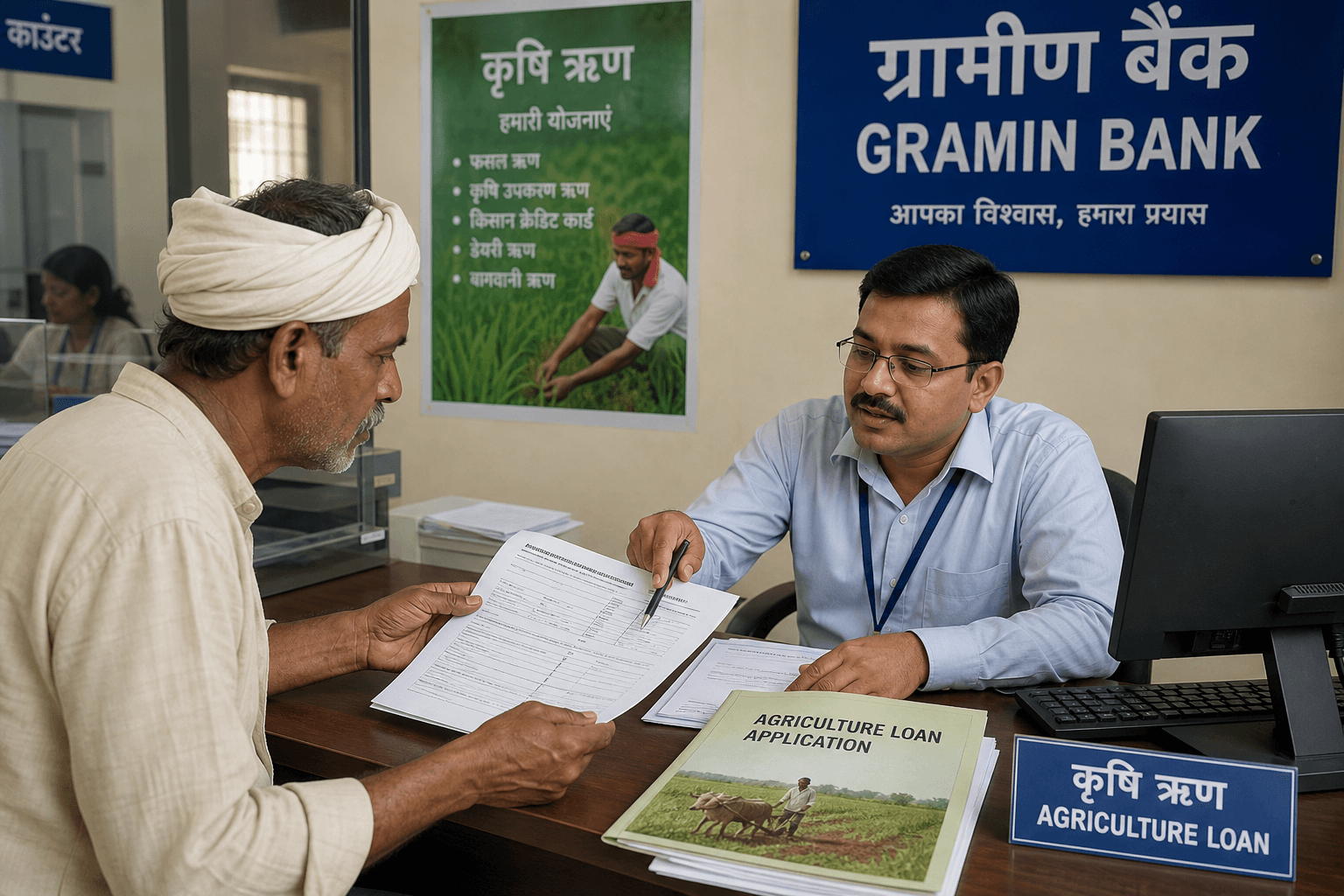
- Visit the branch where your savings or existing KCC account is active.
- Ask for KCC renewal / fresh sanction form — confirm whether your bank uses the unified KCC template.
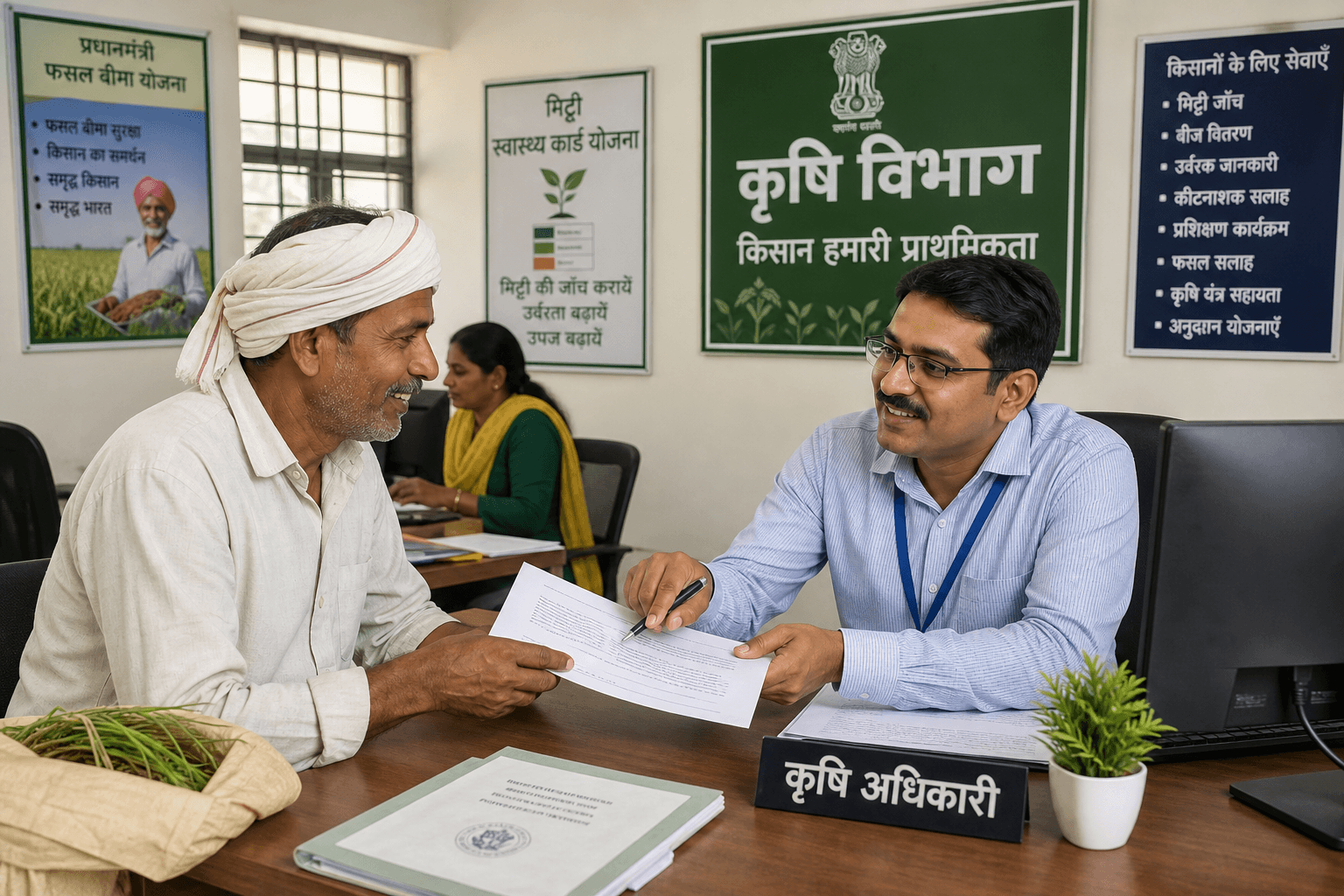
- Submit land and crop documents; bank verifies title and scale of finance from district agriculture office data.
- Receive sanction letter showing limit, interest rate, and validity period.
- Withdraw through card or cash credit account as needed during the season.
- Repay on time to lock in effective 4% and build profile for infrastructure term loan next year.
Online KCC renewal is live in several states through bank apps and Jan Samarth-linked portals — ask your branch if your district is onboarded.
Common Mistakes That Cost Farmers
- Using entire KCC limit for non-farm expenses — audit risk and repayment stress.
- Missing due date — lose prompt-repayment subvention; rate jumps effectively.
- Applying for polyhouse subsidy without term-loan sanction — automatic rejection.
- Expecting KCC alone to fund ₹30 lakh greenhouse — wrong product; weak DPR anyway.
- Ignoring lease registration — unregistered lease fails both KCC enhancement and NHB land verification.
Who Should Prioritise KCC First?
- Small and marginal farmers funding seeds and fertiliser without moneylender rates.
- Horticulture growers in open field preparing to upgrade to polyhouse in Phase 2.
- PM-KUSUM applicants using KCC for the 10% farmer contribution only after checking bank policy — some branches treat this differently; confirm locally.
The Bottom Line
KCC limit in 2026 is a calculated crop credit line, not a project fund. Master the 7% / 4% repayment discipline, keep land records updated, and use KCC as the financial track record that unlocks term loans and NHB subsidy when you are ready for polyhouse. Verify every rate and limit on your bank sanction letter and official RBI/NABARD circulars — policies shift with each agricultural credit season.
Disclaimer: KCC limits, interest subvention eligibility, collateral norms, and term-loan products vary by bank, state, and RBI master circular updates. Figures in this article are indicative for planning only. Confirm live terms with your bank manager and official sources — rbi.org.in, nabard.org, nhb.gov.in — before signing. Ask Kisan is not a bank or NBFC.
Last verified: 8 July 2026.
Frequently asked questions
What is the maximum KCC crop loan limit in 2026?
There is no single national cap printed on every card. Banks calculate limit from scale of finance for your crops, land holding, and repayment history. Many small and marginal farmers receive ₹1–3 lakh for seasonal crop credit; larger operational holdings with documented income can qualify for higher limits after bank assessment. Collateral-free agricultural loans are available up to ₹2 lakh under RBI priority-sector norms.
What interest rate applies to KCC crop loans?
Crop loans up to ₹3 lakh are available at 7% interest under the interest subvention scheme. If you repay promptly within the due date, an additional subvention can bring the effective rate to 4%. Rates above the subvention slab, overdue accounts, and non-crop components follow bank and RBI guidelines — confirm your exact rate on the sanction letter.
Can I use KCC to build a polyhouse?
No for the full project cost. KCC is primarily for short-term crop credit — seeds, fertiliser, labour, and seasonal inputs. A polyhouse or other farm infrastructure requires a separate bank term loan linked to NHB/MIDH subsidy, with a Detailed Project Report and sanction before construction. A clean KCC repayment record strengthens your term-loan application.
Which documents are needed for KCC renewal in 2026?
Typically Aadhaar, PAN, land records (7/12, 8-A or state equivalent), crop details, passport photo, and Aadhaar-linked bank passbook. Banks may ask for income proof, existing loan statement, and crop insurance where applicable. SC/ST or small-farmer category certificates help where enhanced limits apply.
Does NABARD give KCC directly to farmers?
No. NABARD refinances banks that issue KCC. You apply at your bank branch — usually where your savings or existing KCC account is held — not at NABARD headquarters. Subsidy pass-through on horticulture term loans also flows through the bank after scheme inspection.