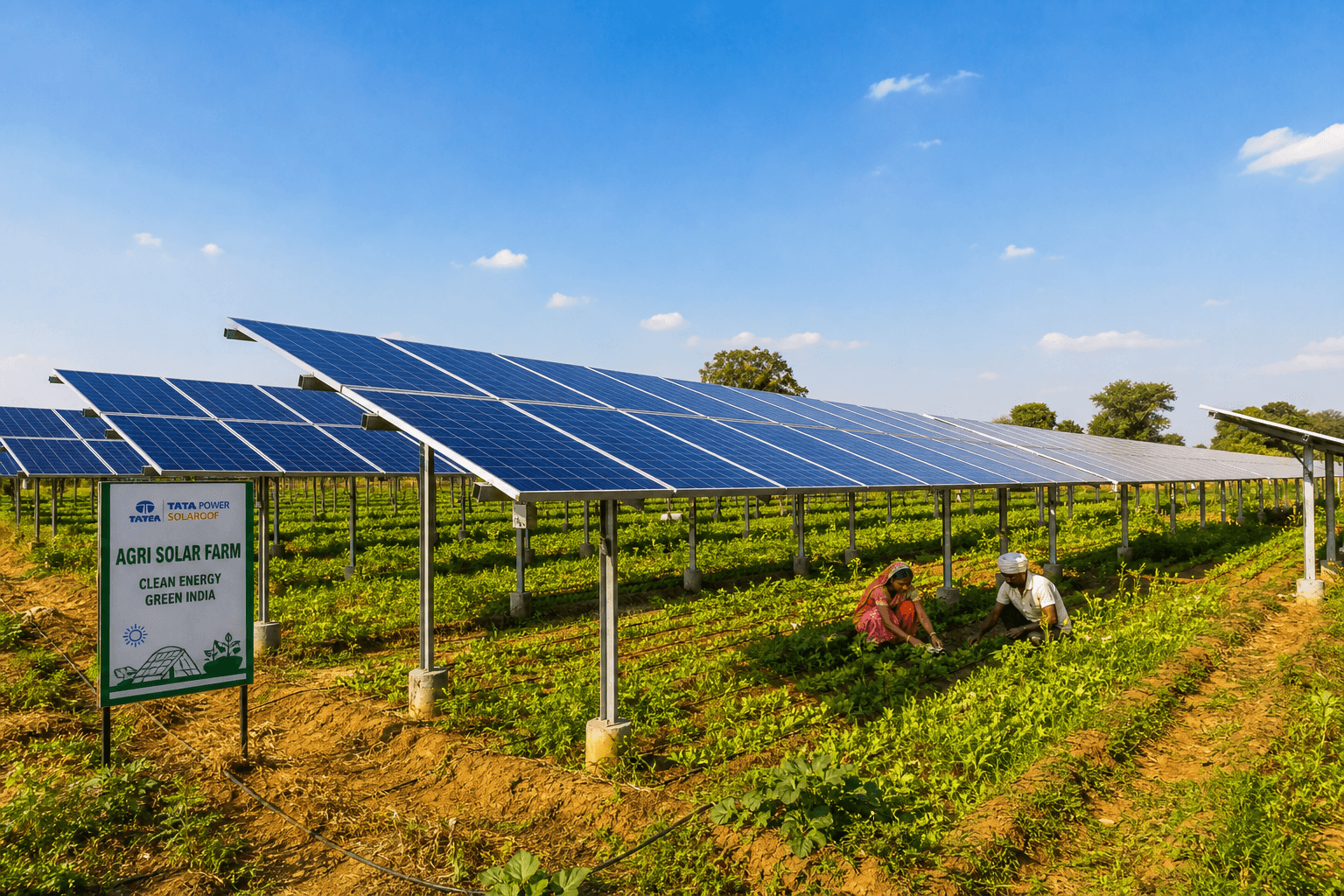
PM-KUSUM Component C was meant to solarise grid-connected pumps and whole feeders so farmers irrigate without waiting for six-hour supply windows — and send surplus power to the DISCOM. On paper it scales to 35 lakh pumps. On the ground, many files stall on feeder solarisation delays, land records, surplus export confusion, and DISCOM coordination.
If your Component B neighbour got a pump while your Component C application sits “under technical review” for months, this guide explains why, what you can fix, and how to escalate without burning bridges with the block office.
Component C rules are state-implemented. Surplus export, metering, and subsidy release differ from Component B standalone pumps. Never sign a surplus power agreement you do not understand — get terms in writing from nodal agency and DISCOM.
Component C in one table — why it is harder than B
| Aspect | Component B (standalone) | Component C (grid pump / feeder) |
|---|---|---|
| Grid tie | Off-grid pump | Existing grid connection |
| Scope | One farmer, one pump | Feeder-level coordination |
| DISCOM role | Minimal | Central — surveys, metering, surplus |
| Land / records | Pump site | Pump + feeder mapping + sometimes common land |
| Timeline | Often shorter | Longer — batch tenders |
Component C is not “B with net meter” — it is grid integration at scale.
Problem 1 — Feeder solarisation delays
Feeder solarisation means planning solar for an 11 kV agricultural feeder serving many tubewells. Delays happen when:
- Feeder not prioritised in state annual target — only X feeders per district per year
- Substation capacity insufficient — transformer upgrade queued separately
- Tender dependency — EPC selected centrally; village waits for LOA + survey
- Political vs technical list mismatch — feeder on announcement slide but not in DISCOM DPR
What farmers can do
- Ask nodal agency for feeder name and batch number in writing
- Check if DT (distribution transformer) loading study is done
- Form farmer group / FPO on same feeder — single voice to TEDA / RECL / UPNEDA equivalents
- Track MNRE dashboard progress vs your state claim
Problem 2 — Land records and name mismatch
Rejection letters often cite:
- Electricity bill not in applicant name (still in father / previous owner)
- Land record shows joint holding — one brother applied without others’ NOC
- Tenant farmer without landlord consent for solar structure
- Pump location on gauchar or canal land without permissible use proof
Fix before re-applying
- Name transfer on DISCOM consumer account — can take 2–8 weeks
- Revenue court / tehsil update for ownership splits
- Self-declaration + NOC formats from nodal agency — all signatures
- Geo-tagged photos of pump, meter, and land boundary — match DPR
Our PM-KUSUM pillar guide covers Components A–C basics; Component C fails most often on paper, not panels.
Problem 3 — Surplus export to DISCOM
Farmers hear: “Extra bijli DISCOM ko milegi, paisa milega.” Reality is state-specific:
- Some states adjust surplus against pump account
- Some pay feed-in tariff on dedicated meter
- Some cap export hours to daytime irrigation surplus only
- Bi-directional metering cost and who pays varies
Questions to ask nodal agency (get answers in writing)
- Who owns the export meter — farmer or DISCOM?
- Is surplus net-metered or separate generation meter?
- Settlement period — monthly or annual?
- If grid is down, does anti-islanding stop export only or whole pump?
- Subsidy release tied to commissioning of export meter?
Surplus without clear settlement causes bill shock — the same class of dispute as Rajasthan net metering bills.
Problem 4 — DISCOM coordination breakdown
Component C sits between MNRE framework, state nodal agency, and DISCOM. Gaps appear when:
- Nodal agency marks “approved” but DISCOM has no work order
- Technical inspection failed — no one told farmer why
- Meter stock shortage for bi-directional units
- Feeder solarisation EPC different from individual pump vendor — blame cycle
Escalation ladder
- Village agriculture extension / block RE office — status diary
- District nodal officer — batch-wise pending list
- State helpline on pmkusum.mnre.gov.in
- Written complaint to DISCOM chief grievance with application ID
- RTI for file movement dates (use respectfully, not as first step)
Maintain a WhatsApp group with other farmers on your feeder name (read it off your electricity bill or transformer plate). Ten coordinated voices beat ten isolated “sir please check” calls.
Problem 5 — Pump trips, inverter faults after solarisation
After install, grid-quality issues surface — see on-grid solar pump inverter trip fix. Component C plants are more sensitive to:
- Voltage fluctuation when feeder loads switch
- Phase imbalance on long rural lines
- Export limit software clipping perceived as “weak pump”
Log trip codes and tie warranty claims to PM-KUSUM empanelled vendor.
Component C vs Component A — do not confuse
- Component A — MW-scale plants on farm land, PPA with DISCOM
- Component C — pump solarisation and feeder programme
Some farmers apply for wrong component and wait years. Verify which component your district is actively sanctioning in 2026.
Practical checklist for stuck applications
- Consumer name matches Aadhaar / land
- Feeder name confirmed with DISCOM survey
- Surplus export terms signed
- Bi-directional meter ordered / installed
- Nodal agency portal status screenshot monthly
- Copy to MLA office only after formal grievance (optional pressure)
Bottom line
PM-KUSUM Component C solves grid pump pain at feeder scale — but feeder solarisation delays, land record gaps, surplus export confusion, and DISCOM coordination block thousands of files. Fix names and papers first, organise feeder-mates, demand written surplus terms, and escalate with dates and IDs — not anger alone.
Component B worked because it was simple. Component C needs the same patience plus village coordination.
Disclaimer: PM-KUSUM implementation varies by state and phase. Verify active guidelines on pmkusum.mnre.gov.in and your state nodal agency. Ask Kisan is not MNRE or any DISCOM.
Last verified: June 2026.
Frequently asked questions
What is PM-KUSUM Component C?
Component C solarises grid-connected agricultural pumps and supports feeder-level solarisation so farmers can run pumps on solar while surplus power may flow to the DISCOM. It targets millions of grid pumps nationally; implementation is through state nodal agencies and DISCOMs with MNRE framework guidelines on pmkusum.mnre.gov.in.
Why are feeder solarisation projects delayed?
Delays often come from feeder identification disputes, weak grid at rural substations, pending DISCOM technical surveys, land for feeder-level equipment, tender cycles, and coordination between multiple farmers on one feeder. Component C is structurally harder than standalone Component B pumps.
What land record problems block Component C?
Farmers need clear land or pump ownership proof, electricity connection in their name, and sometimes consent from co-owners or tenant farmers on shared feeders. Mismatch between revenue records, B1/Khasra, and DISCOM consumer name is a frequent rejection reason — fix names before applying.
What happens to surplus export under Component C?
Surplus solar generation from solarised grid pumps is typically fed to the DISCOM under terms defined in state implementation guidelines — metering, settlement, and whether export is paid or adjusted vary by state order. Confirm written terms with your nodal agency; do not assume rooftop net-metering rules apply identically.
How can farmers push stalled Component C applications?
Document every step with dates, escalate from block agriculture office to state nodal agency (e.g. Rajasthan RECL, Gujarat GUVNL route), use RTI for application status if needed, and coordinate with other farmers on the same feeder. Group complaints get faster DISCOM attention than isolated files.