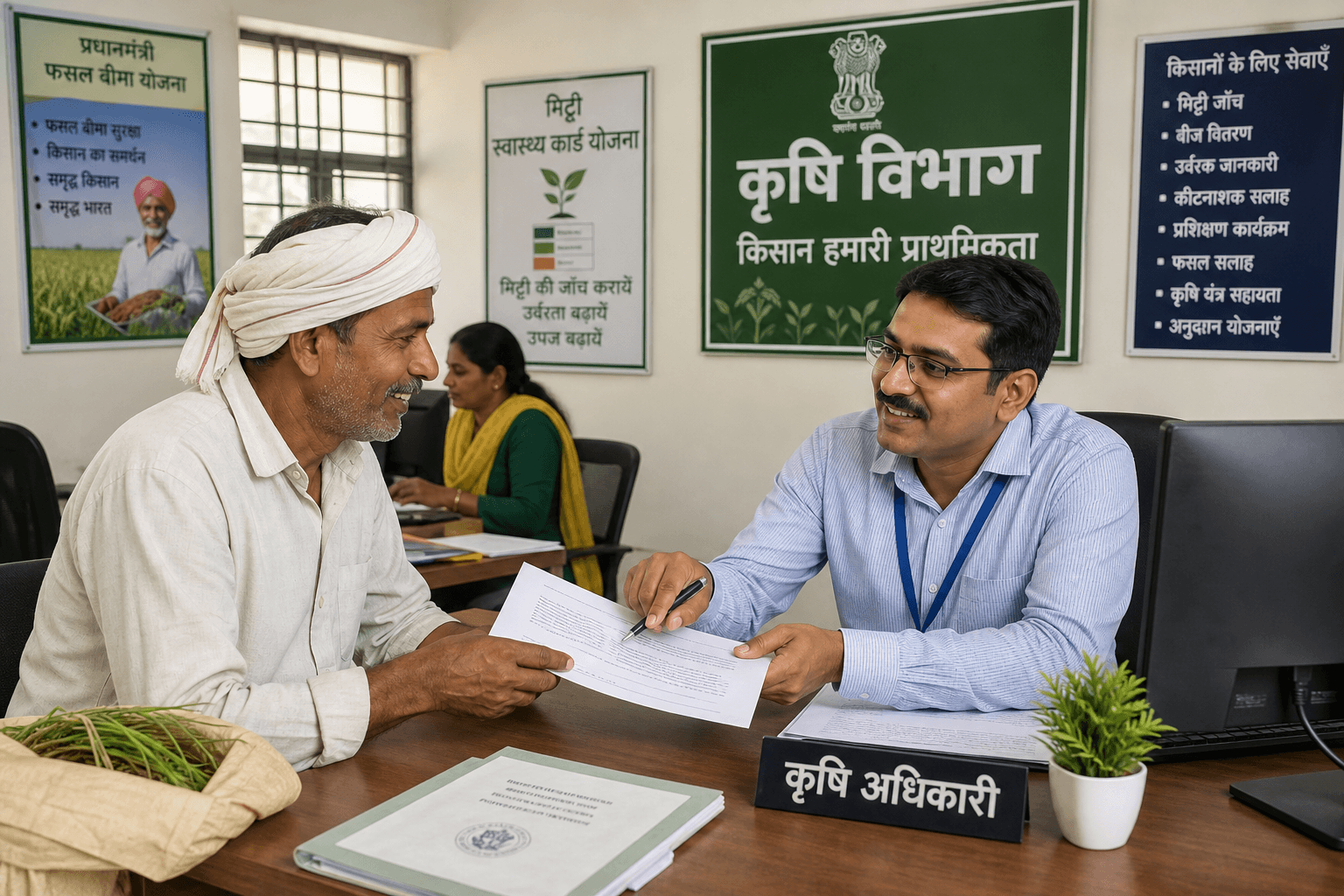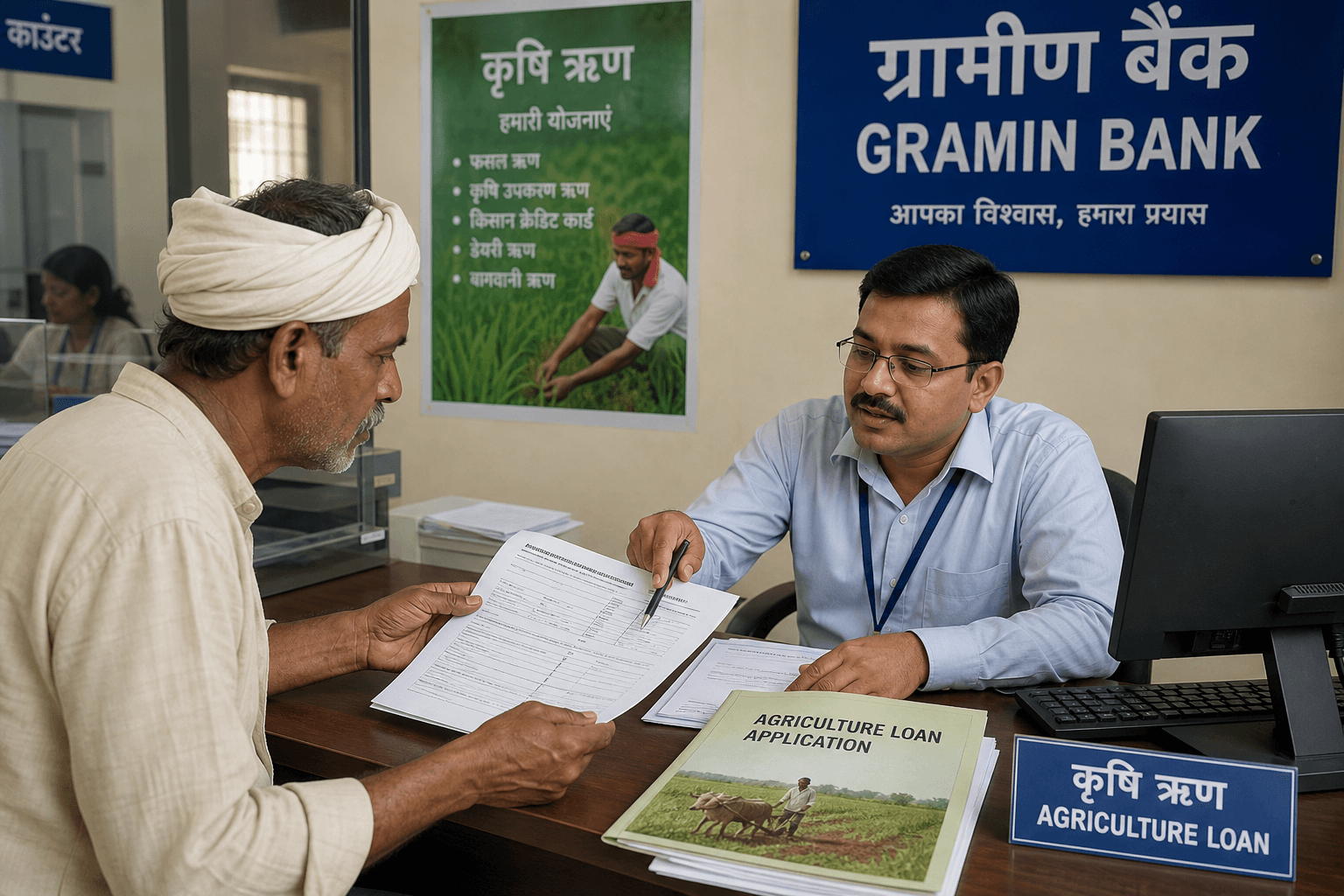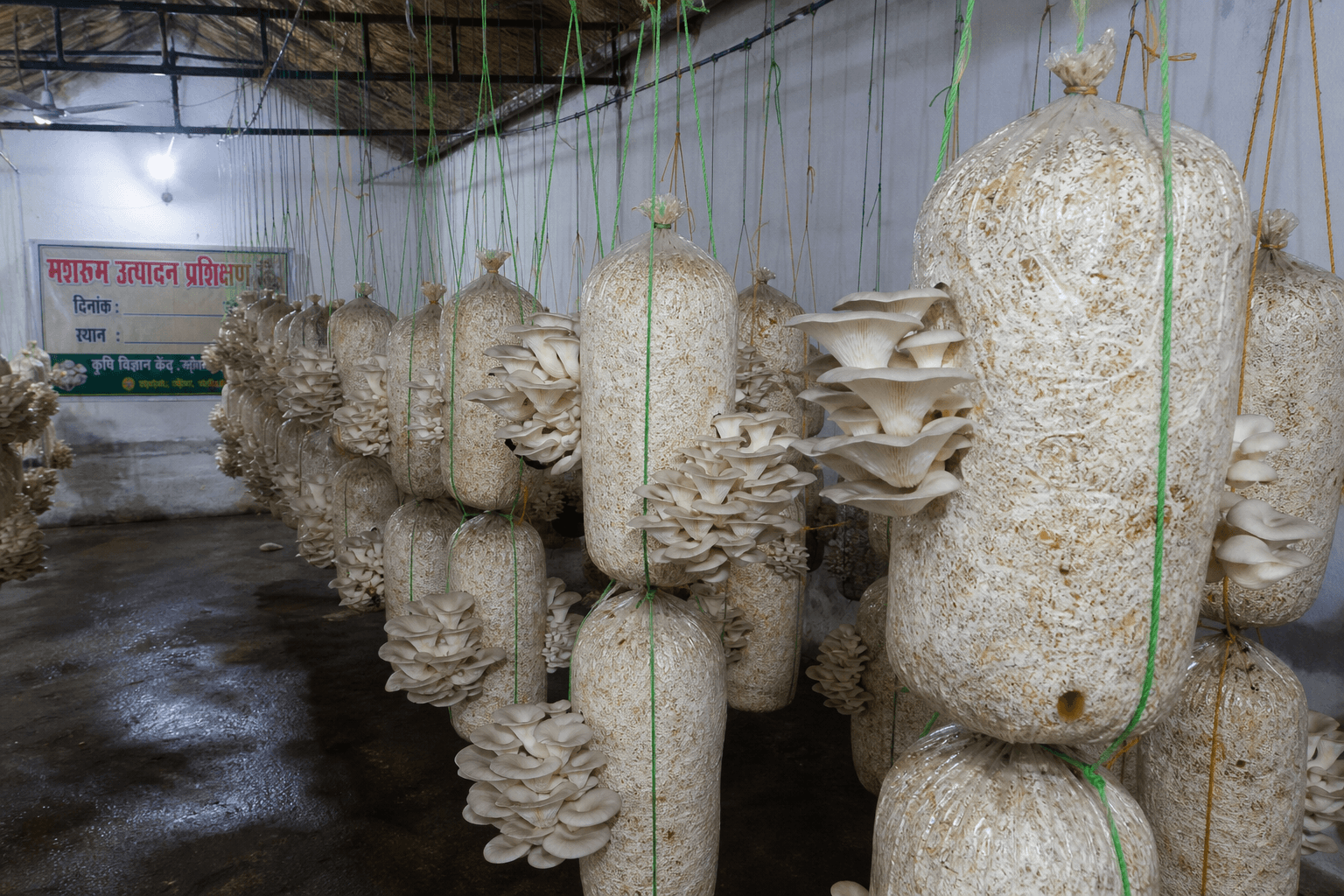
Mushroom cultivation subsidy 2026 — agar aap 500-bag oyster se start karna chahte ho ya button mushroom commercial room plan kar rahe ho, MIDH/NHB aur state horticulture dono routes par 50% band common hai — par pehle apply, phir shed/room, warna cheque zero.
Yeh guide unit subsidy, spawn lab, documents, NABARD bank linkage, aur state vs central apply clarify karti hai. Full profit cycles, oyster vs button, ICAR-Solan training: mushroom farming business guide.
Related: MIDH 2026 · NABARD farmer loan process.
Spawn, AC room, aur pasteurisation tank khareedne se pehle LoI/LoC ya state sanction letter lo. Mushroom subsidy bhi back-ended hai — inspection fail = loan EMI bina grant ke. Vendor “subsidy aa jayegi tension mat lo” — written approval mandatory.
Why mushroom subsidy fits small & marginal farmers
Mushroom needs 200 sqft se start — spare room, cattle shed corner, farm building. Landless, women SHGs, aur youth ke liye district offices actively promote units kyunki:
- Short cycle — oyster 6–8 cycles/year possible
- Waste input — paddy straw, wheat straw
- Local mandi + hotel demand — ₹90–100/kg fresh oyster indicative
- Lower capex than polyhouse — ₹50K–1L for 500 bags vs ₹25L+ NVPH
Subsidy unit ko scale karta hai — ₹5L project par ₹2.5L grant feel (norm-based, illustrative).
Central route — NHB / MIDH mushroom component
| Item | Typical policy frame |
|---|---|
| Subsidy type | Credit-linked, back-ended |
| General rate | 50% on eligible norm |
| Unit ceiling (indicative) | ~₹10 lakh subsidy on ~₹20 lakh project band quoted in NHB mushroom guides |
| Compost infrastructure | Separate 50% line on compost prep where listed |
| Apply | nhb.gov.in commercial route + state SHM parallel in many districts |
Cost norm logic same as polyhouse: government schedule rate, not vendor WhatsApp. Quote ₹25 lakh, norm ₹18 lakh → subsidy calculated on ₹18 lakh.
Oyster vs button — subsidy reality
| Type | Capex feel | Subsidy fit |
|---|---|---|
| Oyster bag culture | ₹50K–3L starter | State small-unit component; NHB when scaled |
| Button | ₹15L–40L+ climate room | Higher norm, stricter inspection |
| Spawn production lab | ₹5L–20L | Separate component some states — licence skill chahiye |
Beginners: mushroom farming business — oyster first, button after cash flow.
State horticulture mushroom schemes — 2026 pattern
States implement MIDH/NHM with local names. Common components:
- Mushroom unit — growing room, racks, humidifier
- Pasteurisation drum / chamber
- Spawn unit — only if trained; quality spawn local supply
- Compost preparation yard (button)
| State pattern | Tip |
|---|---|
| Himachal / HP | Solan hub proximity — spawn quality |
| Punjab, Haryana | Horticulture portal — oyster popular |
| UP, Bihar | KVK + state mission combo |
| Maharashtra | MahaDBT horticulture line check |
| South states | Year-round humidity — dehumidifier cost in DPR |
Enhanced rate: SC/ST, women, small/marginal — +10–25% over baseline in several circulars — category certificate file mein.
Documents pack — apply before you build
- Aadhaar, mobile-linked bank account
- Land record OR building ownership / lease NOC for shed
- DPR — capacity (bags/day), crop (oyster/button), power load
- Vender quotation — empanelled if state list exists
- Caste/category if enhanced rate
- Training certificate — KVK / DMR Solan (recommended)
- Bank term loan sanction — NABARD refinance route through branch
- Environmental — local rules if compost runoff near water body
SHG group: registration, resolution, signatories.
Bank loan + NABARD — how subsidy lands
Flow:
- Farmer submits DPR to bank + horticulture
- Sanction letter — term loan amount
- LoI / LoC from NHB or state
- Civil work + equipment purchase
- Inspection — spawn hygiene, drainage, fire safety basics
- Subsidy credit to loan account — EMI pressure kam
NABARD refinances eligible agri term loans — branch ko NABARD process guide samjhao agar manager unaware ho.
Margin money: Bank usually 15–25% promoter contribution — subsidy is not upfront vendor payment.
Spawn unit — separate subsidy line?
Spawn lab = skill + quality control. Some states subsidise mother culture room separately — do not apply without training; failed inspection common.
Safer path: Buy spawn from licensed labs (Solan belt) — focus subsidy on fruiting room first.
Economics: 500 bags need reliable spawn — ₹8–15/bag spawn cost band indicative — DPR mein likho.
Room spec — inspection checklist
| Item | Oyster | Button |
|---|---|---|
| Space | 150–300 sqft starter | 800+ sqft commercial |
| Temp | 20–28°C band | Strict 16–18°C |
| Humidity | 80–90% | 85–95% |
| Flooring | Washable, drain | Concrete sloped drain |
| Ventilation | Cross vent + humidifier | AC + fresh air control |
| Racks | Bag shelves | Tray shelves |
White paint, insect mesh, footbath — auditors notice hygiene gaps.
Economics with subsidy — quick model
500-bag oyster (illustrative):
| Line | Without subsidy | With 50% on ₹1L norm share (example) |
|---|---|---|
| Setup | ₹1 lakh | ₹50K farmer cash feel |
| Yield/cycle | ~75 kg | same |
| Price | ₹90/kg | same |
| Cycles/year | 6–8 | same |
Scaled 2,000-bag unit — ₹60K–1.5L/month gross possible literature band — management skill decides; subsidy does not replace marketing.
Full tables: mushroom farming business.
Mistakes — subsidy cancel
| Mistake | Result |
|---|---|
| Room built before sanction | Reject |
| Spawn from unlisted seller | Quality fail — no second grant |
| Button DPR, oyster equipment installed | Inspection mismatch |
| No bank loan when credit-linked required | Ineligible |
| Compost runoff complaint | Local stop work order |
Apply timeline — 2026
| Month | Action |
|---|---|
| April–May | Window open many states — file early |
| June | Bank sanction follow-up |
| July–Aug | Construction before humid season prep |
| Sept onward | First harvest cash — EMI start plan |
Bottom line
Mushroom cultivation subsidy 2026 = MIDH/NHB 50% norm-based + state top-ups for units, compost, sometimes spawn — credit-linked, inspection-driven. Start with oyster DPR and business guide; scale button when cooling capex clear.
Disclaimer: Ceilings and norms change by FY. Ask Kisan is not a government body. Verify nhb.gov.in, dac.gov.in/midh, district horticulture, and ICAR-DMR before payment.
Frequently asked questions
How much NHB subsidy is available for a mushroom unit in 2026?
NHB protected cultivation / mushroom components commonly offer up to 50% credit-linked subsidy on eligible cost norms, with indicative ceilings around ₹10 lakh on a ₹20 lakh unit project for commercial mushroom infrastructure — plus separate support for compost preparation where listed. Verify current NHB circular on nhb.gov.in; state schemes may stack differently.
Do state horticulture departments give extra mushroom subsidy?
Yes. Many states run MIDH/NHM lines for mushroom spawn units, growing rooms, and pasteurisation through district horticulture or agriculture portals — percentages from 40–60% with category top-ups. Names differ by state (e.g. horticulture mission component, mushroom development programme). Always apply before purchase of civil work beyond advance planning.
Is oyster mushroom eligible for the same subsidy as button mushroom?
Both can fall under mushroom unit components if your DPR matches approved technology — oyster bag culture is common for beginners; button needs climate-controlled infrastructure and higher capex. Subsidy norm follows structure type in the schedule, not crop hype from vendors.
Can women SHGs and landless farmers get mushroom subsidy?
Mushroom units are popular for SHGs because land requirement is minimal. Many states give enhanced rates for women, SC/ST, and small farmers. Group applications may need FPO/SHG registration and joint bank account — confirm with district horticulture.
Where to get training before applying for subsidy?
ICAR-Directorate of Mushroom Research (Solan) and Krishi Vigyan Kendras run practical courses. Training certificate strengthens DPR and bank sanction — see our mushroom farming business guide for economics and cycle timing.