Biofloc fish farming — raising fish in high-density tanks where beneficial bacteria convert waste into protein-rich floc — has moved from training-centre demos to viable side-income on farmyards across India. Search traffic in 2026 clusters around three questions: setup cost, PMMSY subsidy through state FFDA, and tilapia economics per cycle.
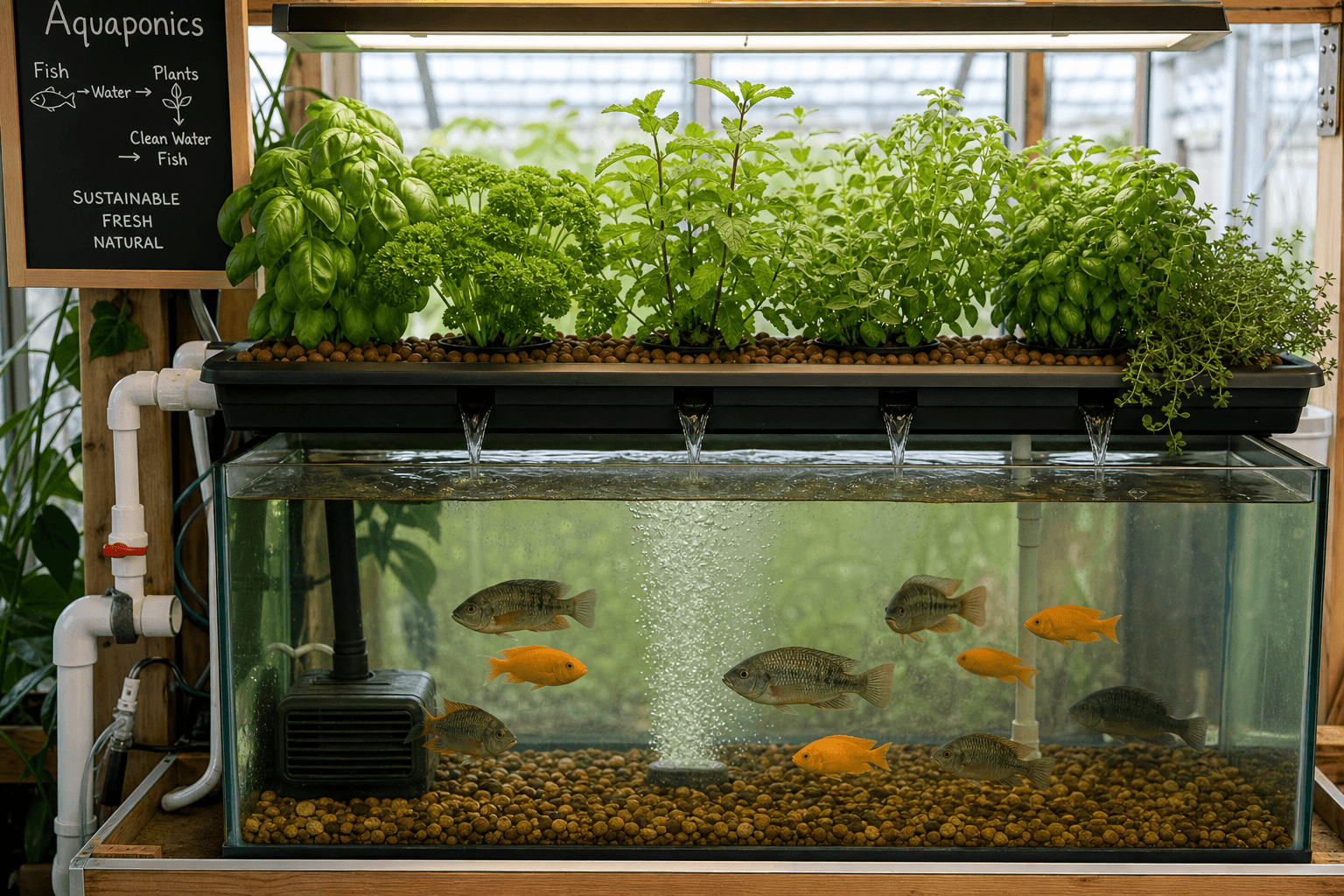
This guide covers realistic investment tiers, how to route funding through PMMSY and NABARD-linked bank loans, tilapia revenue planning, and the water-quality basics that separate profitable units from failed experiments. For integrated fish-plus-vegetable systems, compare with our aquaponics farming guide.
What Biofloc Is — and Why Farmers Choose It
Traditional pond culture needs large water bodies and long grow-out periods. Biofloc technology (BFT) uses ** aeration**, carbon source addition (molasses or jaggery), and probiotic management to maintain a suspended bacterial floc that fish consume as supplemental feed while cleaning the water column.
Advantages on a farm plot:
- Small footprint — one 4–6 m tank on 200–400 sqft can replace a much larger pond volume for equivalent biomass in some setups
- Water recycling — limited freshwater top-up compared with flow-through ponds
- Faster cycles — tilapia can reach market size in 4–6 months with good FCR
- Year-round potential — with shed cover and aeration backup in hot/cold extremes
Trade-offs are real: 24/7 aeration (power cost), daily water quality monitoring (ammonia, nitrite, pH, DO), trained labour, and disease risk if stocking density exceeds biofloc capacity.
There is no separate "biofloc-only" central scheme. Funding flows through PMMSY and state FFDA channels as fisheries infrastructure — similar to how aquaponics splits fish and greenhouse components. Write your DPR with FFDA-specified line items and species approval.
Setup Cost — Starter to Commercial
Indicative 2026 investment ranges (market quotes vary by state and vendor):
| Scale | Description | Investment (before subsidy) |
|---|---|---|
| Starter | 1–2 tanks (4–6 m), basic aerator, probiotic starter kit | ₹2–4 lakh |
| Mid-commercial | 4–6 tanks, shed net, backup aeration, water test kit | ₹4–8 lakh |
| Multi-tank farm | 8+ tanks, processing shed, generator, office | ₹10–25 lakh |
Cost drivers:
- Tank construction — RCC, tarp-lined, or prefab HDPE lined pits
- Aeration — paddlewheel or blower capacity matched to stocking density
- Shed / shade net — reduces temperature shock and algal blooms
- Backup power — inverter or generator; aeration failure overnight kills stock
- Water source — borewell or canal; FFDA may require water quality report
Compare with aquaponics: integrated vegetable loops add hydroponic beds and higher capital (₹20 lakh–₹1 crore commercial). Biofloc is fish-only — simpler scope, lower entry, but no second crop revenue.
PMMSY and State FFDA — Subsidy Route
Pradhan Mantri Matsya Sampada Yojana (PMMSY) supports fisheries infrastructure creation:
- 40% financial assistance for general category beneficiaries
- 60% for SC/ST and women entrepreneurs in many components
Application typically flows through:
- State fisheries department or FFDA (Fisheries Development Authority) district office
- Empanelled training / implementation agency where required
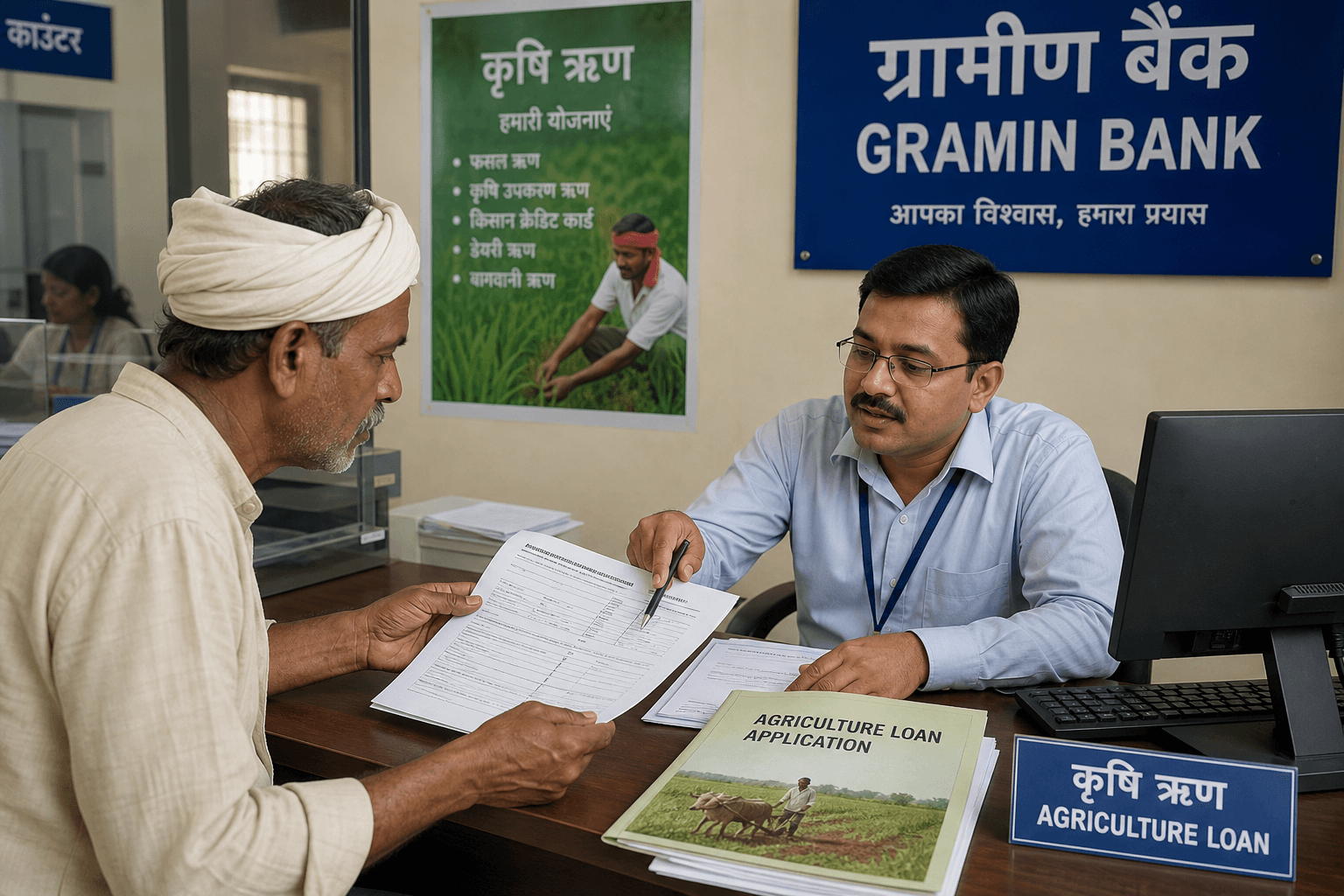
- Bank term loan with NABARD refinance for the balance
- Back-ended subsidy release after joint inspection
Your DPR fisheries section should cover:
- Species (tilapia GIFT most common for biofloc)
- Stocking density and harvest weight targets
- Feed and carbon source plan (FCR projections)
- Aeration capacity calculations
- Marketing — local mandi, live fish traders, or contract buyers
States interpret "biofloc unit" under different PMMSY sub-components — freshwater aquaculture, re-circulatory aquaculture system (RAS), or entrepreneurship slots. Meet the FFDA officer before finalising vendor quotations.
Tilapia Economics — Illustrative Planning
Disclaimer: All prices, yields, and margins below are illustrative for planning only. Mandi rates, feed costs, and mortality vary by district and season. Verify local offtake before stocking.
Yield per tank (indicative)
A 6 m diameter tank at moderate biofloc density might harvest:
- 600–1,000 kg per cycle
- 2 cycles per year in plains with good management; 3 where climate and market align
Revenue illustration
| Scenario | Yield | Illustrative price | Gross turnover |
|---|---|---|---|
| Conservative | 600 kg × 2 cycles | ₹120/kg | ₹1.44 lakh/year |
| Mid | 800 kg × 2 cycles | ₹150/kg | ₹2.4 lakh/year |
| Strong | 1,000 kg × 2 cycles | ₹180/kg | ₹3.6 lakh/year |
Operating costs to subtract
- Feed — often 40–55% of operating cost even with biofloc protein supplement
- Power — aeration 12–18 hours/day; budget ₹3,000–8,000/month per multi-tank unit
- Probiotics, molasses, lime — ₹2,000–5,000/month
- Labour — daily monitoring non-negotiable
- Mortality allowance — plan 5–10% in DPR
Net margin on a ₹4–6 lakh mid-scale unit might land ₹1–2.5 lakh per year in favourable conditions — not the "double capital in six months" claims on social media. Present bankable numbers conservatively.
Pangasius and other species
Some FFDA programmes promote pangasius or rohu in modified biofloc. Tilapia remains the default for fast turnover and wide retail acceptance. Check state restrictions — certain tilapia strains require FFDA-approved sourcing.
Water Quality — Non-Negotiable Basics
Biofloc fails when treated as "fill tank and forget":
- Dissolved oxygen — maintain above 4–5 mg/L; aerator sizing is not where you cut cost
- pH — often kept 7.0–8.5 with lime corrections
- Ammonia / nitrite — test kits weekly minimum; spike = reduce feeding, add carbon, increase aeration
- Alkalinity and TDS — state FFDA training modules specify ranges
- Biosecurity — quarantine new seed; avoid wild-caught seed without clearance
Many states offer short FFDA biofloc training — attend before first stocking. Certificate sometimes required for subsidy file.
Stacking PMMSY with NABARD and Other Schemes
Sequence that works for many first-time fish entrepreneurs:
- FFDA training + species clearance
- Bankable DPR with conservative tilapia economics
- Term loan sanction — see NABARD loan process for farmers
- PMMSY application through state fisheries portal
- Construction and stocking after approval where required
- Inspection and subsidy release
Do not double-claim the same tank cost under PMMSY and a separate NFDB component without written clearance. See Government Farming Subsidy Schemes 2026 — Complete List for stacking rules.
Common Mistakes
- Undersized aeration — overnight DO crash wipes stock
- Overstocking before floc stabilises — wait 2–3 weeks after inoculation
- No backup power — one outage = total loss
- Marketing after harvest — tie live fish traders before stocking
- Ignoring FFDA species list — unapproved seed blocks subsidy
- Feed-only mindset — biofloc saves feed but does not eliminate it
Verify Before You Invest
Confirm PMMSY component classification, FFDA empanelment, and tilapia market rates with your district fisheries office and local mandi traders before paying tank contractors. Scheme windows and assistance percentages change with state budgets.
Disclaimer: Yield, price, and subsidy figures are educational estimates. Ask Kisan is not a fisheries department, FFDA empanelled agency, or feed supplier.
Frequently asked questions
How much does a biofloc fish tank cost in India in 2026?
A starter unit (one or two tanks, ~4–6 m diameter) often costs ₹2–4 lakh before subsidy. A mid-scale commercial setup with aeration, probiotic inputs, and shed cover runs ₹4–8 lakh. Full multiple-tank farms with backup power and processing reach ₹10–25 lakh depending on capacity and land preparation.
Is there PMMSY subsidy for biofloc fish farming?
Biofloc units may qualify under PMMSY (Pradhan Mantri Matsya Sampada Yojana) through your state fisheries department or FFDA (Fisheries Development Authority). General category assistance is often 40%; SC/ST and women beneficiaries may receive up to 60%. Exact classification and empanelment vary by state — apply with a fisheries DPR section.
Which fish species work best in biofloc in India?
Tilapia (GIFT strain) is the most common choice for biofloc because of fast growth, tolerance, and steady domestic demand. Pangasius and rohu are also used in some states. Match species to local FFDA guidelines and market offtake before stocking.
What profit can tilapia biofloc give per cycle?
Indicative planning: a well-managed 6 m tank may produce 600–1,000 kg per cycle with 2–3 cycles per year in favourable climates. At illustrative farm-gate prices of ₹120–180/kg, gross turnover can reach ₹1.5–5 lakh per tank per year before feed, power, and labour. Net margin depends on FCR, mortality, and marketing — not guaranteed.
Can NABARD finance a biofloc project?
Yes. Banks refinance fisheries projects with NABARD support when the DPR shows viable DSCR (often ≥1.5), land/water rights, and FFDA or state fisheries clearance. PMMSY subsidy is typically back-ended after inspection. Combine with our NABARD loan process guide for document preparation.