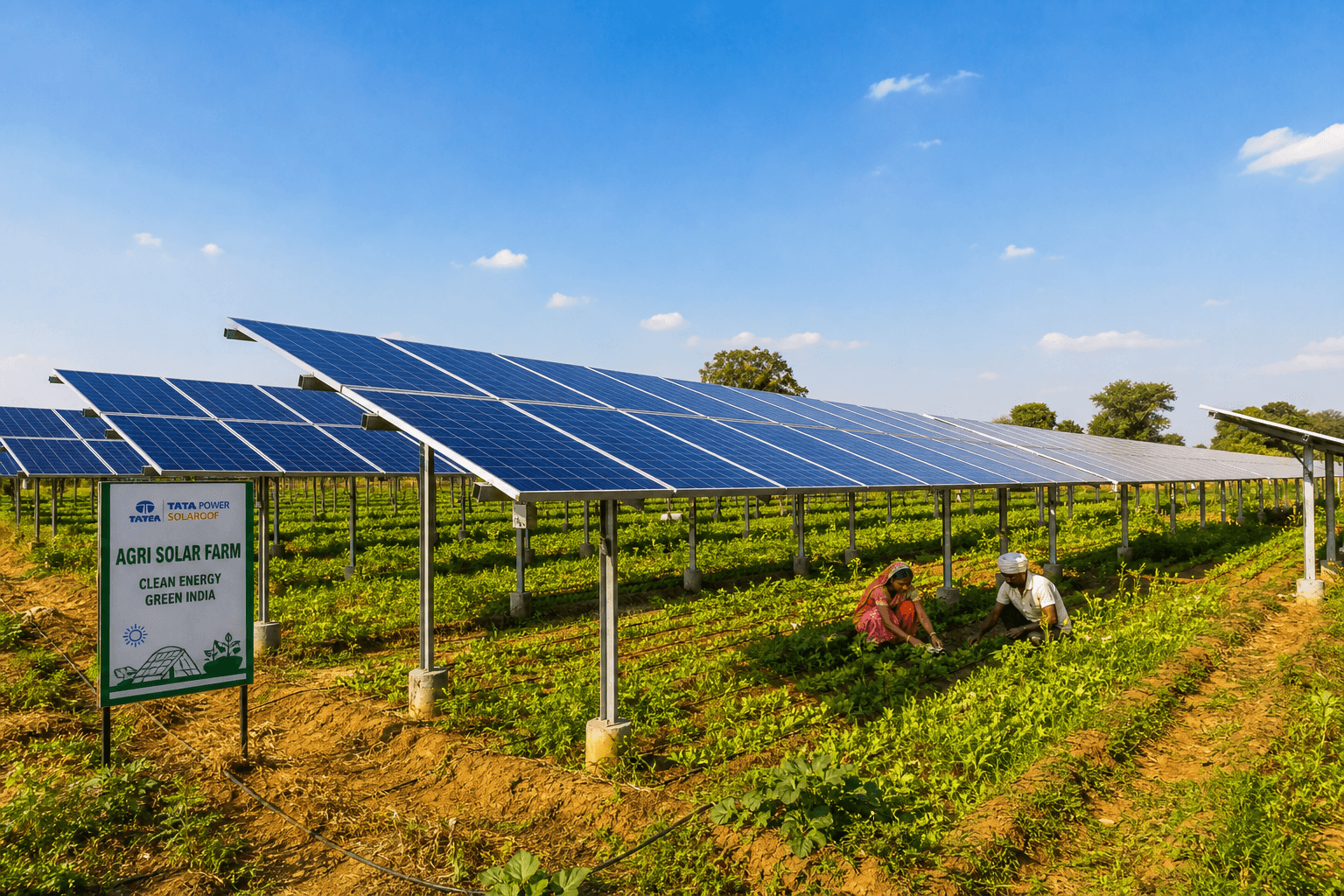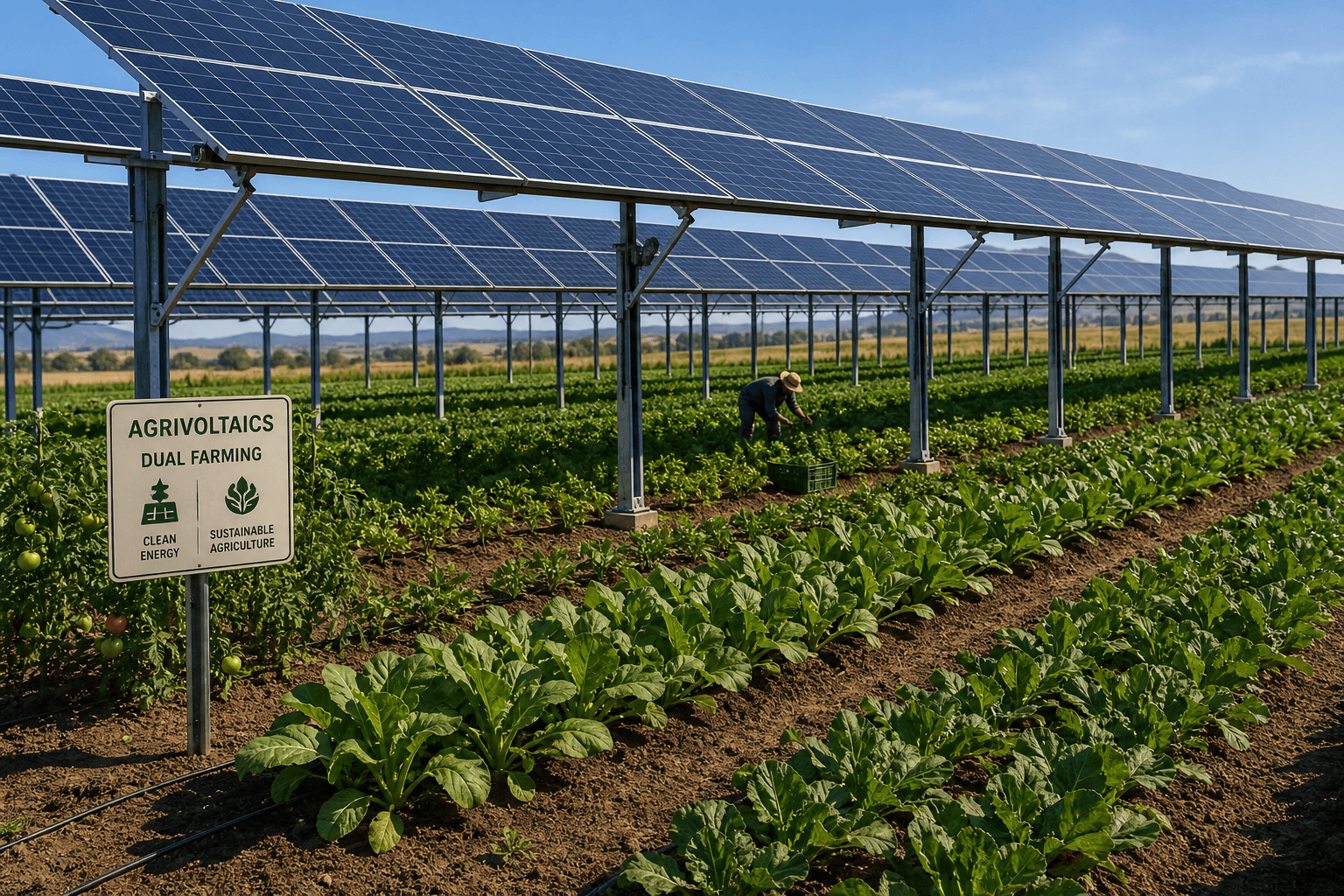
One acre, two incomes — that is the promise of agrivoltaics (Agri-PV): stilt-mounted solar above the field while crops or fodder grow below. For land-scarce farmers in Rajasthan, Maharashtra, Gujarat, and Punjab, it beats choosing between panels OR plough.
This guide explains stilt farming layout, shade-suitable crops, government lease figures around ₹25,000–30,000 per acre per year, the PM-KUSUM 2.0 10 GW Agri-PV announcement, and what ICAR-CAZRI Jodhpur pilots teach — without treating policy headlines as cash in your hand.
Start with our PM-KUSUM solar farming guide and agrivoltaics PM-KUSUM 2.0 update for component basics.
PM-KUSUM 2.0 and 10 GW Agri-PV were announced in March 2026. Detailed guidelines may still be pending — treat 10 GW as a policy target, not an open tender, until pmkusum.mnre.gov.in publishes operational rules.
Why “ek zameen” matters in Indian farming
Average operational land holdings remain small. Pure ground-mount solar on cultivable plots triggers social and income fears — “company ne khet le liya.” Stilt agrivoltaics answers that: machinery can enter, irrigation lines can run, and grazing or fodder can continue under raised arrays.
Benefits often cited in policy speeches and pilot reports:
- Dual revenue: crop + lease or power share
- Microclimate: partial shade may reduce heat stress on some vegetables (pilot-specific)
- Water: lower evaporation under panels in some arid trials — not universal
Risks are equally real: wrong crop, fixed lease below inflation, 25-year lock-in, and developer default. Read contracts like a banker, not a relative.
Stilt structure — how farming continues underneath
Stilt-mounted systems lift panels 2.5–5 metres (project-specific) on steel structures so:
- Tractors with moderate height clearance can pass (design-dependent)
- Drip lines and labour work under panel rows
- Panel row spacing allows inter-row cropping
Typical layout concepts (not a single national standard):
| Element | Farmer concern | Ask the developer |
|---|---|---|
| Clear height | Can my bullock cart / mini tractor enter? | Written metres at lowest point |
| Row spacing | Enough sun for fodder between rows? | Agronomist crop plan |
| Water runoff | Dripping from panels — erosion? | Gutter design |
| Land rights | Who owns structures at year 25? | Decommissioning clause |
Component A plants (500 kW–2 MW) historically allowed ground or stilt mount on barren, fallow, or cultivable land within ~5 km of 33/11 kV substation. Agri-PV adds mandatory cultivation continuity in the policy narrative — expect stricter crop plans in PM-KUSUM 2.0 rules when released.
Shade-tolerant crops — what works below panels
There is no one crop list for all India. Arid-zone pilots differ from Gangetic plains. Common starting points from research and pilots:
Fodder and forage
- Berseem, lucerne, guar (region-specific)
- Partial shade may extend green fodder season in heat — validate locally
Vegetables and spices
- Spinach, coriander, fenugreek — lower canopy
- Ginger, turmeric — shade trials in some Agri-PV demos
- Mushroom — needs separate house; not open-field under panels unless designed
Floriculture
- Some orchids and anthurium in protected shade — capital intensive
Usually poor fits without redesign
- Long-duration wheat or cotton needing full sun
- Fruit trees whose canopy hits panels
ICAR-CAZRI Jodhpur and peer institutes test variety, spacing, and irrigation under panels in low-rainfall zones. Before you switch from wheat to coriander because of a YouTube video, ask: “Is there a CAZRI-class trial for my district?”
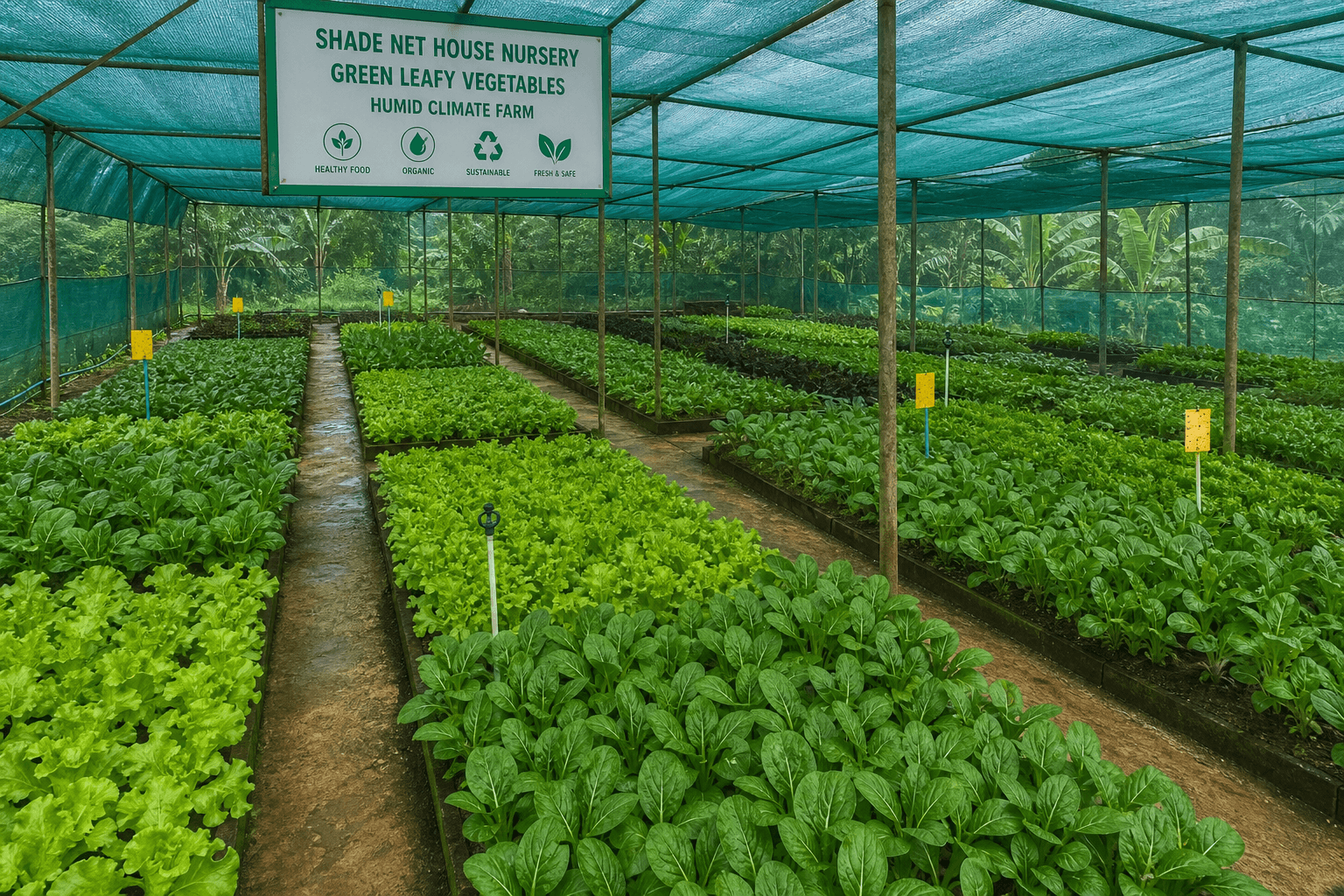
For protected cultivation economics, compare shade net house farming — different capex, similar shade logic.
Lease income — ₹25,000 to ₹30,000 per acre and beyond
Farmers hear “₹30,000 per acre rent guaranteed.” Separate government benchmarks from your contract.
| Source / context | Indicative lease | Notes |
|---|---|---|
| Component C land lease (Rajya Sabha citations) | ~₹25,000/acre/year | Feeder / land models — verify active scheme |
| IISD / policy analysis | ~₹30,000/acre/year | Benchmark, not your offer |
| Agrivoltaics premium | ₹40,000–1,00,000+/acre in speeches | Often crop + lease combined story |
At National Agro-RE Summit (March 2026), ministers cited studies where annual income per acre could rise from about ₹60,000 toward ₹1 lakh+ when crop and solar combine — not lease alone.
Contract must-haves:
- Escalation every 3–5 years (inflation-linked)
- Payment date and late penalty
- Crop freedom — which crops banned, which mandatory
- Damage — who pays if shade pattern changes after module cleaning schedule shifts
- Exit — what happens if developer fails PPA
Never accept verbal lease on WhatsApp.
PM-KUSUM 2.0 and 10 GW Agri-PV — what is real in June 2026?
PM-KUSUM 2.0, announced March 2026, includes a dedicated 10 GW Agri-PV component to scale crop + panel co-location. Union Budget 2026-27 reporting also raised PM-KUSUM allocation sharply — political signal is strong.
What may still be pending:
- State-wise application portals and tariff orders
- Minimum panel height and crop compliance audits
- Subsidy or incentive stack for stilt capex (Component A historically had no capital subsidy for MW plants)
Until guidelines publish:
- Watch pmkusum.mnre.gov.in and your state nodal agency (e.g. RRECL in Rajasthan)
- Treat pilots as learning — roughly 50 Agri-PV pilots cited nationally by 2026
- Do not transfer land title on 2.0 hype alone
ICAR-CAZRI Jodhpur and national pilots
ICAR-CAZRI, Jodhpur — Central Arid Zone Research Institute — features in government speeches as an Agri-PV pilot hub for water-scarce, high-insolation regions. Typical research questions:
- Optimal panel tilt and height for fodder yield
- Soil moisture under partial shade
- Heat stress reduction on selected vegetables
National count of ~50 Agri-PV pilots by 2026 means your state may have one — KVK, SAU, or private developer demo. Visit before signing lease.
Decision roadmap for farmers
If you have 4–5 acres near a substation
- Explore Component A developer interest — they need grid proximity
- Negotiate stilt + cultivation clause, not bare ground mount
- Hire local advocate to review 25-year lease
If you have one acre only
- Lease to Agri-PV developer may beat solo MW plant
- Keep crop plan you can execute — fodder + vegetables often lower risk
- Track PM-KUSUM 2.0 for smaller aggregated models (FPO) when rules open
If you only need pumps
- Component B standalone solar pump may fit better — see Rajasthan solar pump subsidy guide
Model three cash flows separately: (1) crop profit, (2) lease rent, (3) power revenue if you are investor — do not merge into one WhatsApp ROI number.
Bottom line
Agrivoltaics on one land is the credible face of solar farming — stilt panels, shade-smart crops, and lease benchmarks near ₹25,000–30,000/acre/year in official discourse, with upside when crop income stays strong. PM-KUSUM 2.0’s 10 GW Agri-PV channel is the scale path; ICAR-CAZRI Jodhpur-type pilots are the science path.
Your path: written lease, crop plan backed by local trial data, and official portal confirmation before land or money moves.
Disclaimer: Lease rates, PM-KUSUM 2.0 rules, and pilot results change. Verify on pmkusum.mnre.gov.in, MNRE, and state nodal agencies. Ask Kisan is not a government agency or legal advisor.
Last verified: June 2026.
Frequently asked questions
What is agrivoltaics or Agri-PV on one acre?
Agrivoltaics means raising crops under or between elevated (stilt-mounted) solar panels on the same land. You keep cultivation while earning lease rent or sharing power revenue. PM-KUSUM 2.0 (March 2026 announcement) targets a dedicated 10 GW Agri-PV component; detailed operational guidelines were still pending — verify on pmkusum.mnre.gov.in.
How much land lease do government sources cite per acre?
Benchmarks from official and policy sources include roughly ₹25,000/acre/year (Component C land lease cited in Rajya Sabha replies) and about ₹30,000/acre/year (IISD and similar analyses). Agrivoltaics lease can run higher when developers need cultivable land with stilt structures — local negotiation and written contracts matter.
Which crops work under solar stilt shade?
Shade-tolerant and low-height crops are common in pilots: fodder (berseem, lucerne), vegetables (spinach, coriander, ginger, turmeric in some trials), mushrooms in controlled setups, and certain floriculture. High-light crops like open-field cotton or full-season wheat need agronomist clearance — do not assume universal compatibility.
What is ICAR-CAZRI Jodhpur doing in agrivoltaics?
ICAR-Central Arid Zone Research Institute (CAZRI), Jodhpur, is among roughly 50 Agri-PV pilots cited nationally by 2026 — testing panel height, crop microclimate, and water use in arid zones. Outcomes are site-specific; use pilots as reference, not guaranteed income for your district.
Can small farmers join PM-KUSUM 2.0 Agri-PV now?
PM-KUSUM 2.0 with 10 GW Agri-PV was announced in March 2026; detailed application windows and tariffs may not yet be live. Meanwhile Component A (500 kW–2 MW), Component B (pumps), and Component C (feeder solarisation) operate via state nodal agencies — check RRECL, UPNEDA, or your state portal before signing land lease.